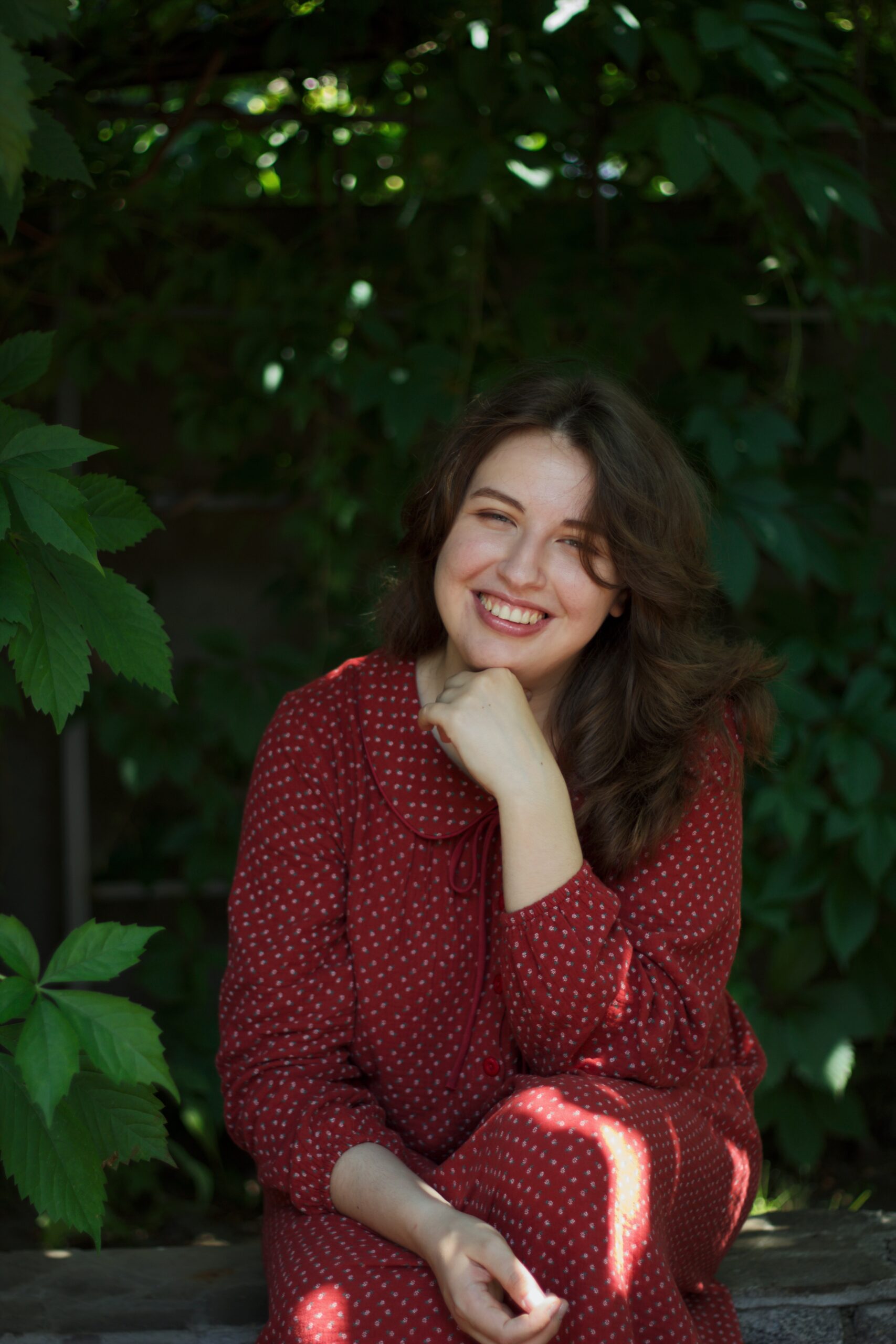
Before we talk about volunteering, I’d like our readers to get to know you a little better. What was your life like before the full-scale invasion? What did you do, what was an important part of your everyday life, and what did you dream about at the time?
I grew up in Brovary, in the Kyiv region, in a family of musicians. My parents always encouraged us to think creatively. I also graduated from music school, but I had loved literature since childhood, so I eventually chose to study literature at university. I was also passionate about drawing — even now, it helps me release inner tension.
I have always been an empathetic and highly sensitive person. I could, and still can, easily burst into tears over things that might seem insignificant to other people. At school, this sometimes made my twin sister and me feel like outsiders. But now I think that experience shaped my desire to protect vulnerable people — people who reminded me of who I was back then, and, in some ways, who I still am today.
In the years leading up to the full-scale invasion, I was studying at the Faculty of Literature at Taras Shevchenko National University of Kyiv. That was when I began experiencing severe attacks of facial pain. I went to doctors repeatedly and tried different medications, but nothing helped. Despite the support of my loved ones, I felt lonely, and the future seemed uncertain.
It eventually took me five years to find a doctor and the right dosage of medication, which I now take every day to keep the attacks from happening. But at the time, it seemed that I would have to live with constant pain for the rest of my life.
At the same time, my own physical and psychological pain became one of the factors that pushed me toward volunteering. A year before the full-scale invasion, I had already started thinking about where I could be useful. Several volunteer organizations turned me down because I had no relevant experience.
Everything changed at Christmas in 2022, when I took part in a charity initiative and prepared a gift for a person experiencing homelessness. I wanted the gift to be as good and comfortable for them as possible. But in the end, I realized how valuable the experience had been for me, too.
Without even knowing it, that person changed the way I thought and my values. It was the first time I had truly helped someone while, at the same time, helping myself.
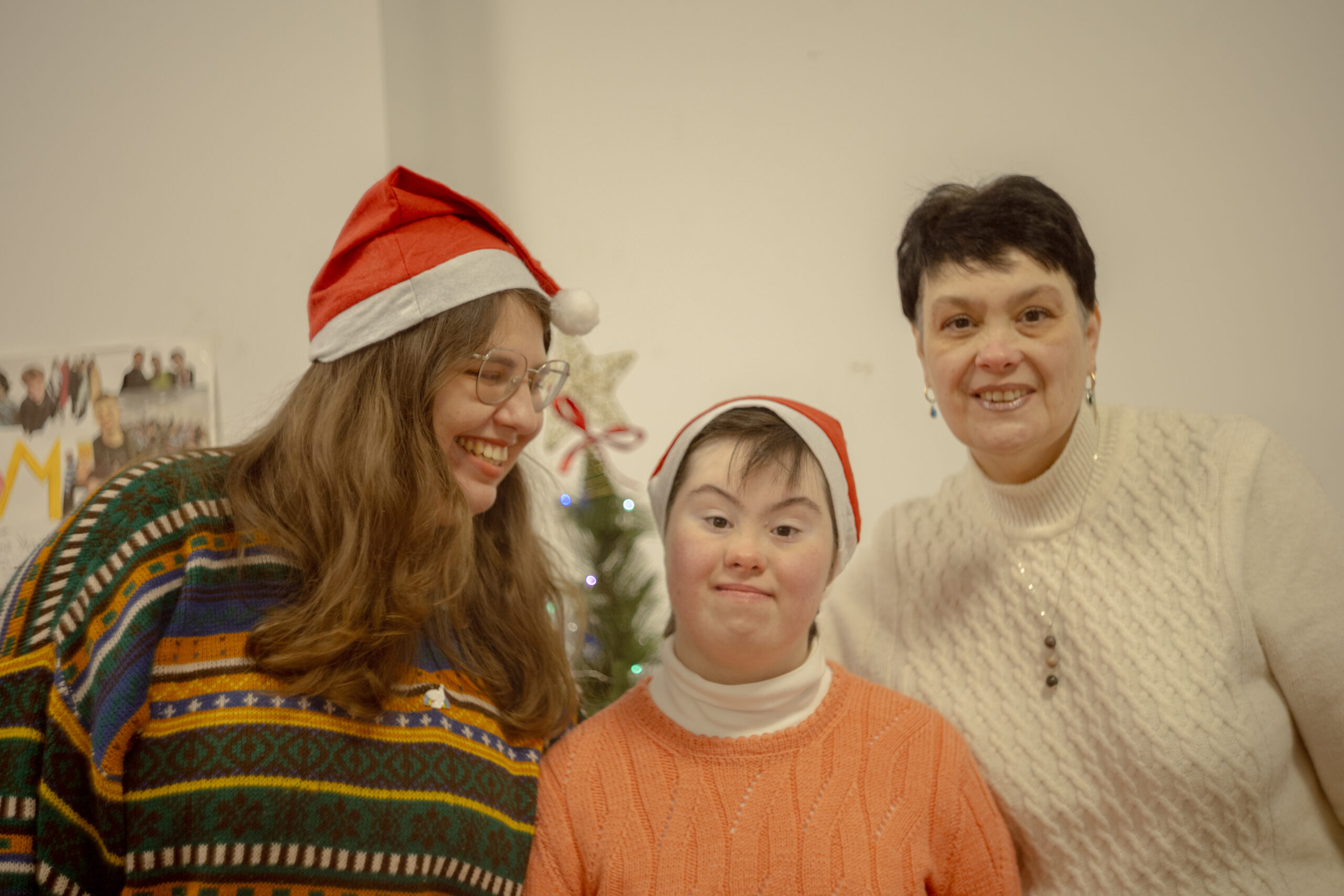
A little later, I heard a phrase from one of the organizers that still motivates me to act: “You don’t need special training to be friends with people who are poor.”
That was how my journey as a volunteer with the Community of Sant’Egidio began.
February 24, 2022, divided the lives of millions of Ukrainians into “before” and “after.” More than four years have passed since then. How did your journey as a volunteer begin? Was there a moment when you realized you could no longer stand on the sidelines? And could you have imagined at the time that helping others would become such an important part of your life?
As I mentioned, my journey as a volunteer had begun a little earlier. But the full-scale invasion made me realize just how urgent it was to help. Like for so many Ukrainians, there was no longer any question of whether to help.
For the first three months after the invasion began, I stayed with relatives in Lutsk and immediately started looking for ways to help. That was where we met Liubomyr Dmytryshyn — at the time, a student at a theological seminary, and now a serviceman, who was also connected with the Community.
We distributed food to people experiencing homelessness because their numbers were not declining. Together with Yuliia, who helped us and prepared dozens of portions of hot food, we tried every week to give these people a chance to have at least one good meal.
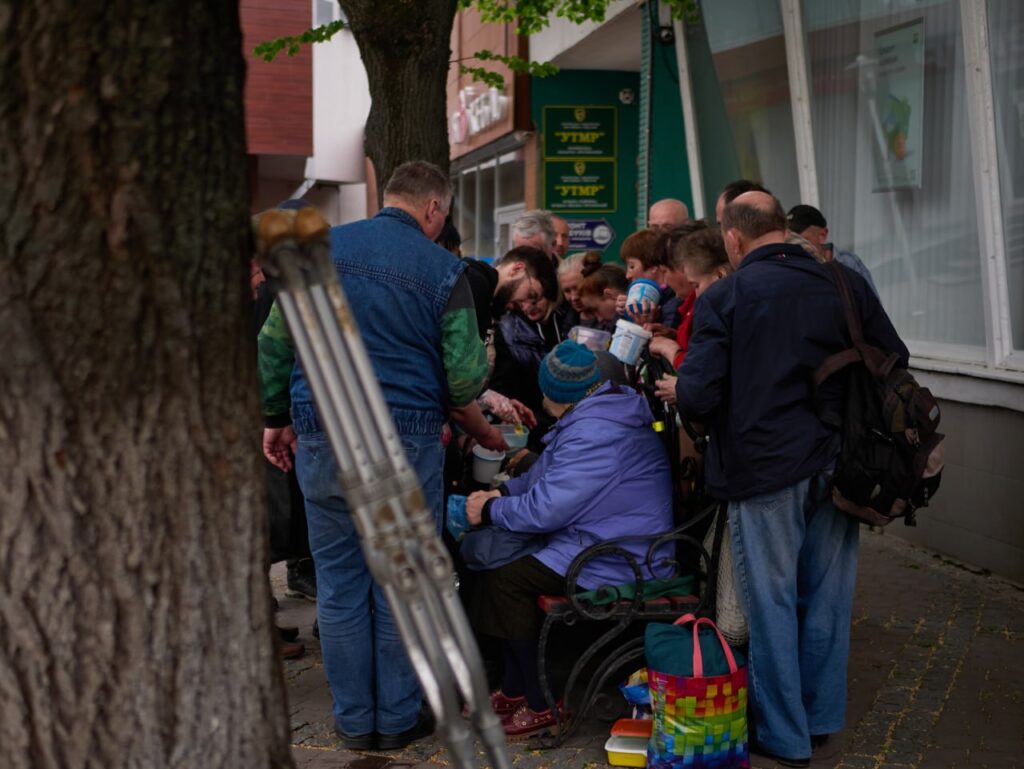
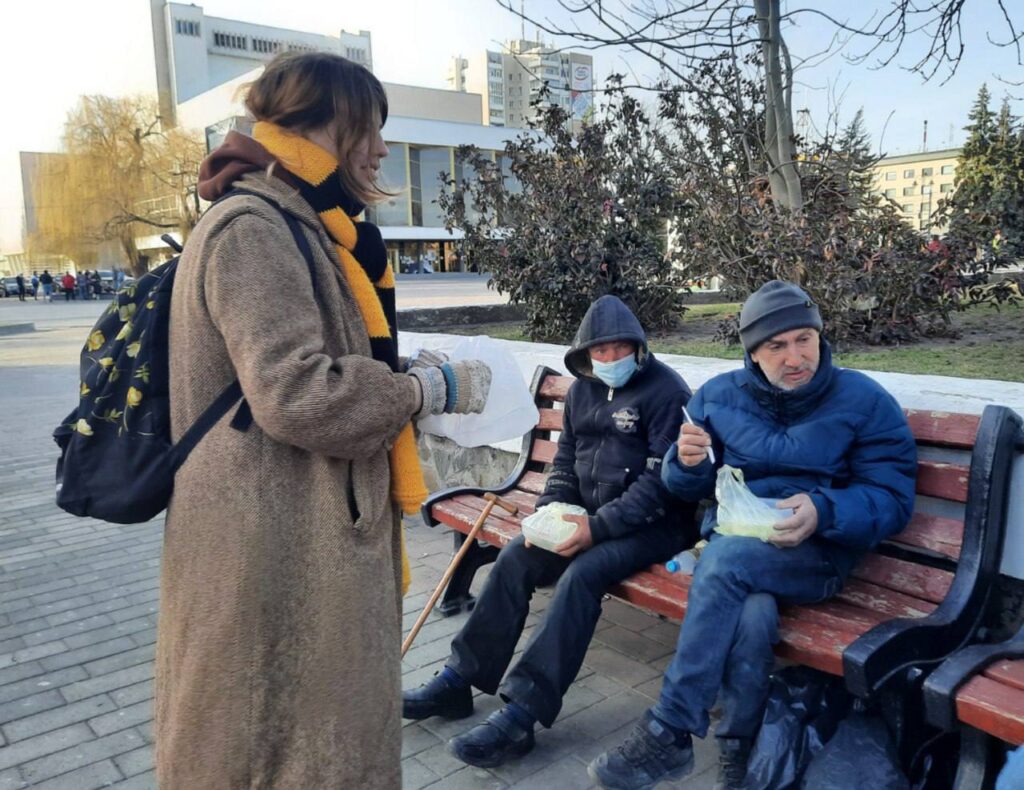
We would simply go out to the main square, approach people, and ask, “Would you like something to eat?”
For someone with social anxiety like me, it felt like a waking nightmare. Liubomyr, on the other hand, seemed able to connect with absolutely anyone. We talked a lot with people and listened to their stories. Sometimes, the two of us, or together with friends, would discuss different theological, philosophical, or literary questions.
Eventually, we built a small circle of helpers. At the beginning of summer, my husband and I returned to Kyiv/Brovary, while the food distribution in Lutsk, despite various difficulties, continued for almost another two years.
And by then, I simply could no longer imagine my life without helping others.
As far as I know, you now volunteer at a workshop for people with disabilities and also help at a humanitarian center. What prompted you to get involved in these particular areas of volunteering? Why have they become especially important to you?
In Kyiv, I did not join the humanitarian center right away. I spent about six months in Rome, where the Community’s main center is located. There, while receiving treatment for my facial pain, I took part in food distributions and in the “School of Peace” — an initiative where older teenagers and young people help younger children integrate, play with them, do homework together, and simply spend time with them.
It was also there that I saw for the first time how humanitarian aid works, and I visited the workshop for people with disabilities. It was an incredibly intense period that changed the way I saw global problems and the scale of the need for help.
After returning to Ukraine, I hesitated about whether to join the humanitarian center. Because of my social anxiety and sensitivity, I was afraid that listening to the stories of people affected by the war would worsen my already fragile state. But I could not stay on the sidelines, so I trusted our coordinator, Liudmyla Kharchenko, and came to help.
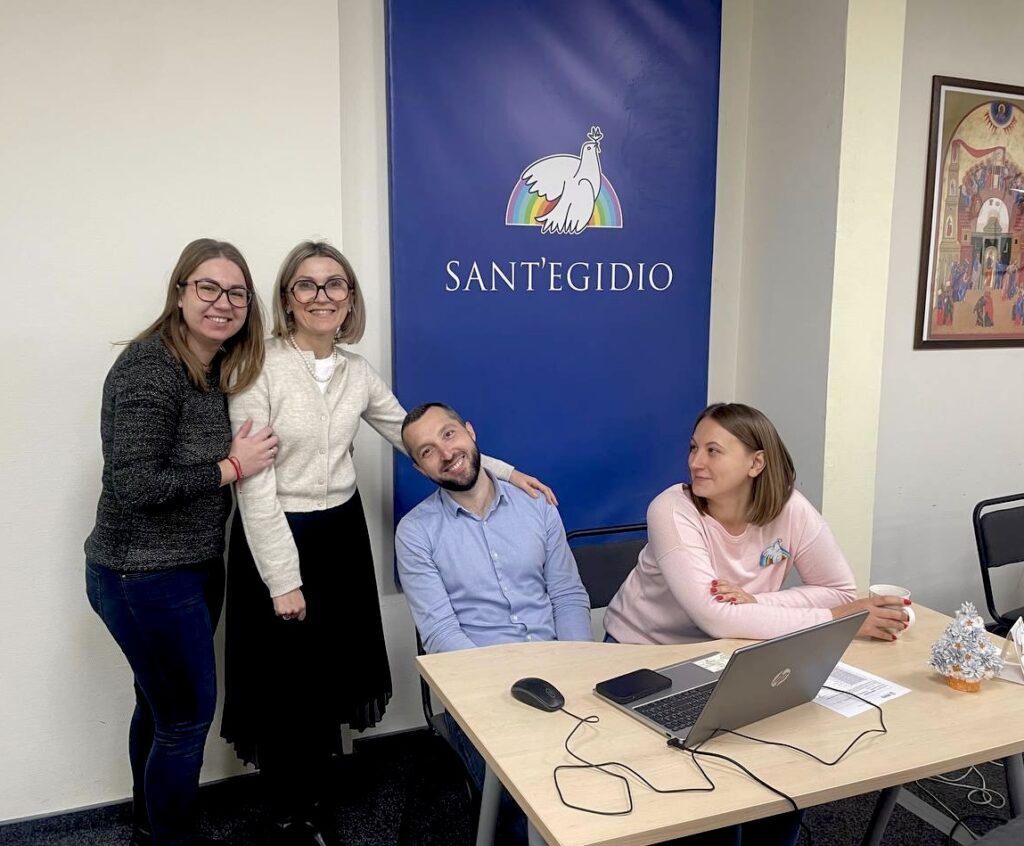
I was immediately struck by the warm and friendly atmosphere in our centers. People affected by the war can come here not only to receive material and psychological support, but also to talk things through, meet people from their hometowns, and simply feel that they belong.
Many of the stories are deeply painful. Adjusting to a new life can be incredibly difficult for displaced people, military personnel and their families, older people, and those who have lost their homes or had them damaged.
Volunteering helped me replace my own inner sense of alienation with openness, and fear with solace.
The workshop for people with disabilities is a somewhat different story. It was a project I had been looking forward to for a long time. In Rome, I was deeply moved by an exhibition of works by people with disabilities organized by the Community in 2022.
I saw how profound these works could be and how people could use art to express what was troubling them. I very much hope that one day we will be able to organize something similar in Ukraine — for example, to exhibit the work of the people we support at the Mystetskyi Arsenal or Ukrainian House.
In Rome, I also started drawing much more frequently myself. It became a way for me to cope with pain and express my emotions. After returning, I wanted to continue this kind of “self-therapy,” but together with other people who might also find creative expression helpful.
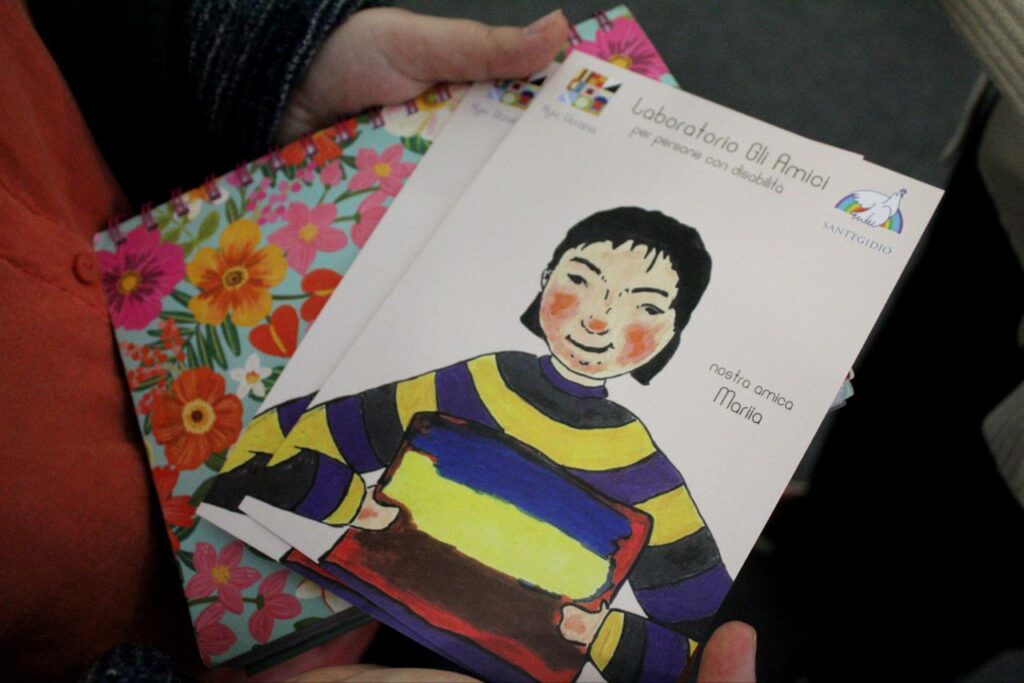
So I asked Liusia to help revive the workshop in Kyiv, and at the beginning of 2024, we held our first meeting.
Now the workshop is my favorite area of volunteering. I feel comfortable and able to be myself there. I do not have to hide behind social expectations, shyness, or inner tension.
Our “friends” are very open and sincere, and their spontaneity is inspiring. Somehow, the workshop has become a truly safe space for all of us.
Volunteering is often associated with major fundraisers, humanitarian aid shipments, or helping at the front. But often, the greatest support a person can receive is attention, a sincere conversation, or simply the feeling that they are not facing their difficulties alone. Has volunteering changed your understanding of what it really means to help another person?
Yes. I think there is a certain kind of self-deception in assuming that people need some extraordinary, large-scale form of help, and that there is nothing you can do on your own.
Many people first think about the material side of things: large fundraisers, major events, or special training. As a result, a person in need may end up receiving no support at all, because that is how most people think.
I would advise focusing first and foremost on the psychological side — being ready to listen, to talk, or simply to be there for someone.
The packages we distribute every week are quite modest, and they cannot fully meet a person’s needs even for a month or two. But the people we support keep coming back, and they often say that it is the warm atmosphere in our Houses of Friendship that encourages them to seek help from us again.
People affected by the war, older people, and people with disabilities often simply want to be heard. A few words of compassion, a genuine emotional response, and sometimes even a hug can be incredibly important.
And sometimes people do not want to return to traumatic memories at all. They simply want to talk about ordinary things: their interests, the news, their children or grandchildren.
A conversation like that requires no special training, but it can make a real difference.
Sometimes beauty comes from the simplest things.
When I doubt whether someone like me can really make a difference, I read the feedback from the people who visit us and realize that a few words from me have made someone’s day better.
And I keep coming back to one simple truth: you don’t need special training to be someone’s friend.
Fortunately, I can see that society is changing. It is just unfortunate that, to a great extent, this change is happening because of the painful experience of war — through growing losses and sacrifices, and because almost every other family has relatives who are now serving at the front.
That is why there are so many requests for help that people sometimes have to wait for months before they can come back to us.
Continuation of the story — in the second part of the article.
Translator: Ivan Chepaykin


