A deployment to the front line that changed everything
Ivan Roman is originally from the village of Blahodarivka in Mykolaiv Oblast. Before 2014, he worked in construction and at car service stations, and once went abroad to find work. He took on whatever jobs allowed him to support his family.
He has defended Ukraine against Russian occupying forces since 2014, when he was first mobilised into the military. After leaving the service and returning twice more, eventually signing a contract with the Armed Forces, he was serving as the driver of a heavy-duty transporter used to move tracked military equipment when Russia launched its full-scale invasion. He was part of the repair company of the 79th Separate Tavriia Air Assault Brigade of the Ukrainian Air Assault Forces, stationed in Luhansk Oblast.
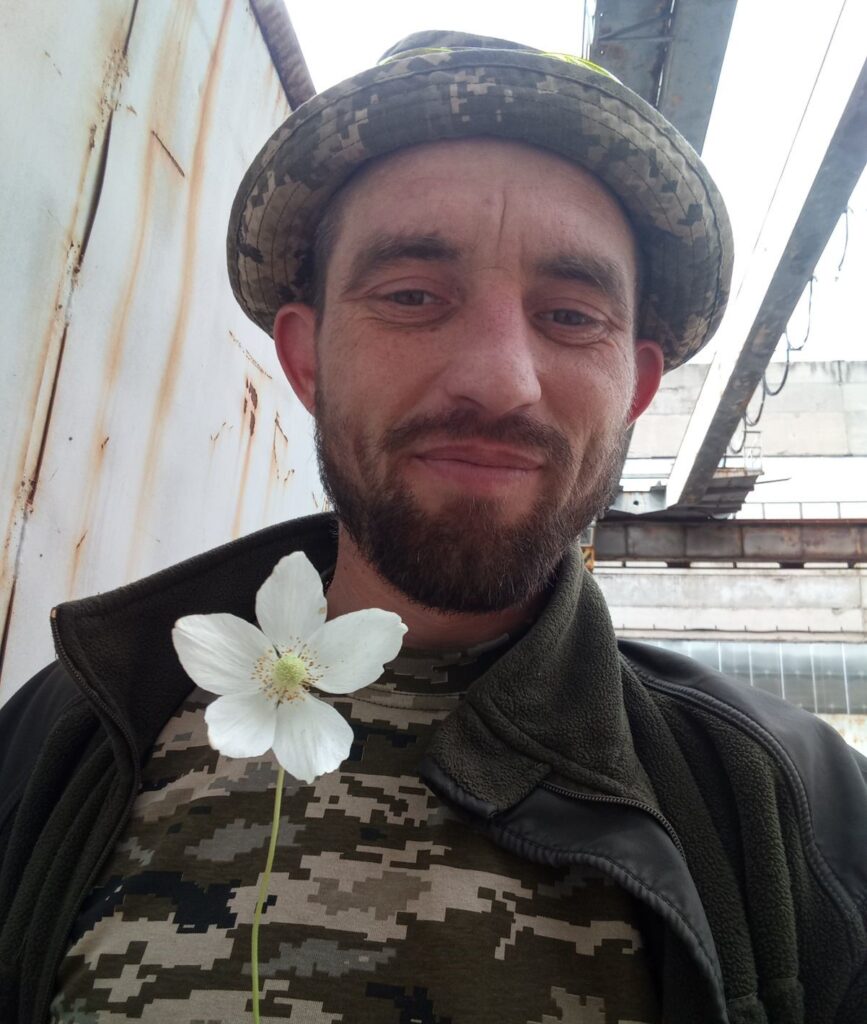
In 2023, Ivan was transferred to a newly established UAV strike unit within the same brigade, where he served as a driver. His job was to take UAV operators as close to the front line as possible. One day, on 21 January 2024, while driving them there, as he himself says, he almost made it…
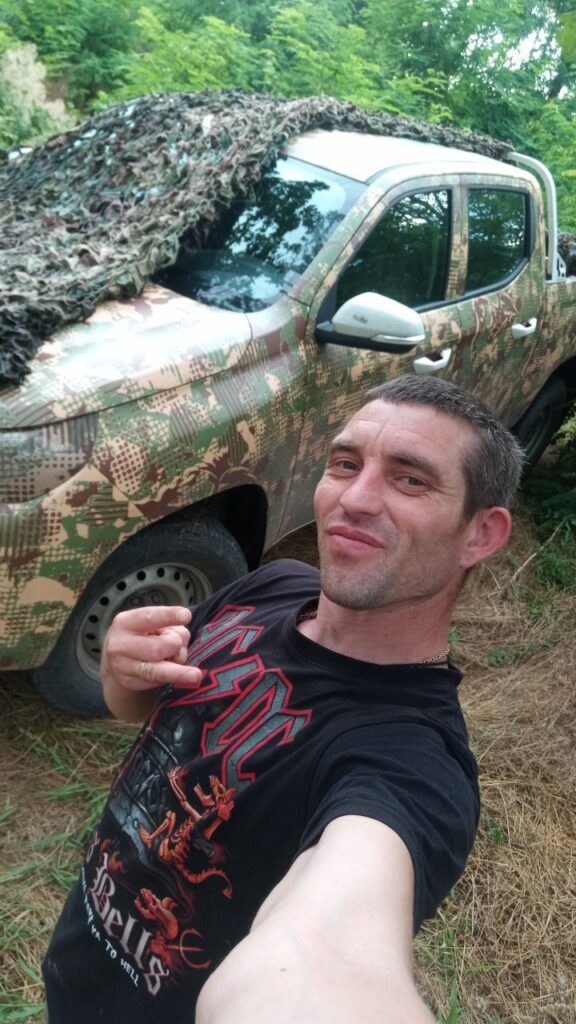
The first enemy kamikaze drone struck near the vehicle. This most likely saved several lives: had it hit the vehicle directly, more people would have been wounded. After the strike, everyone jumped out of the vehicle. Ivan told his comrades that the place where he was supposed to drop them off was not far away, so they could take the equipment and continue on foot. He also told those who were due to be picked up after their night mission that he would wait for them in a safer location. He then got back behind the wheel. At that moment, another drone struck – hitting the windscreen head-on.
– I was making a U-turn when I suddenly realised I was no longer in control of the vehicle. It was rolling down a slope towards the river, Ivan Roman recalls. I thought that if I ended up in the water, it would be harder for my comrades to evacuate me, so I decided to jump out while the vehicle was still moving. That was when I realised that my left arm was gone. I opened the door with my right hand and jumped out. When I landed, I shouted to the others for help, but they could not come closer because another drone was approaching. I touched my leg – and there was nothing left of it. I still don’t know how I managed to jump out of the vehicle in that condition.
When Ivan heard another drone approaching, he froze and pretended to be motionless. Apparently, that saved his life: the drone circled above him and flew away. His injuries were severe: a traumatic amputation of his arm, a severely damaged leg and facial injuries. It was later discovered that shrapnel had also damaged his intestines. He will always be grateful to the fellow soldier who drove to the site despite knowing how dangerous it was. Ivan remembers the evacuation team changing his clothes and putting him into a medically induced sleep. He woke up in intensive care.
– When Ivan regained consciousness, he immediately said that he knew about his arm, his wife, Larysa, recalls. But he did not yet know about his leg. When he realised that he had lost that too, he simply said, “I understand.” Then he asked what time it was. When he heard that it was four in the afternoon, he was surprised that it was dark around him. That was when he realised he had lost his sight. For some time, I thought I was going to lose my husband, because he had to come to terms with everything: no limbs, no sight – and yet he was alive. Do you understand?
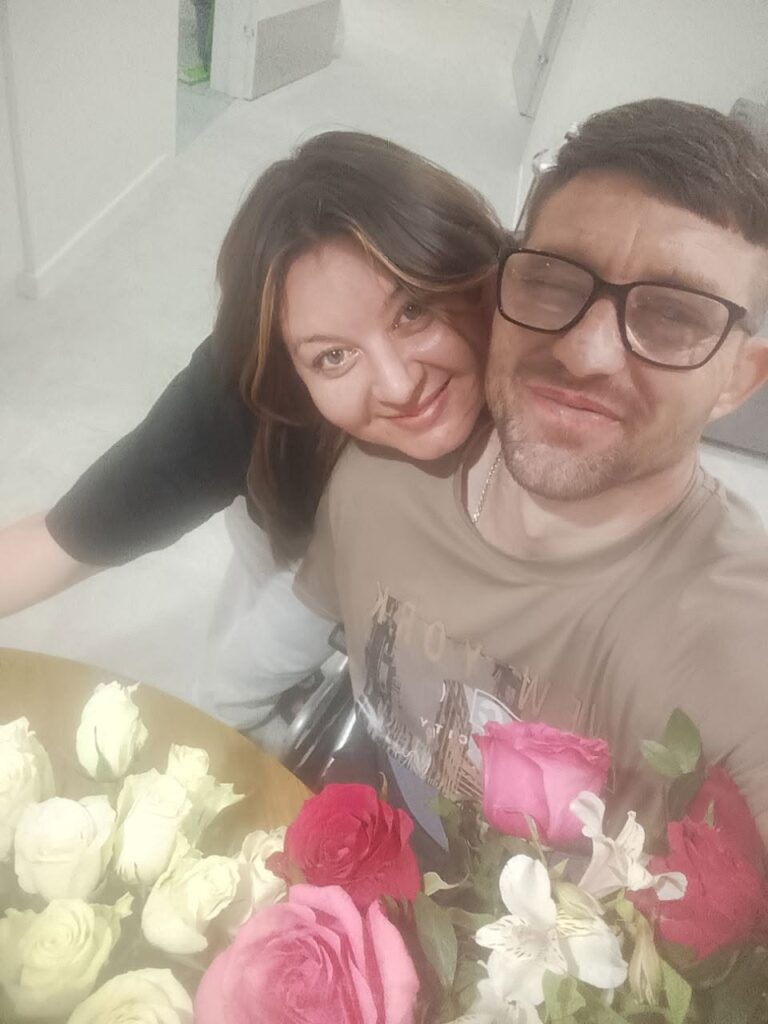
The treatment, which included 17 operations – four of them on his eyes – lasted around two years. The surgeries restored one per cent of vision in one eye and light perception in the other. The veteran is currently undergoing another course of rehabilitation.
The arrow that started it all
At the hospital in Ivano-Frankivsk, where Ivan was initially treated, Ukrainian Olympic archery champion Kateryna Dubrovina came once a week to hold a masterclass. After russia’s full-scale invasion, she left Kharkiv with her three children, settled in Ivano-Frankivsk and began working as a coach. She also started visiting wounded service members in hospital.
At first, Ivan did not even consider the possibility that he might be able to shoot. His fellow soldiers from the ward would go to training sessions, while he thought: “Good for you, you can do it, but I can’t.” He knew that shooting a bow required two hands.
One day, because of bad weather, the training session was moved indoors. Ivan was invited along simply to watch, have some coffee and meet Kateryna Dubrovina and local entrepreneur Natalka Naida. Instead, Kateryna suggested that Ivan try shooting a bow himself. Before his injury, Ivan had never held a professional bow and had never even followed Olympic archery competitions on television. As a child, he had occasionally shot a homemade bow, but he points out that this was a completely different level and technique, so it hardly counts. The veteran could not imagine how he would shoot a bow after losing his limbs, but the coach assured him that she would help and become his “second hand”, emphasising: “Nothing is impossible.”
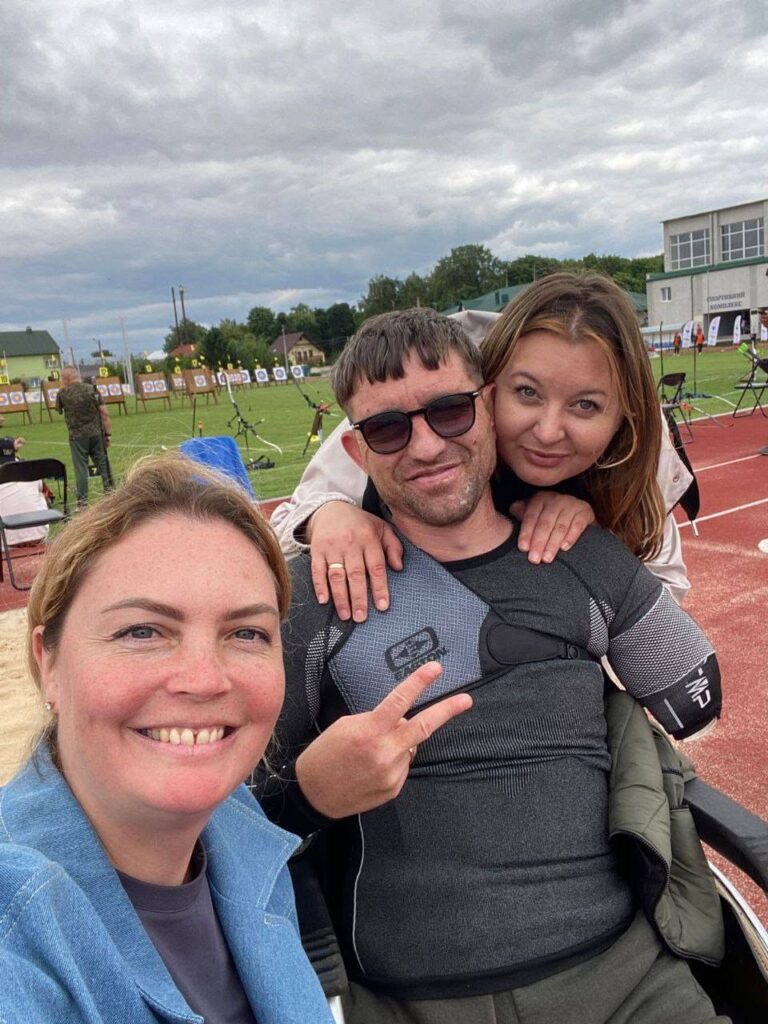
The target was placed very close so that Ivan could at least see the spots. His first shot nearly knocked him out of his wheelchair, but he quickly figured out how to keep his balance, and by his fifth or seventh shot, he hit a ten. Of course, his coaches guided him, but he made the shot himself.
These were his first positive emotions since the injury. From then on, he eagerly looked forward to every training session. Even after surgeries, he would go out for at least 10–15 minutes, take a few shots and return to his ward exhausted but happy.
Eventually, he started going to the stadium more often. Kateryna and Natalka saw how much he had taken to archery and launched a fundraising campaign to buy him his own bow.
– My first-ever competition took place in Ivano-Frankivsk – the Mayor’s Cup. I was given a bow for the competition, and a fundraiser was launched to buy it for me, Ivan says. Later, Natalka Naida admitted that she had initially hesitated because people were raising money for drones and to support the military, while here they were raising money for a bow. But she decided to go ahead. Money started coming in on the very first day, and then a friend of hers from abroad called and covered the entire amount. For me, this was another sign that good should be repaid with good. If someone has shown me kindness, I should respond with kindness too – and show that it really is possible.
From personal experience to founding a club
This gift became the catalyst for the couple to establish their own archery club. They say that without that first bow of their own, it is unlikely that any of what they have today would have happened.
During Ivan’s rehabilitation, he and his wife completed the “Restart” business course and later received a grant from German donors to purchase equipment for an archery range. In 2025, they submitted an application, were selected from more than 400 applicants and began purchasing bows and targets. Today, the club has 16 bows (12 for adults and four for children) as well as four permanent archery targets and another four designed for outdoor events.
After finding a suitable space, they opened Archery Club X10 in Lviv on 8 May 2026. The name combines the two highest scores on an archery target: 10 points and X, the centre of the target.
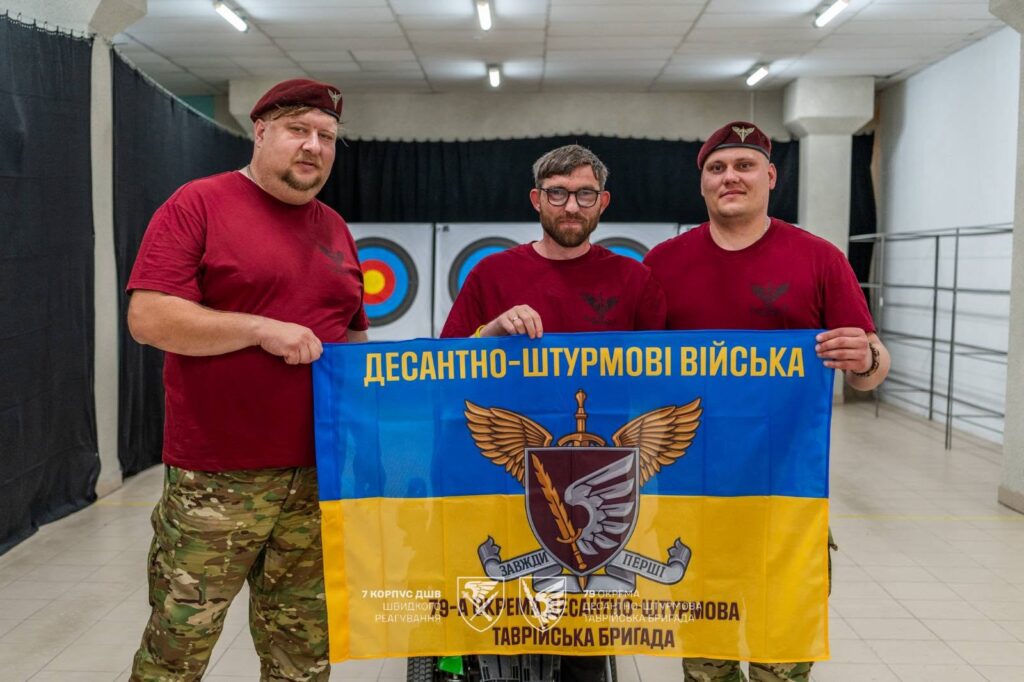
The club is open to people of all ages, from children to pensioners, including veterans, both men and women. On designated days, sessions are free of charge for veterans, while their families receive discounts. The couple also plans to establish a separate free section for blind people.
Archery is an Olympic, highly technical and specialised sport that in Ukraine is currently developed mainly among athletes under the age of 20. Once they reach adulthood, many stop training because there are often few opportunities to continue practising or compete. The sport also requires specialised and expensive equipment (a single archery setup costs €700 or more) which is not manufactured in Ukraine and therefore has to be purchased abroad. At Archery Club X10, there are no age or physical limitations.
To pursue the sport professionally, Ivan is training to become an archery coach. He is currently a second-year student at the Faculty of Physical Education and Sports of Ivan Boberskyi Lviv State University of Physical Culture.
With limited vision and his own experience of rebuilding his life after injury, Ivan understands how difficult adapting to vision loss can be. In the future, he wants to work with blind and visually impaired people, both veterans and civilians. Through his own example, he hopes to show that even after major changes, it is possible to keep moving forward: to play sport, live, create and grow, without allowing circumstances to determine the course of one’s life.
In the future, Ivan sees himself not only as a coach but also as a competition organiser. He says he wants to develop his own approach to this work, as the academic system currently provides mostly general knowledge and does not always take into account the specific needs of working with blind and visually impaired people.
For now, he combines his studies with training as a parasport athlete, competing in archery in the visual impairment category at a distance of 30 metres. Because of the amputation of his arm and leg, he shoots while seated and without prostheses, drawing the bowstring with his teeth. Since he cannot see the target at that distance, he shoots blindfolded, with special assistive devices helping him determine the direction of the shot. After each round, a volunteer helps collect the arrows.
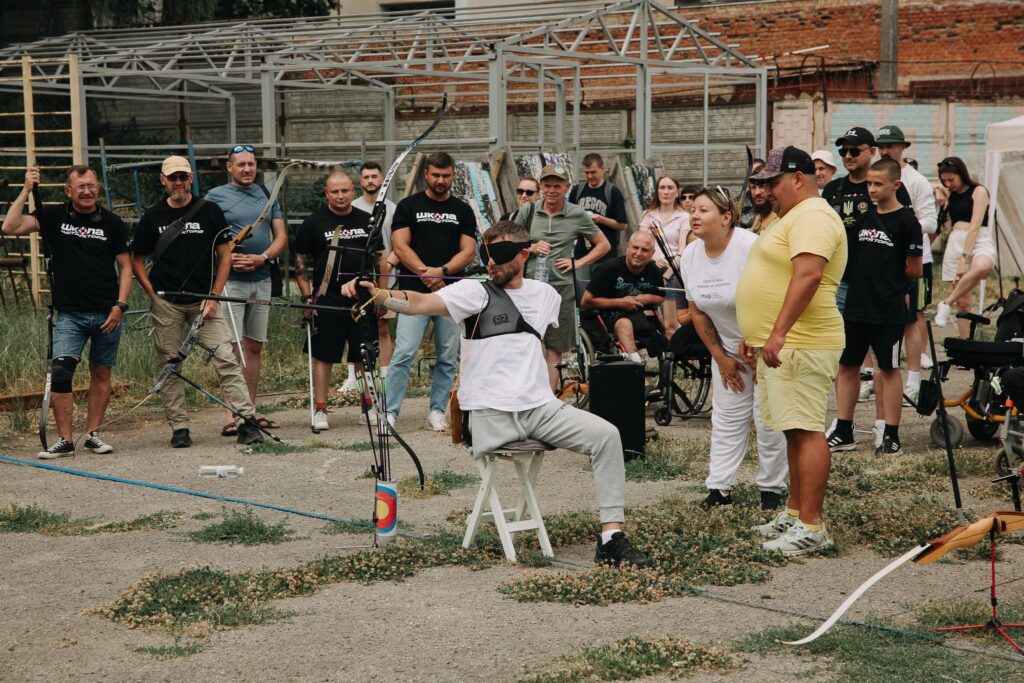
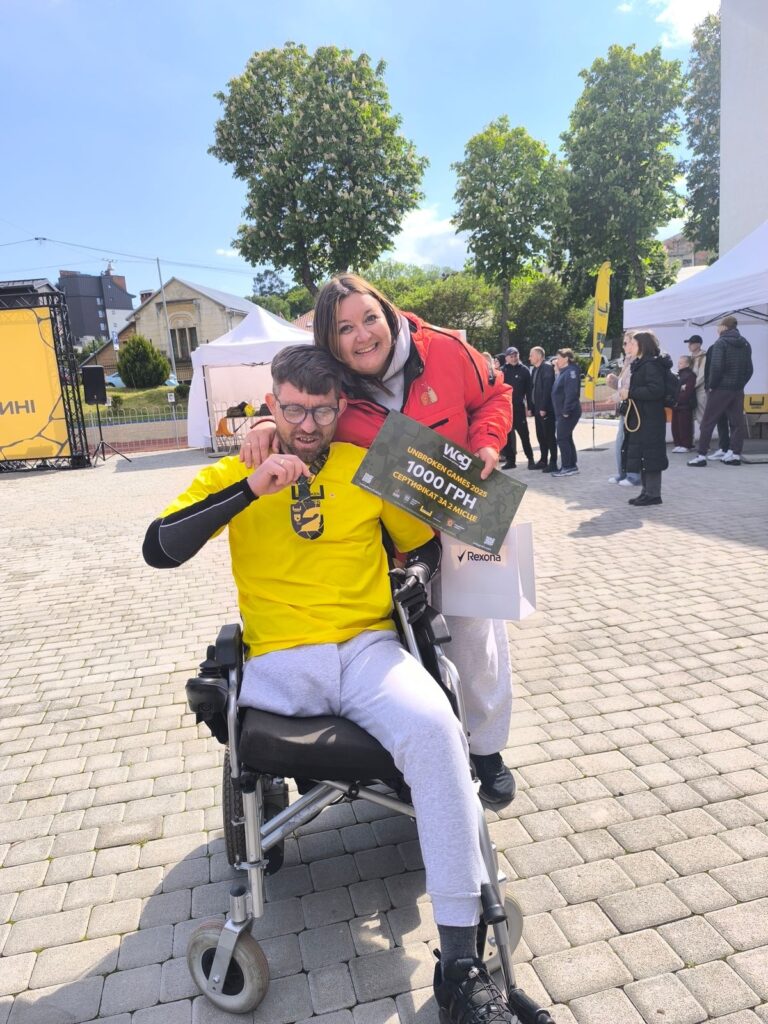
Ivan has already competed in two Ukrainian Winter and two Summer Para Archery Championships for athletes with musculoskeletal impairments and visual impairments, as well as in two Unbroken Games and four Warriors’ Cups. At his first competitions, he was the only athlete shooting blindfolded. At this year’s Winter Championship in Lutsk, however, he competed alongside three blind athletes, and at the latest Ukrainian Championship in Kovel, Volyn Oblast, held in early August this year, there were five visually impaired competitors – three civilians and two veterans. Ivan won two gold medals, in the individual and head-to-head events.
Now they come to help others
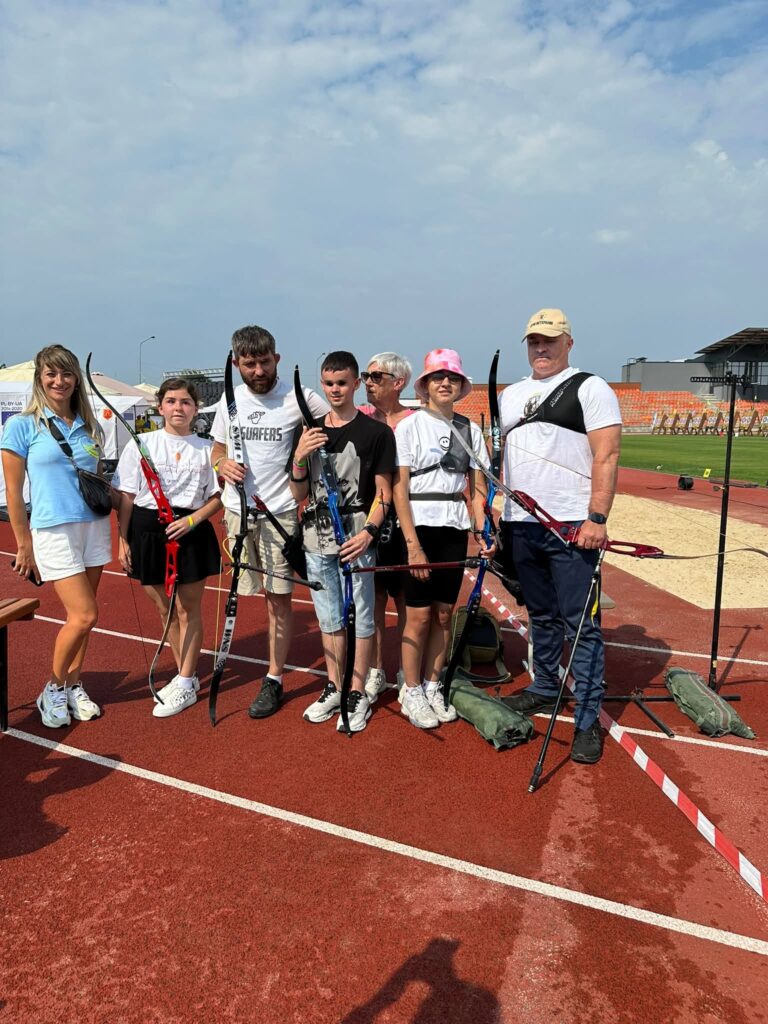
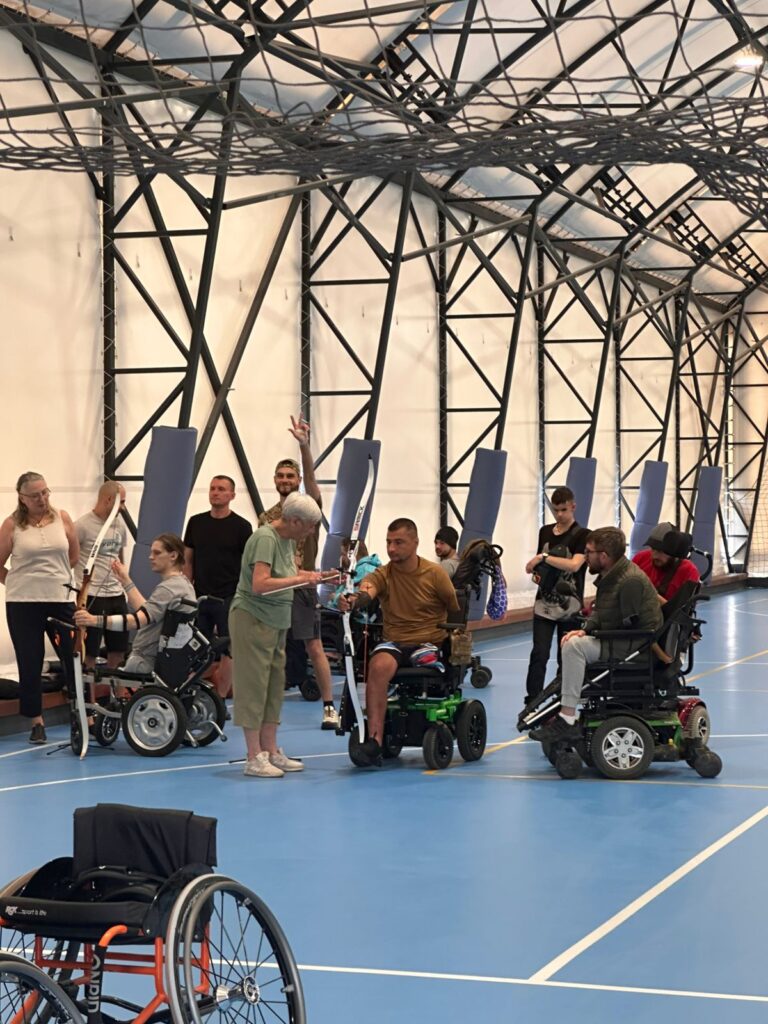
Ivan and Larysa are navigating Ivan’s recovery together, running their business as a team and, more recently, volunteering together. On their own initiative, every Saturday they hold archery masterclasses for wounded service members and blind civilians at St Panteleimon Hospital in Lviv – the same hospital where Ivan was treated.
They understand how difficult it can be to cope with life after major losses, having gone through the process of accepting a new reality themselves after Ivan’s serious injury. Now they support others, helping them break out of isolation, socialise and simply try something new. They also involve other coaches, first explaining how to communicate properly with blind athletes: describing in words what a person cannot see and not giving up on working with them simply because it may be more challenging.
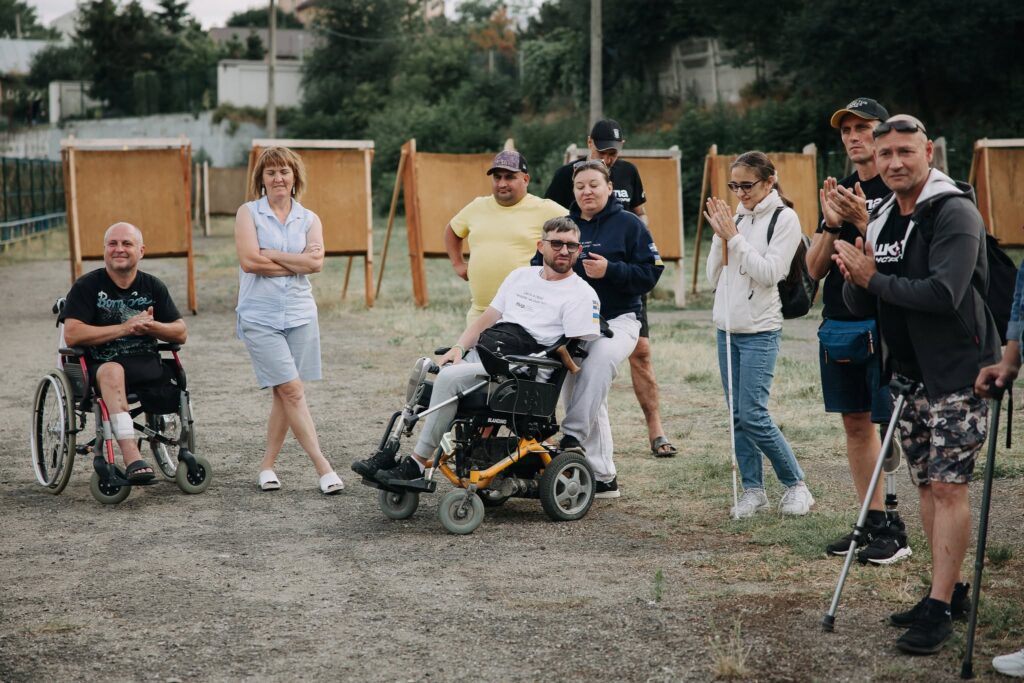
So far, they have held ten sessions. They are delighted and proud to note that there are never less than 20 participants. Still, getting someone to step onto the archery range for the first time can often be quite a challenge.
– We go into the wards to meet blind service members who, quite literally, do not want to go on living. We introduce ourselves, hear their categorical refusals, talk to them for a long time – and are happy when we manage to persuade them, Larysa explains. Recently, Ivan managed to convince one veteran to join a session. He had suffered severe injuries: he had lost both eyes, one arm and four fingers on his other hand, and sustained extensive burns. At first, he did not want to talk or leave his ward, but eventually he came to our session. He spent two hours with the others and, at the end, apologised for his scepticism and thanked us for getting him out of his hospital bed.
After ten shots, participants with injuries need 15–20 minutes to recover, as the activity is physically demanding. That is why the couple also purchased a game of pétanque, so participants can switch activities during the break without interrupting the conversation – because that is how a community is built.
– At first glance, volunteering may not seem that difficult. In reality, it is exhausting, both physically and emotionally, because you give yourself completely to what you are doing. You come home tired, but at the same time you feel that you are helping others discover a new zest for life. That is what makes it meaningful, Ivan says. Having gone through something similar yourself, you understand the value of support particularly well. If people had not helped me back then, perhaps I would not have been able to recover to the extent I have. We do not know how long we will be able to keep working at this pace, but we will continue for as long as we have the strength.
Translator: Zoriana Karpenko


