For some, volunteering began with the war in 2014; for others, in 2022. But volunteering existed long before that — that is an undeniable fact. Few people, however, know what it looked like back then.
Marta Cheban, who we spoke to, is a volunteer through and through. Volunteering has become a way of life for her — one she chose long before it became a widespread phenomenon. It all began in Ternopil, at a time when volunteering was neither fashionable nor popular, when very few people were willing to help others for free. Yet Marta not only got started — she kept going and continued to take action.
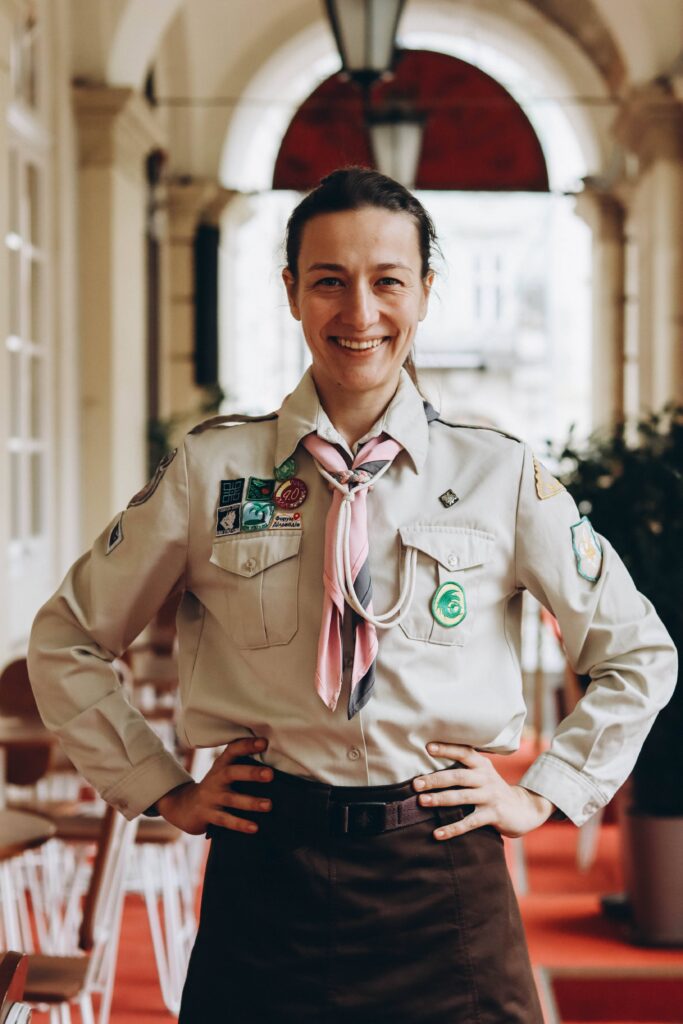
How did you get started? Tell us about your very first volunteer experiences. How did you find them, and what challenges did you face?
I have a long history with volunteering. When I was at school, English was offered as an extracurricular class, but I didn’t have the money for it. Only two of us in the class didn’t attend the extracurricular English classes — me and another boy who was always getting bad grades. But I have an older brother, and he was in a sports class. Obviously, not everyone there was very interested in studying, but he was an excellent student. And because he was such a great, well-mannered, fun kid, the English teacher said she could teach me for free.
During one of those extracurricular classes, we happened to have a lesson about volunteering. That was the first time I learned that volunteering was an activity where you share your expertise for free. And I thought it was a sign — as if the fact that I had been allowed to attend these classes for free, and that the teacher was volunteering her time to teach me, meant that I should volunteer too. I wanted to give something back.
I started joining different activities and helping out. Together with my mom and friends, I took part in clean-up efforts as part of the “Let’s Make Ukraine Clean” initiative. We cleaned up a lake in Ternopil, then a park, and planted trees. Whatever we could do, we did.
I don’t think I really faced any difficulties at the beginning, because my mom started working in IT early on and taught me how to Google things. So whenever I didn’t understand something, I would just Google it and figure it out, and that was enough for me.
In fact, I mostly organized those volunteer activities rather than searched for them. I was always the one getting everyone together to clean something, do something, or organize something.
How did you get involved with Plast?
I have a cousin who used to drag me along to all kinds of clubs and activities, and then she would disappear, while I stayed — because I was too embarrassed to tell people that I didn’t like it. She also managed to quit Plast, but I told her, “I know all your tricks by now, and I’m not falling for them.”
By the way, she’s very shy, nothing like me, and she was self-conscious about her body. She said she would go out onto the balcony — do something she was embarrassed to do — if I went to Plast four times in a row, to four meetings. I thought, “Come on, that doesn’t happen in real life.” But I agreed — and lost the bet, so I went to those four meetings.
At Plast, you take part in small groups. The groups are single-sex, with up to ten people in each age group. You’re assigned to a group based on your age and where there is space, so you don’t really get to choose who you go with.
My cousin’s group happened to have only a few members, so she invited me to join. I liked it there — there were fun girls, we talked about all kinds of things, did different activities, sometimes volunteered, went for walks in the park, had picnics. It was a fun crowd. Although, honestly, I already had enough of that with my friends, and I also had to travel from the outskirts of Ternopil to the city center to get there.
There was one meeting left, and my cousin said, “Okay, I won’t bother you during the summer, but in the fall we’re going to a birthday party for a boys’ group.”
And the boys… She showed us some photos, and they turned out to be literally all the heartthrobs of Plast at the time. I was like, “Okay, we’re going.”
When I arrived, it turned out that she had asked them in advance to make a fuss over me. They surrounded me from all sides, asked me to dance, and wanted to know who I was. Basically, they showered me with attention.
And that was it — I decided to stay in Plast.
What were the first difficulties you encountered in Plast? How did you deal with them?
At first, there really weren’t any difficulties. It was a great environment. At school, I was used to always being expected to do something. For example, I was good at math, so they would send me to academic competitions, but they wouldn’t let me join the choir.
Here, though, you could choose what you wanted to do — you could try everything. And what was really great was that no one told you whether you were good or bad at singing, because most people there were amateurs anyway and simply did whatever they wanted. It was an environment of explorers — everyone was curious about everything, everyone tried things, and nobody really cared about grades or evaluations.
Things became more difficult when I turned 18 and was old enough to start my own group. This was the 2000s in Ternopil, and this kind of activity was very unpopular. It was a small city, and it was really difficult for me to recruit a group.
I realized that doing something yourself is one thing, but being a leader, managing people, and taking responsibility for them is something completely different. I felt like it just wasn’t for me. Everything seemed difficult because I couldn’t even recruit a group of kids — so what was I supposed to do with them?
It’s a different level of teamwork when you take responsibility not only for yourself but for someone else as well. That was a little difficult for me.
As I got older, somehow all of that just went away on its own. I didn’t have any particular difficulties after that.
Who or what had the greatest influence on you during your early years in Plast?
What influenced me the most was the environment itself — a place where you could do anything. There were no rigid rules, no categories of “right” and “wrong.” If you wanted to do something, you just did it the best way you knew how. You could ask for help, you could do it yourself, or you could put together a team. Maybe someone would join you and say, “Oh, I’m interested in this too. Let’s do it together.”
It was a very open, flexible environment where you could genuinely do whatever you wanted.
For a long time, I couldn’t believe that such a thing was possible — that nobody was judging you, that you didn’t have to pass some kind of exam. And even if you did something badly, not once but a hundred times, it wouldn’t have any negative impact on you.
That environment had a very positive influence on me. I opened up, became more confident in myself, and I’m genuinely grateful for that.
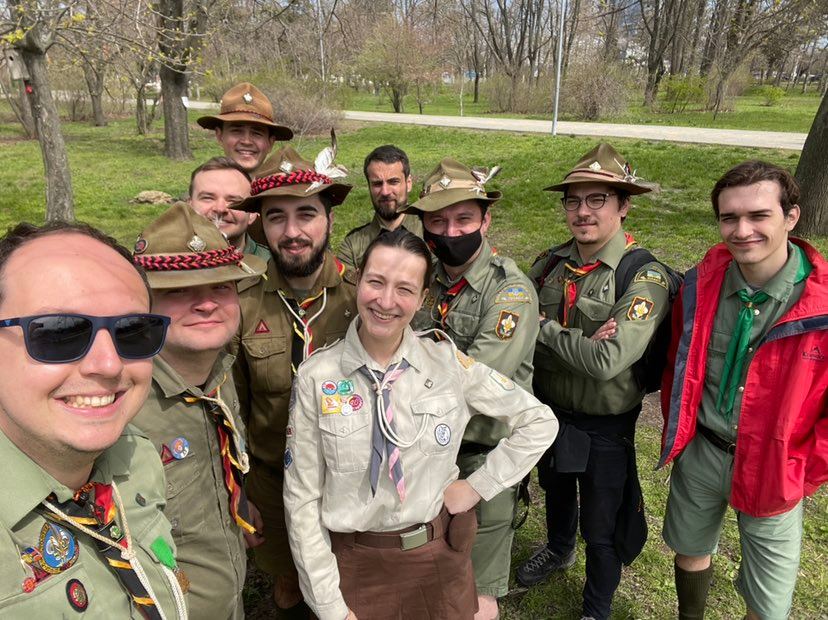
Tell us about your path to becoming a mentor in Plast. What was the most difficult part of that role?
The path wasn’t very long. All the girls from my group who had been with me for a long time eventually went to other cities or countries. I was the only one left in Ternopil.
And I just got so drawn into it. I liked being there, and I wanted to stay in that environment. Plus, I was very grateful for what it had given me, so when I became an adult myself, I wanted to give something back.
I was worried that I wouldn’t be able to handle it. When you’re in a group before the age of 18, you can take on different roles, and I felt that I was pretty good at many of them. But I thought that a leadership position specifically wasn’t for me, and I was afraid that I would have the same problem with my own group.
But my curiosity has always been stronger than fear — it’s a trait I’m grateful for. Sometimes I’m scared, but I’m also curious, and curiosity always wins.
So, when I turned 18, I completed all the necessary training and recruited my own group. The hardest part was overcoming the fear that I wouldn’t be able to handle being a leader — managing children and taking responsibility for someone else. And, of course, recruiting a group in a small city like Ternopil in the 2000s, where this kind of activity was very unpopular, was also difficult.
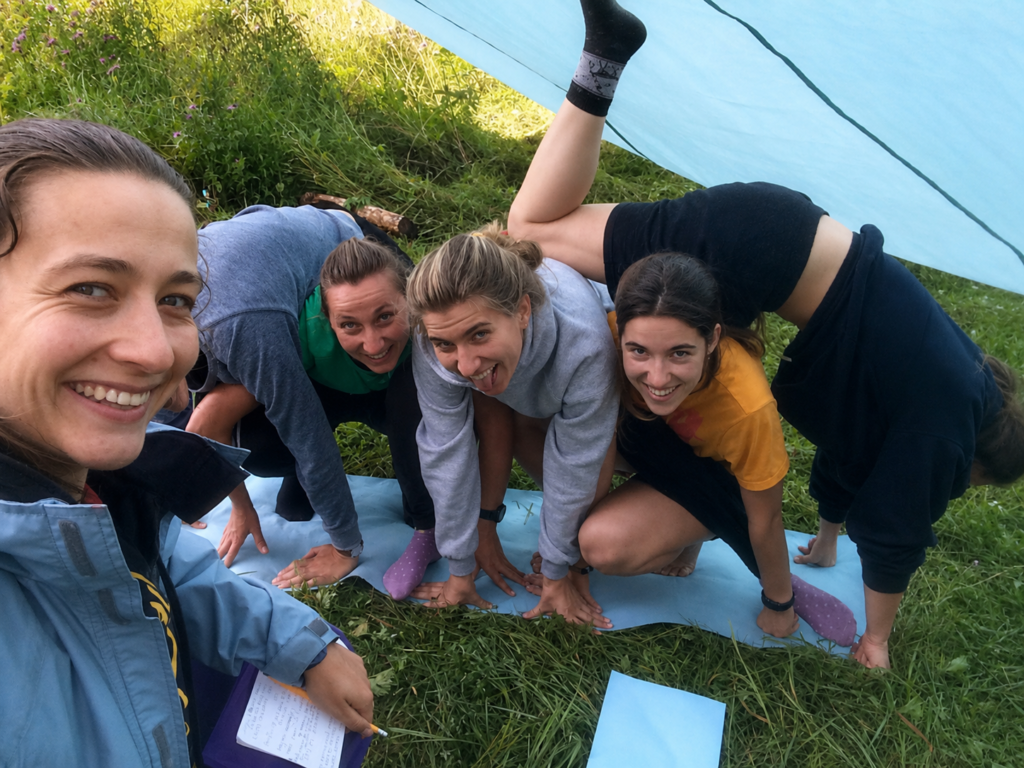
How did your parents feel about your involvement in Plast and your volunteering?
My parents were always pretty indifferent. They didn’t have time to raise my brother and me. In a way, they chose to give us a lot of trust and freedom — perhaps because we were both excellent students.
My parents have never judged me for volunteering in Plast, but they haven’t particularly supported it either. And I actually like that neutral attitude — I feel that there’s a certain respect for what I do in it.
How did your character and inner values change as you volunteered in Plast?
I was a very shy girl. I always felt like there was something I was lacking. Even though I was an excellent student, we were raised in a way where being an excellent student was simply the minimum, the standard — not something to be proud of.
In Plast, I found myself in a non-judgmental environment where you weren’t judged based on your results. For a long time, I couldn’t believe that such a thing was possible.
Once I finally believed it, I relaxed a lot and changed. I opened up and became more confident in myself.
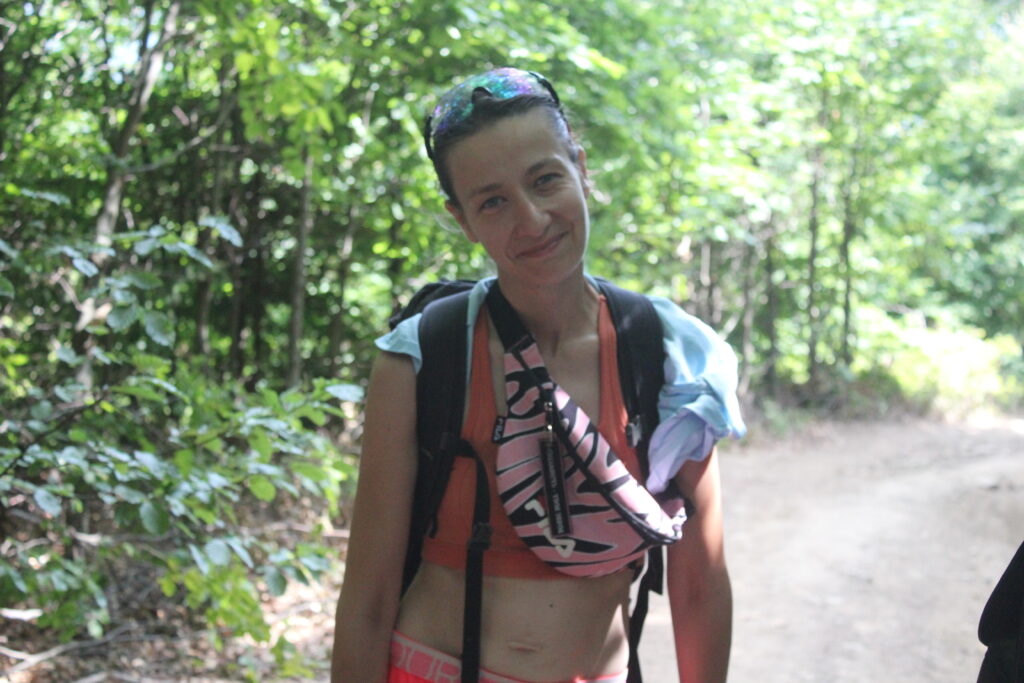
What volunteer projects outside Plast have you taken part in?
Sports volunteering, planting trees, clean-ups, helping animal shelters, working with veterans — a bit of everything. It’s easier to say where I haven’t volunteered than where I have. And it’s fun because there’s always some kind of community, with great people who volunteer.
What have been your most unusual volunteer experiences?
That’s a difficult question, because there have been so many that I’ve already gotten used to all of them.
But working with veterans is a little unusual for me, because I’m not a very empathetic person, and I find it difficult. They see the world somewhat differently from the way I do.
It feels strange to me because I’m usually very straightforward and direct, whereas with them you have to be a little more careful, because it could be traumatic for them.
For me, volunteering has always been about a certain atmosphere that you become part of, because you’re surrounded by people whose values are close to your own.
The interview continues in the second part of the article.
Translator: Ivan Chepaykin


