The beginning of the story is in the first part of the article.
How has your understanding of responsibility, mutual support, and human resilience changed over the years of the war? What events or experiences have influenced this the most?
At the beginning, things were simpler for me: I saw that I could help, so I helped. Now I understand responsibility a little differently. It’s no longer just about showing up and getting involved. It means taking responsibility for a specific task and seeing it through to the end, rather than giving up halfway.
I see this not only in my own experience. I have many friends and acquaintances who work for charitable foundations, volunteer on a regular basis, launch fundraisers, and coordinate projects. And I understand very well how much energy all of this takes when you’re doing it not for a week or a month, but for years.
I guess that’s what resilience means to me. It’s not some dramatic story about how you never get tired and are never afraid. Everyone gets tired. Everyone sometimes wants to step back and distance themselves. But then people still come back and continue working toward this shared cause.
The war has really heightened our sense of responsibility for one another. We’ve seen how much an ordinary person can actually do if they don’t think, “Well, what difference can I make?” I think the huge number of volunteer, charitable, and civic initiatives that have emerged over these years are really about exactly that.
In your opinion, what most distinguishes the Ukrainian volunteer movement from how it is perceived abroad? What do foreigners often fail to see or understand about it?
I travel quite a lot and talk to people from different countries. And, of course, it’s very noticeable how differently we experience this war. For us, volunteering stopped being something like, “I decided to do a good deed today” a long time ago. It’s part of the reality we live in. Our families, our friends, our acquaintances — they’re all here. Some people have loved ones serving in Ukraine’s Defense Forces, some have lost their homes, and others have lost family members. In one way or another, the war has affected almost everyone.
Someone abroad may know very well what is happening in Ukraine, support us, and follow the news. But if they don’t have a personal connection to Ukraine, they still don’t live with it every day. And I don’t think it’s right to blame anyone for that. We can’t experience every war and tragedy happening around the world with the same level of intensity every single day either.
At the same time, I’ve met many foreigners who do an incredible amount for Ukraine. They organize fundraisers, talk about Ukraine in their countries, work with the media, and create support communities. Ukrainians who now live abroad do the same: they raise money, collect humanitarian aid and supplies, and constantly remind people about Ukraine.
So I definitely wouldn’t divide it into “Ukrainians help, while foreigners don’t.” It’s simply that, for us, this is a matter of our own lives. For someone from another country, it’s a matter of solidarity and a conscious choice to support someone who is far away. And perhaps that’s exactly why that kind of support is so valuable to me as well.
How have the war and volunteering changed you as a person? What have you come to see differently about your own life over these years?
I’ve grown up. That’s probably the shortest answer again. Before the full-scale invasion, I was a student who was only beginning to figure out what I wanted to do. Over these years, I’ve developed a clear civic stance and gained a much deeper understanding of government and political processes, as well as crisis communications. And that has influenced not only my views, but also the way I see my profession now.
I’ve become much more responsible. It’s important to me not only to have my own position, but also not to be afraid to express it. It’s important to understand exactly how I can be useful and how I can use my professional skills not only in my work.
And my attitude toward my own capabilities has changed a lot too.
I used to think, “I’m just an ordinary young woman. How much responsibility can I really take on?” And then, at some point, you just go ahead and do it. You talk to people. You look for partners. You organize the process. You solve problems that come up along the way. And suddenly, you see that it all worked.
That really changes the way you see yourself. I realized that you don’t have to wait for the moment when you suddenly feel experienced enough, grown-up enough, or ready enough. That moment may never come at all. Sometimes, you become ready along the way.
Now I want to keep growing — professionally, in my civic engagement, and simply as a person. And to do what I can. Without thinking that someone else will necessarily do it instead of me.
Despite all the difficulties and challenges, what gives you the most hope today? What allows you to look to the future with confidence?
People give me the most hope. The way so many Ukrainians, despite exhaustion, loss, and years of war, continue to work, help others, create new projects, support one another, and simply keep building their lives. I can’t say that I look to the future without any fear at all. I don’t think that would be entirely honest right now. We don’t know when the war will end or what else we may have to go through.
But at the same time, I see so many people around me who refuse to put their lives on hold. They study, take on new projects, start families, volunteer, and develop their cities and communities. And to me, that is a very powerful sign.
Over these years, I’ve seen just how much Ukrainians are capable of doing together. Not because things are easy for us or because we never get tired, but because even in difficult moments, there are always people who ask, “Okay, what can we do right now?”
I think that’s what keeps me from becoming a pessimist. I really want the war to end as soon as possible so that we can finally plan for the future instead of living from one air-raid alert to the next. But I also believe that after everything we have been through, we will be able to rebuild the country, develop it, and create a normal life here.
I want to be part of that future. And I guess that’s what hope means to me — knowing that we have a future and that, in many ways, we are already shaping it ourselves.
If you could address the people in Ukraine and abroad who will read your story, what would you like to tell them?
I would probably say first and foremost: get involved. Volunteer, contribute to fundraisers, support initiatives that resonate with you. But at the same time, make sure you know who you are entrusting with your money, time, and support. Unfortunately, even in times like these, that remains important.
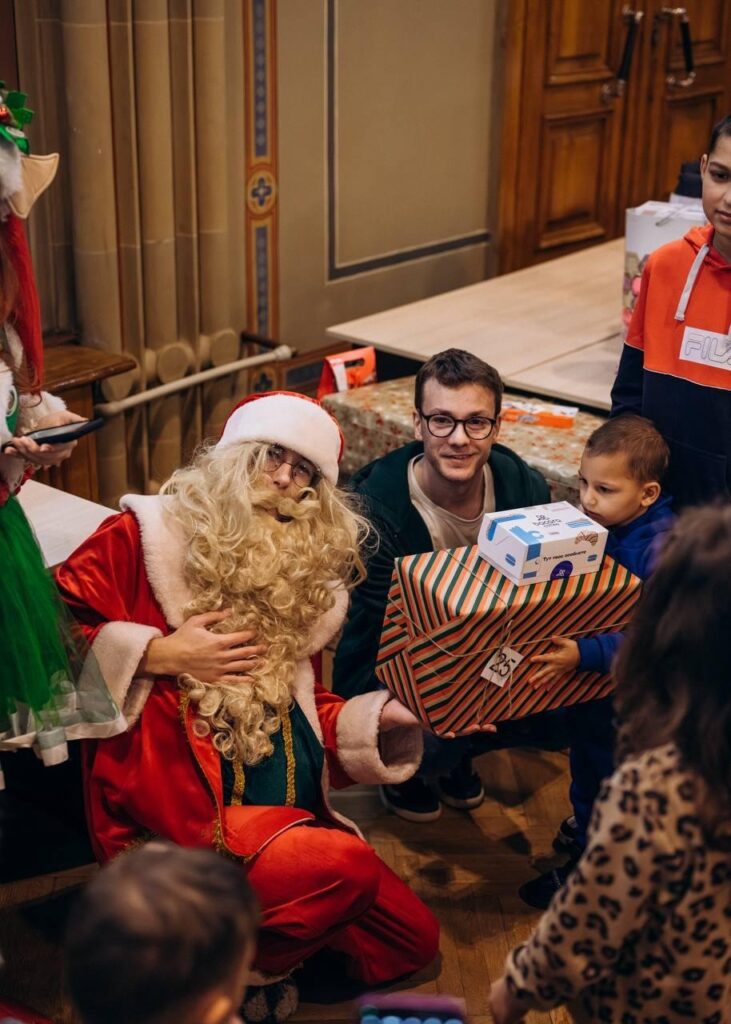
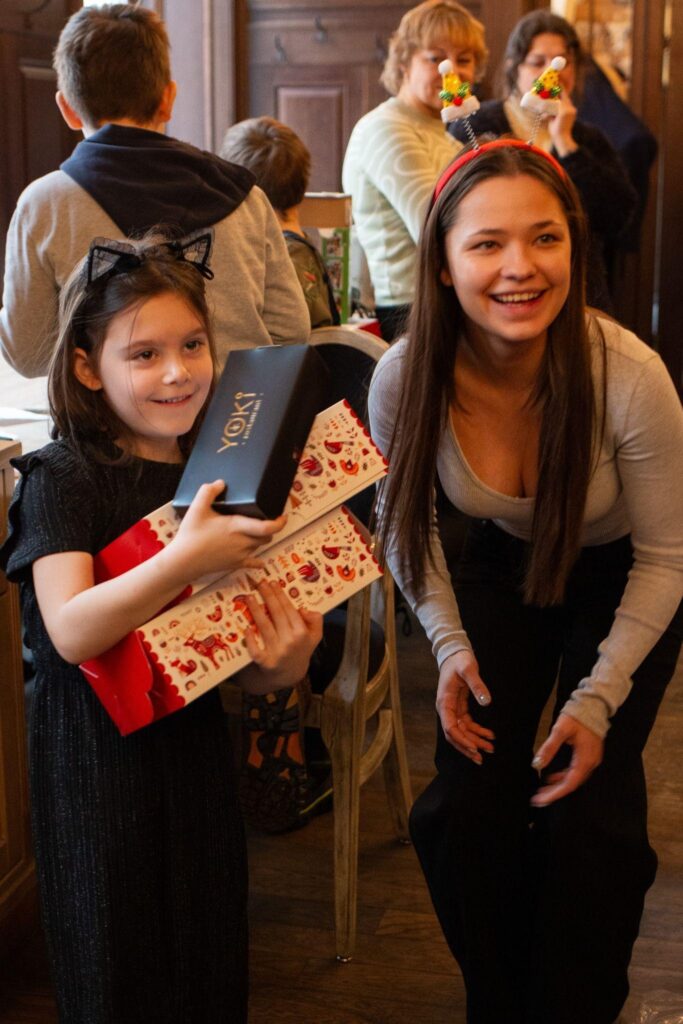
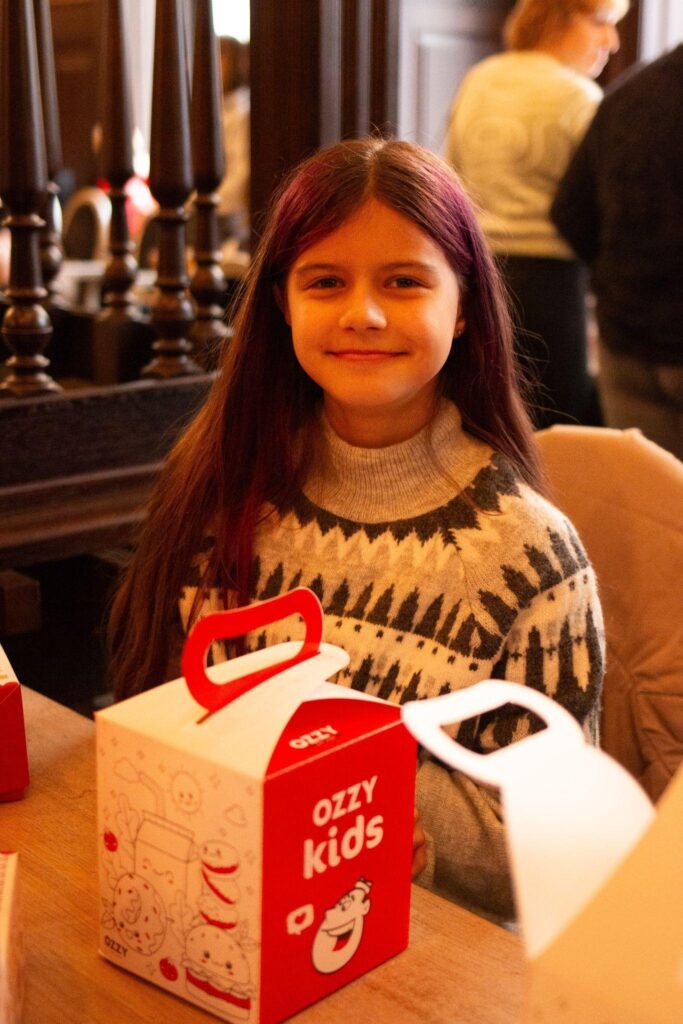
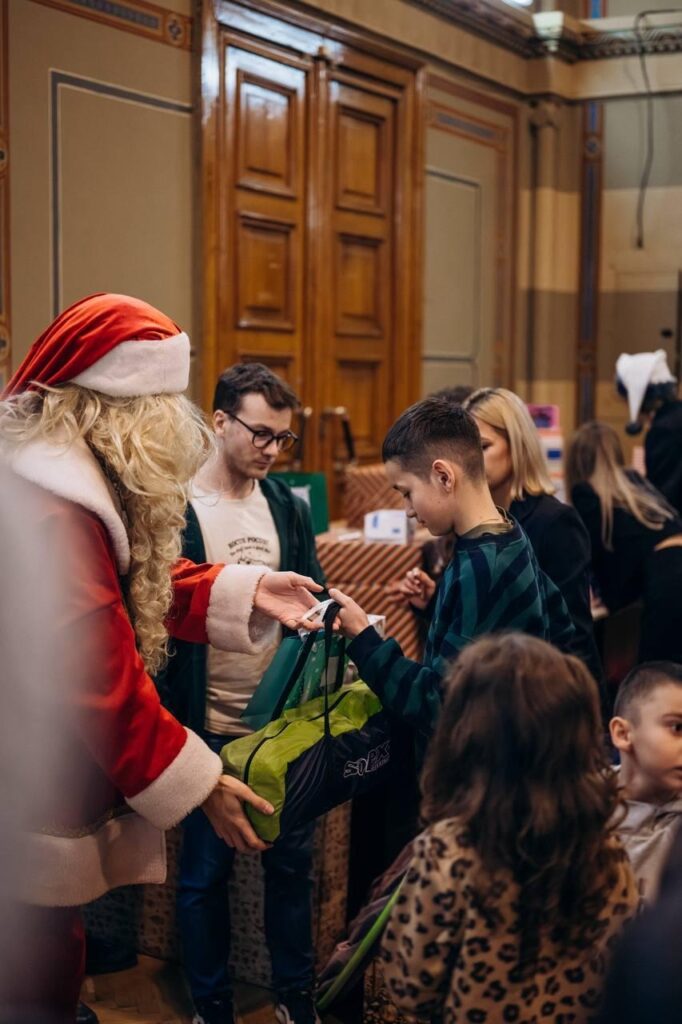
And, of course, I want to invite people to get involved with our “Sviatkuyu” initiative. We created it for children who have lost their parents in the war. These families often need not only emotional support, but very practical help as well. I really want these children to still have a childhood, despite everything. I want this initiative to include holidays, presents, joy, and something good to look forward to. For many of us, these are ordinary things we don’t even think about. But for them, they can mean so much today.
And to people outside Ukraine, I simply want to say: “Thank you!” For continuing to talk about Ukraine, share information, support our projects, and remind others that this war is still going on.
Even if you are far away, your support matters. Sometimes it’s a donation, sometimes it’s sharing, talking to your friends, or posting on social media. The important thing is not to stop paying attention to Ukraine and the people who live here.
Translator: Ivan Chepaykin


