Could you tell us a little about yourself? What were you doing before the full-scale invasion began? We’d like to get to know you a little better.
Before the full-scale invasion, I was a student majoring in Marketing at Yuriy Fedkovych Chernivtsi National University. Alongside my studies, I was gradually developing my professional skills: learning the basics of marketing, working on my first projects, and doing a lot of self-study. While working, I was trying to figure out what I wanted to do next. Of course, I couldn’t have imagined just how profoundly the next few years would change both me and my life.
Do you remember the moment when you realized that you couldn’t stand by and had to help? What prompted you to make that decision? What were your first steps into volunteering?
I’ve always had a strong desire to help others. If I see that I can be useful, it’s hard for me to just walk away. At the beginning of the full-scale invasion, I was scared, just like everyone else. I was very young, and I didn’t have much life experience. I’m from Chernivtsi, and I was there on February 24.
In the first months, a huge number of people who had been forced to leave their homes arrived in the city. The difficult situation brought the local community together in a big way: volunteer centers and aid stations began appearing, people brought clothes and food, and helped in any way they could. My friends and I went wherever an extra pair of hands was needed. We sorted donations, packed aid — we did whatever was necessary at the time. That was my first experience of volunteering.
My first project was an initiative to collect humanitarian aid for the Kherson region following the destruction of the Kakhovka Hydroelectric Power Plant in June 2023. We managed to collect and deliver more than 800 kilograms of humanitarian aid to people affected by the disaster. I realized that often, you don’t have to wait for someone to come along, organize everything, and tell you what to do. Sometimes, if you see a problem, you simply need to start with what you can do yourself.
How have your responsibilities and areas of volunteering changed over time? What do you do as a volunteer today?
Volunteering is no longer something I do only occasionally or in response to a particular situation. If I see an initiative where my knowledge, contacts, or time could be useful, I try to get involved. I think what has changed most is my approach. In the beginning, things were often very straightforward: there was a clear need, and it had to be addressed quickly. Now I think much more about how to organize the process, who to involve, how to communicate it to people, and how to achieve the desired result.
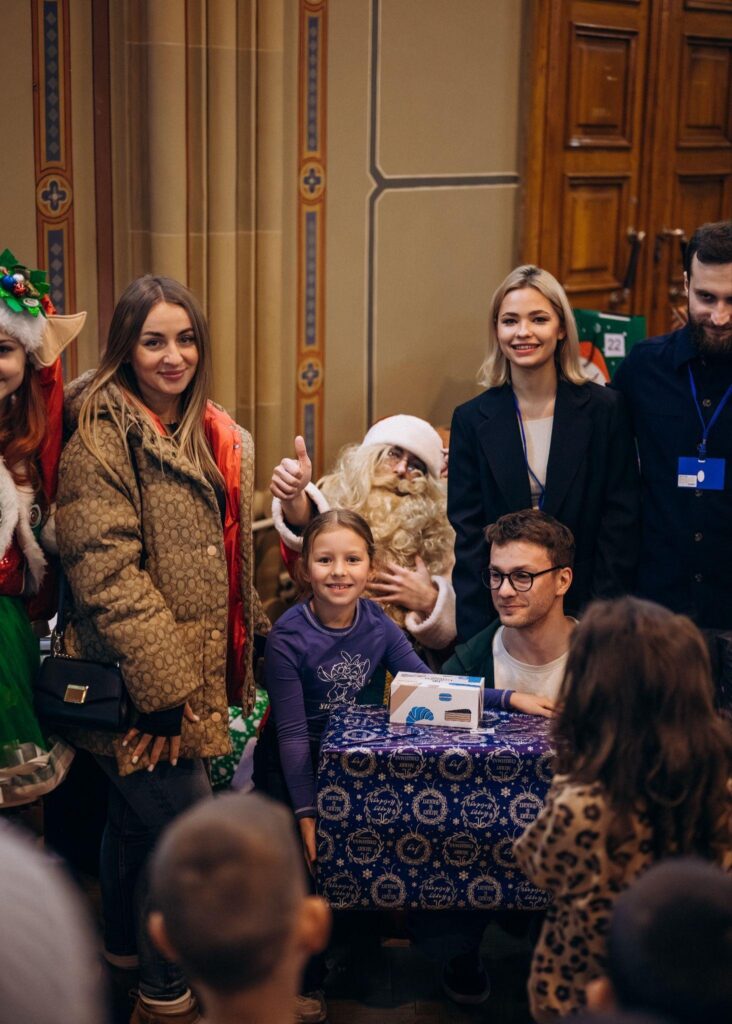
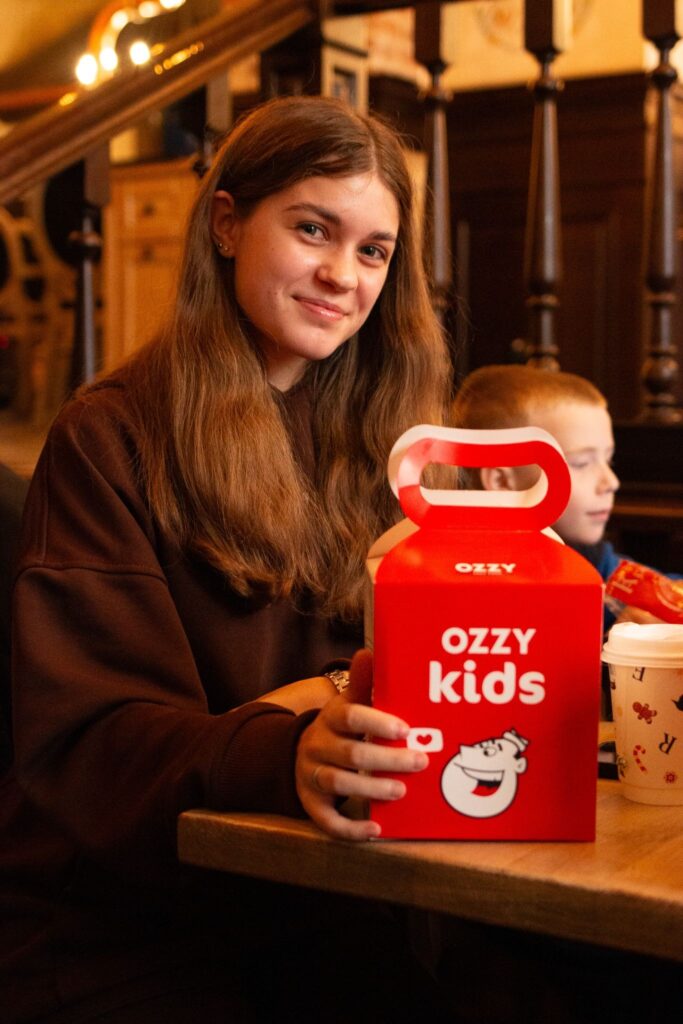
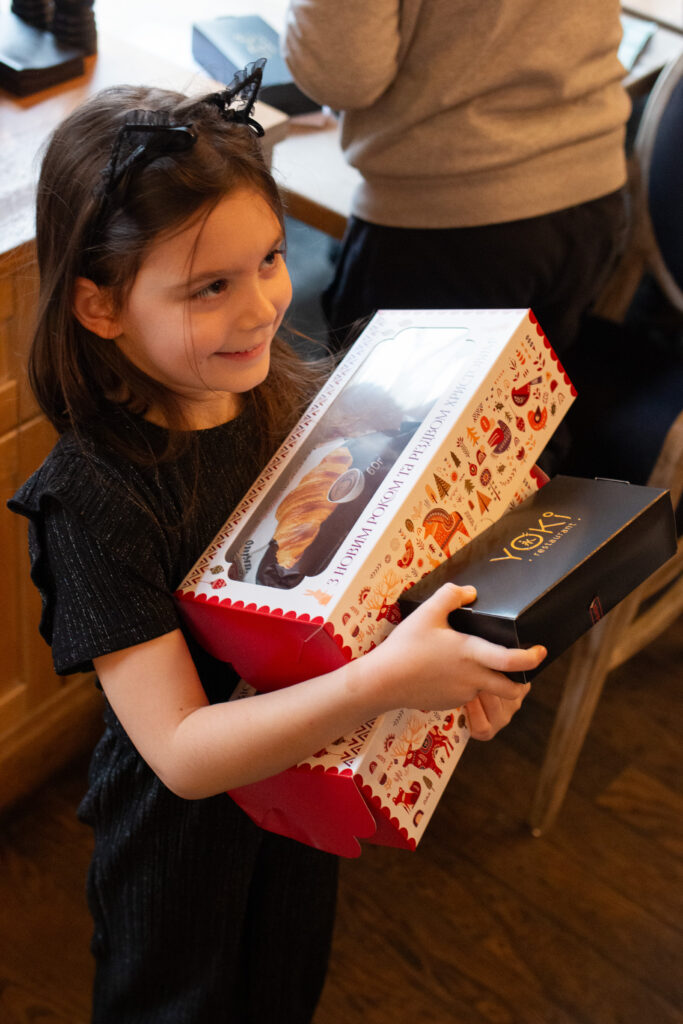
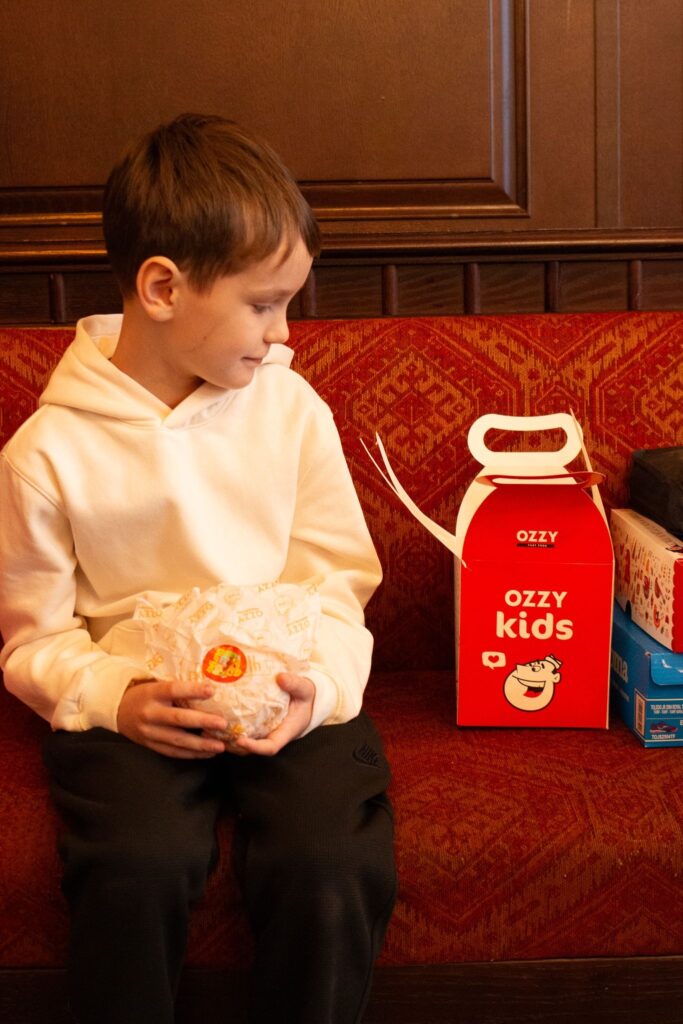
One of the biggest projects I’m currently involved in is the charitable Christmas initiative “Sviatkuyu”, which we launched for children affected by the war. As part of the project, we collected letters with children’s Christmas wishes and brought together partners, volunteers, and caring people who helped make those wishes come true. In particular, we organized a series of activities for children to create a festive atmosphere, as well as a space for communication and support. This is the second year in a row that we’ve been working on the project, and it is gradually growing. This year, we want to start preparing even earlier — already at the beginning of October — so that we can prepare more thoroughly, including by expanding our network of partners.
I like seeing the initiative grow and mature along with us. At first, you act largely on instinct, make mistakes, and come up with things as you go. But the following year, you already understand what could be done better, where the team needs to be expanded, where partnerships are needed, and where more work needs to be done on communication.

What are the biggest challenges you face in your volunteer work? What helps you overcome them and keep helping others?
Probably the hardest part is finding colleagues and partners who are willing not just to offer their support in words, but to help address a specific need. These days, simply saying, “We need help,” is no longer enough. There are so many fundraisers, initiatives, and requests around us, and every one of them matters. So you need to explain to your audience exactly what you are doing, who it will help, why it is needed right now, and what difference their contribution will actually make.
This is where my professional knowledge comes in. I work in communications and marketing, so I think not only about the need itself, but also about how to communicate it effectively. How to find words that won’t get lost among hundreds of other messages. How to choose a format that will capture people’s attention. How to explain a complicated story simply and honestly. And I’ve seen many times that when people truly understand why they are getting involved, everything moves much faster.
Was there a person or story from your volunteering experience that had a particularly strong impact on you? What made it so important to you?
There is one story I know I will remember for a long time. Last Christmas, in 2025, I spent the holiday away from my family for the first time. And family is very important to me. That day, I was in Pavlohrad. We were organizing a Christmas dinner for service members as part of a charitable initiative, together with a team from the Main Directorate of Intelligence of the Ministry of Defence of Ukraine. I was involved in the organization and coordination of the event, so we basically spent the entire day there.
To be honest, I was scared. At the time, I was living in Kyiv. You understand that there is a war in the country, you read the news, you hear the air-raid alerts. But when you travel closer to the east of the country, you experience it in a completely different way. I didn’t know what to expect.
At the same time, I really wanted to be there for Christmas. Many service members haven’t been able to spend Christmas at home with their families for years; they don’t get to see their loved ones. And I wanted to give them, even if only for one evening, that simple feeling: people remember you, you are not alone, and people back home care about you.
There was also kutia. I remember trying it myself — I think I even still have a video of it. And it was probably the best kutia I’ve ever had in my life.
After moments like that, some things no longer need to be explained to yourself. You simply understand very clearly why you keep doing this.
What helps you stay motivated and keep helping even during the most difficult moments?
People. I guess that’s the simplest answer. I especially feel this when it comes to projects like “Sviatkuyu,” which we organize for the children of veterans and fallen heroes. There are always so many messages, emotions, and reactions afterward — both from the people who helped us organize everything and from the families we did it for.
Sometimes it can feel like you’re completely exhausted, like you’ve put so much energy and time into something. And then you receive one message — and you realize: it was worth it. I guess those are the things that keep you going.
When you see not just numbers in a report, but a real person who, because of what you’ve done, feels at least a little better or happier, you find the strength to keep moving forward.
The interview continues in the second part of the article.


