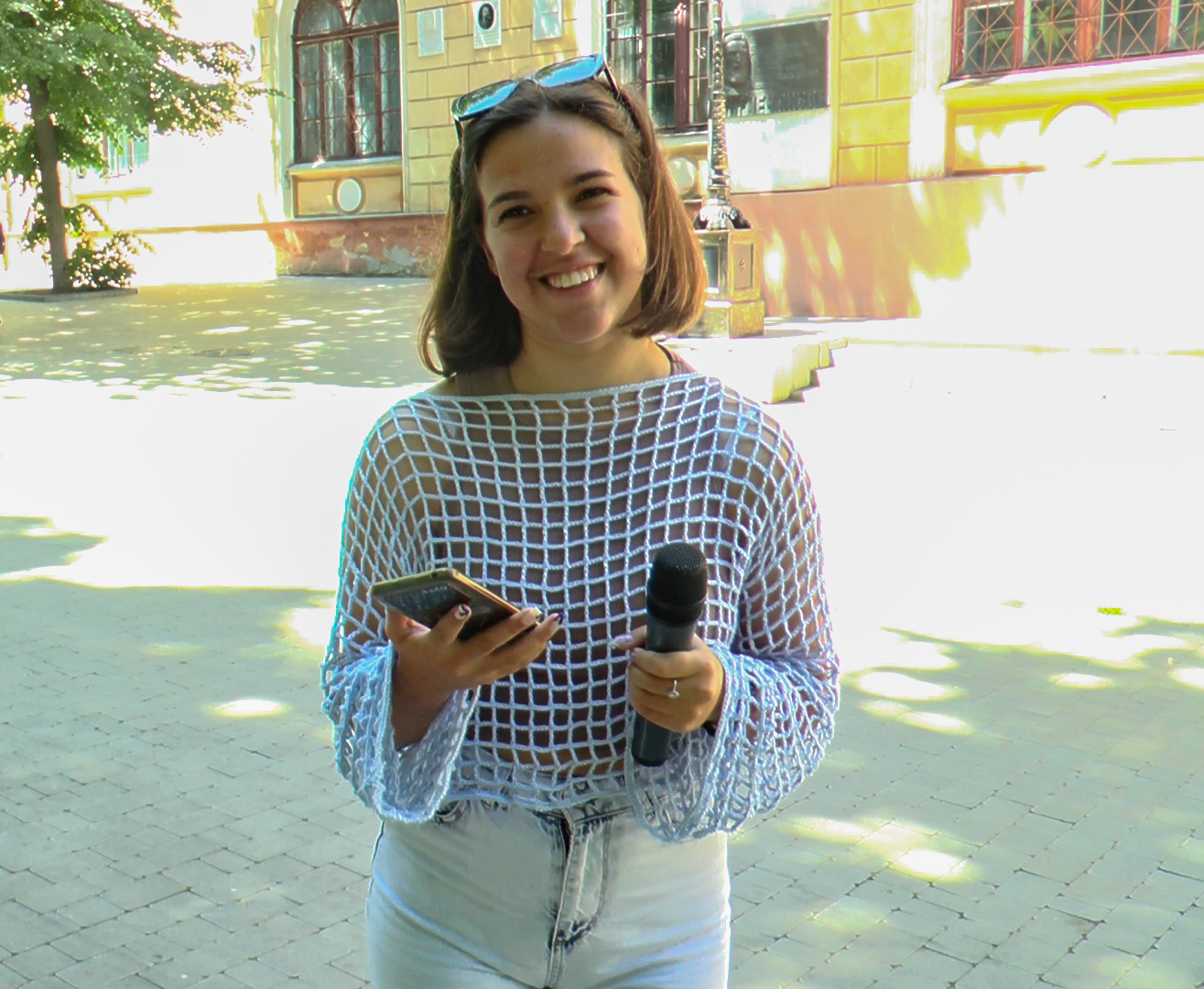
“Young people are our future” — this is the stereotype the protagonist of our interview, Liliia, is challenging, seeking to prove that young people are not only the future, but also the present. Her journey began with school student government, where she and her peers organised celebrations and helped teachers, even though adults did not always believe in her. Her work with young people did not end there. She went on to become involved in a youth council and later moved into analytical work, researching youth policy abroad and working with the National Ukrainian Youth Association union in Odesa. Today, she has extensive experience of working with young people, volunteering and organising events.
The war has touched every one of us (Ukrainians). We have all changed, and so has the structure of organizations. This piece explores the changes that have affected our protagonist, Marta Cheban, and her volunteer work since the beginning of the war: how the environment in which she grew up has changed; how conflicts and differences in views emerged within a large community; how demographic losses affected the very structure of the organization; how she personally rethought her role — trying a new form of volunteering after a break — and what her life looks like now.
For some, volunteering began with the war in 2014; for others, in 2022. But volunteering existed long before that — that is an undeniable fact. Few people, however, know what it looked like back then. Marta Cheban, who we spoke to, is a volunteer through and through. Volunteering has become a way of life for her — one she chose long before it became a widespread phenomenon. It all began in Ternopil, at a time when volunteering was neither fashionable nor popular, when very few people were willing to help others for free. Yet Marta not only got started — she kept going and continued to take action.


