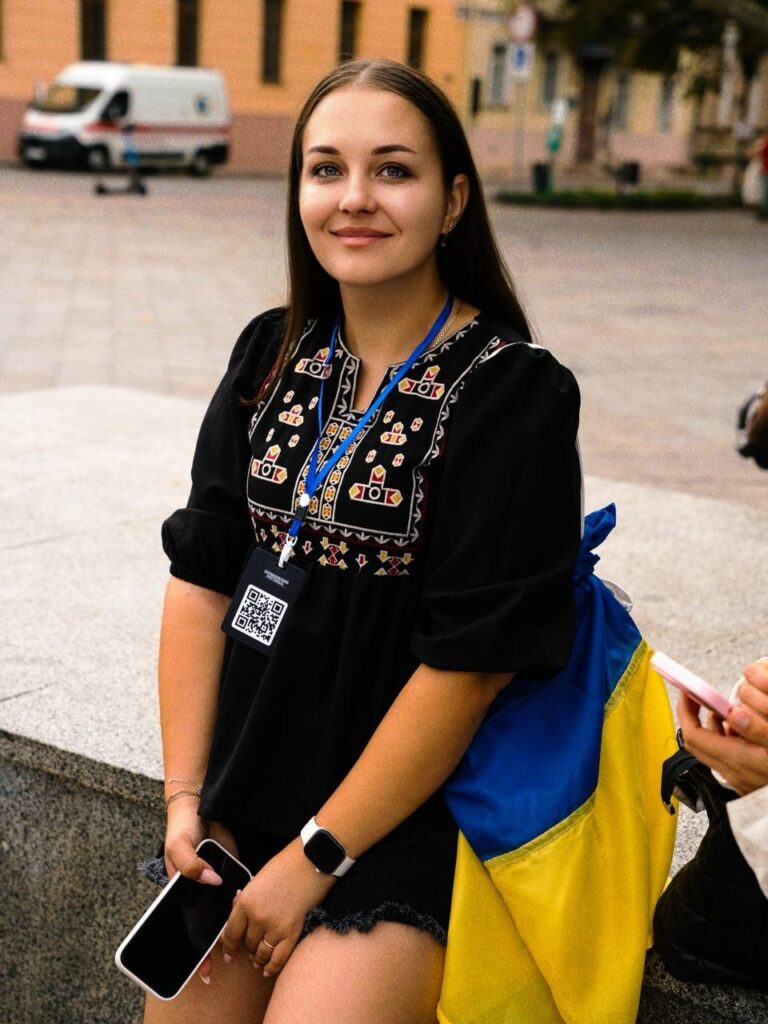
How did you get involved in school student government?
It was a long time ago, I graduated from school in 2013. There was an open call for anyone interested in joining. It was not particularly popular at our school, so we mainly organised celebrations and other events and helped out during lessons. I was an active person and thought I should get involved too. Our first initiative was two open lessons, one in biology and one in chemistry. By the way, that experience encouraged me to enrol in a programme to become a teacher of biology, chemistry and human health. I really enjoyed communicating with my peers and doing things together, and we were always praised for it. I liked the fact that people valued you and recognised that you were capable of doing things. We organised events regularly and travelled to youth training programmes, and that was when I began to realise that I wanted to connect my life with the civil society sector and youth education.
What challenges did you face at the school student government stage?
The hardest thing was that people had very little faith in us — just as young people and youth councils, school and student self-government bodies are often not taken seriously today. People say, “What do those teenagers know? What can they possibly do?” Back in my day, it was teachers who said these things. They did not believe that we could achieve anything. However, at the same time, we received tremendous support from our parents and peers.
What did your participation in school student government give you?
First and foremost, self-confidence. An understanding of who I want to be and what I want to do. A sense of unity, because I had a group of people with whom I spent a very long period of my life. And also my friends, who were always there to support me.
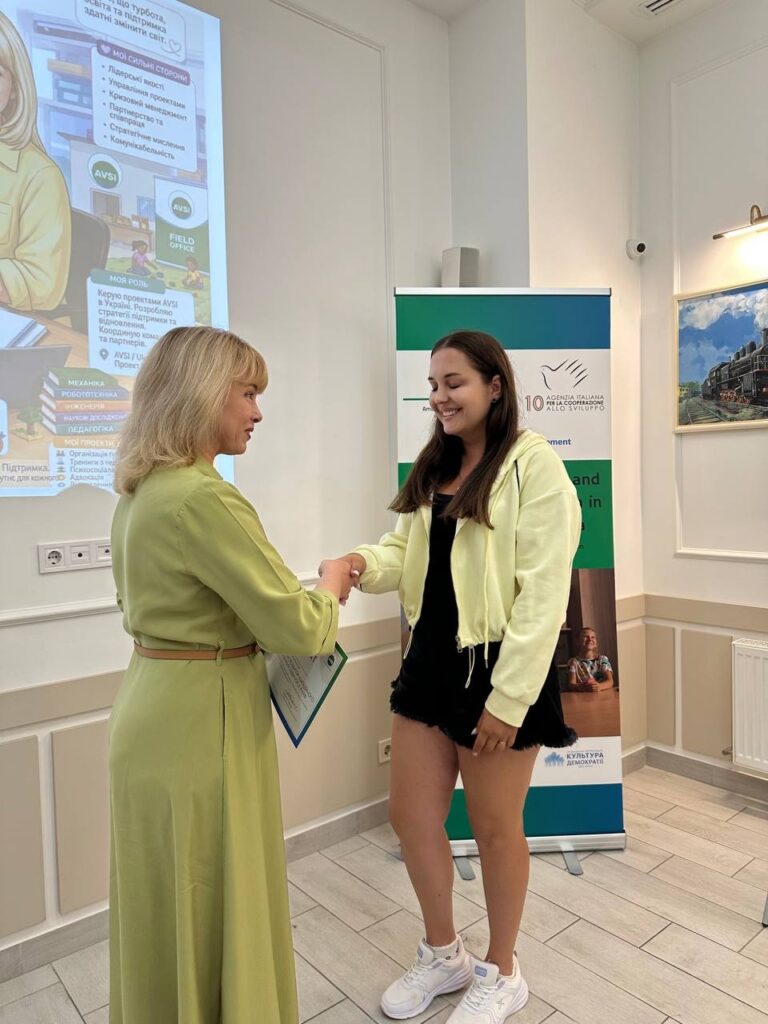
Why did you choose medicine and teaching?
Medicine because my whole family are medical professionals, and teaching because I wanted to share information with a wider audience — children and teenagers. These two fields are closely connected: chemistry, biology and human health, and medicine are essentially part of the same field.
What skills did your education give you that you use in your work with young people?
When I run training sessions, the most important thing for me is creating a safe space. For example, when organising a camp, I knew I was running an event for young people, but at the same time, I could also help from a medical perspective in case someone needed assistance and our nurse happened to be unavailable. So knowledge and practical experience are the main things my education has given me.
When did you realise that you wanted to work with young people?
Probably when I joined the youth council. I attended training sessions and conferences and watched trainers at work, how they delivered lectures, and thought, “I want to do that too!” You need to know how to engage an audience so that people understand that you really know your subject. Later, I became chair of the youth council and realised that I could take things further. The real turning point came when I joined the Odesa team of the National Ukrainian Youth Association Union (NUMO Union) and wrote analytical reports on the state of youth policy abroad. That was a decisive step — I had actually carried out this kind of research! — and it gave me the opportunity to continue developing professionally.
What is the most challenging part of working with young people for you?
There is probably nothing particularly difficult. The most important thing is having a great team. Without it, working can be genuinely challenging, but running a training session or organising an event is not an issue for me. I feel comfortable working with young people because we are on the same wavelength: I understand what I want and what they want. First of all, I ask them what they are interested in, and then we organise workshops, activities and everything else based on that.
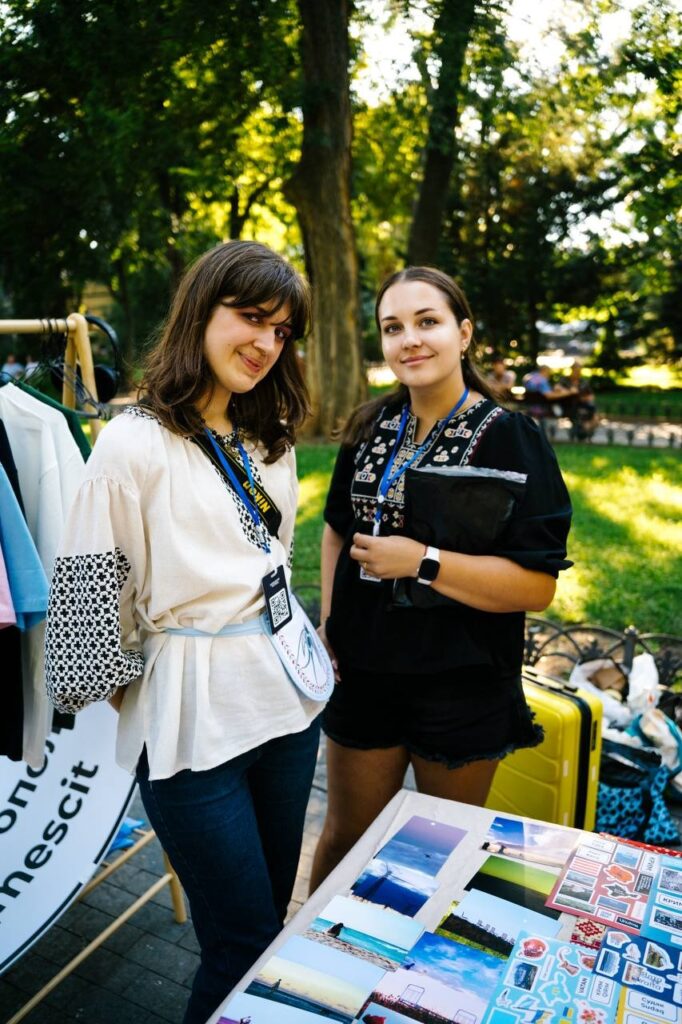
Tell us about your journey to becoming a member and later chair of the youth council.
At the time, I was still working as a nurse at a kindergarten. There was a call for young people to join the youth council, and I was invited to apply. I submitted my CV for that term, joined the council and realised that this was a place where we could genuinely make things happen and bring about change. We organised free competitions, sporting events, training sessions, all sorts of things. Later, I realised that I wanted to become chair of the youth council so that I would have more opportunities to make a difference.
What changed for you during your time at the youth council?
My outlook changed. I wanted to challenge the stereotype that young people are “our future”. Young people are our present as well as our future. I wanted to show the older generation that young people are ready and able to change the world, that they are more capable and interesting than they may seem, and that they can achieve a great deal even through simple projects for themselves and their communities. What I really wanted to convey was that young people can drive change and are ready to do so. They just need to be given the opportunity.
What made you decide to start doing analytical work?
I wanted something more, I wanted for it to become my job in the civil society sector. While looking through vacancies, I saw that the Odesa regional team of the National Ukrainian Youth Association Union was looking for an analyst, and I thought: “Why not give it a try?” At the time, I knew very little about the union, but I had attended one of their forums and seen the great research they were doing, and that was what attracted me. That very evening, after I sent my CV, they called me and invited me for an interview. Yurii Yuzych was there — someone I found particularly interesting, who had done a lot for youth policy, youth participation, and Plast at the national level. That is how I got the job.
One of my main tasks alongside exchanges, forums and camps, was to conduct research into the state of youth policy abroad: to select countries where youth policy was well developed and understand why young people there use youth centres, why every community has a youth council and how all of this works. I found it really interesting.
There were four of us from different regions, and when we shared the information we had gathered and realised that we could influence youth policy in Ukraine, it was incredibly motivating.
The information we gained through the analytical work helped us identify weaknesses in our youth organisations and subsequently introduce innovative approaches into their work.
Did you face any challenges while working on the research?
Yes, there were challenges. It was extremely difficult because everything was in a foreign language. At first, I thought we could rely on our existing contacts — Plast members who had moved abroad and had already settled there. But it turned out that they were working locally and did not have a reliable understanding of the bigger picture. I had to search for information myself and write to the heads of youth councils, civil society and scouting organisations. I found it interesting to establish contacts and speak to them directly. I wrote to and spoke with many people, and they told me what was happening in their countries and what their youth policy looked like. Of course, having a good command of English would have made everything much easier.
How did you get into organising events, and what made you really passionate about it?
It all started with the first free youth camp organised by the National Ukrainian Youth Association Union. After running it, I realised that I could do absolutely anything. When everything goes exactly according to plan, that is great, but when it does not, it is even more interesting. Sometimes the programme says the topic is “Youth Council”, but you see that the young people are not engaging with it, so you improvise on the spot, perhaps by running a simulation game. After the first camp, the participants asked me why I did not lead more sessions, and I thought: why not? I know how to do this. The young people themselves were asking me to run more sessions for them, and that was what motivated me to work as a trainer and youth worker and share information with young people.
Which event that you organised stands out most in your memory?
Probably the most recent camp. It was the most challenging because funding was limited, yet there was so much to do. That was when I realised that I could do anything. I managed to fundraise and secure a whole range of things, even though I had not known much about fundraising before. Being able to get everything we needed for the camp was a major sign to me that I really could do anything.
How did you get into sports volunteering?
It all started when a friend invited me to volunteer. When I came for the first time, I felt that these were my people. I don’t know why, but I immediately felt comfortable.
Then there was “Khvylya 2.0” with veterans. Another friend came with me and was surprised that I knew all these people. But I was actually meeting them for the first time — there is simply a community here where you feel completely comfortable.
After several sporting events, people started telling me that I was already experienced enough to have less experienced volunteers assigned to me. That was really inspiring, especially when working with veterans, hearing that I was approachable and that they felt comfortable around me. It has continued ever since: you come to a new event and someone says, “Hi, we remember you.” That is incredibly motivating. For me, it is about more than just an event. It is the community, the people — that is what matters most to me.
Which story from your entire journey has stuck with you the most?
There is one story that is both sad and funny. When the National Ukrainian Youth Association Union project ended, we realised that we would no longer be together in the same way as before. Yes, we had created a coalition, but we did not know how it would work going forward. That day, my colleagues Nastia, Marta and I (we had worked together for a whole year by then) simply sat there and cried because we thought we would not see each other anymore. But we really did not want to go our separate ways. We felt so comfortable together as a team of three that we looked for any opportunity to stay together. That is how the volunteer coalition came about — our little “baby”, which is still growing. Despite all the challenges, we continue to invest a lot of energy and effort in it, and the three of us are still together. This is a very meaningful moment for me: throughout this journey — the forums, camps and exchanges — there have been many times when things did not work out the way we wanted, but we have remained together. People — that is what I value most.
What would you say to people who are just starting their journey of working with young people?
Don’t be afraid. Learn. Reach out to people who are already doing this work, and try new things: write grant applications, develop projects. And definitely volunteer! It will give you much more than any individual project: people, opportunities and connections that will come in useful later. Take part in any training, online or offline, you can learn a lot from it, and it will encourage you to keep moving forward and doing new things.
Look for people who will support you and become your team.
Translator: Zoriana Karpenko


