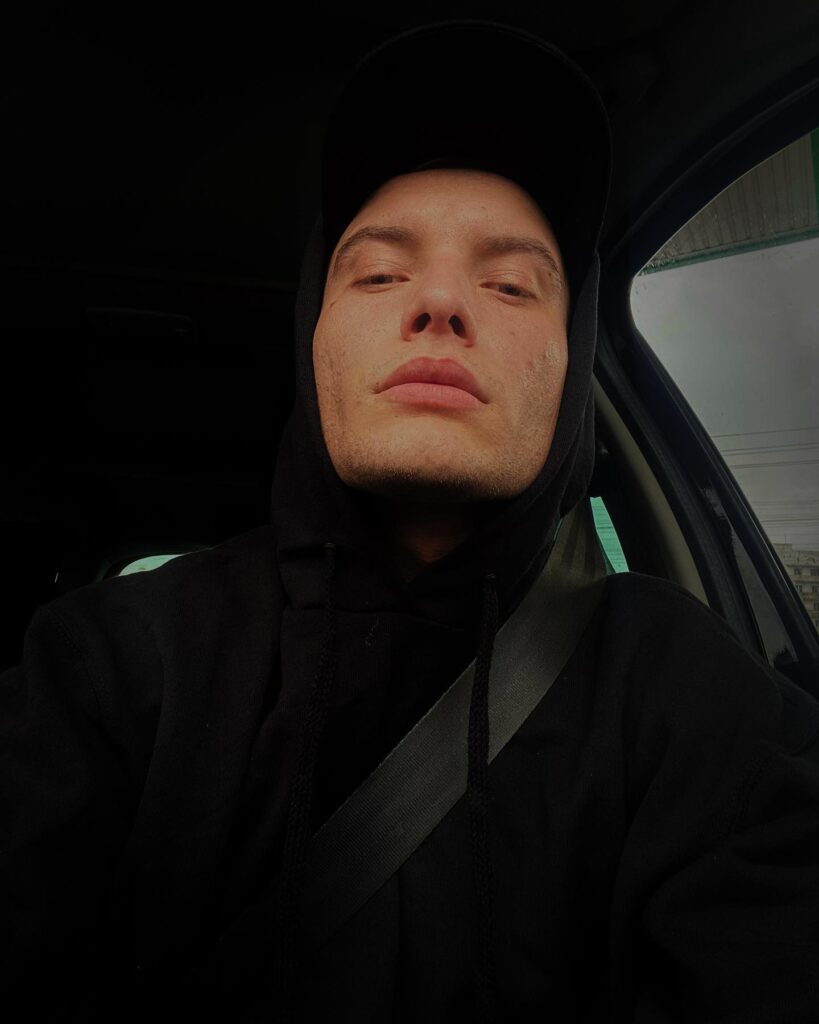
The draft notice for compulsory service came to him in October 2020, and he decided not to seek ways to avoid service; he knew he had to be there. “I passed the medical examination, and after 3 days, I was already on my way to the training center in Starychi, Lviv Oblast. After a month, I was sent to serve in Zhytomyr,” Vova recalls.
His term of service was supposed to end in April 2022, but after the start of the full-scale invasion, he realized he had to stay in the army. Vova remembers February 24, 2022: “The night before, I was on duty, so I was sleeping in the morning. Suddenly, I was woken up and told that something terrible was happening on the streets. I went out and saw missiles flying over me; one of them hit a nearby building. I managed to just crouch down. We were issued body armor, rifles… just yesterday, we were getting ready for demobilization, and today we don’t even know if we’ll survive,” Vova recounts.
The young man says that he misses his civilian life very much. Military personnel are entitled to a 30-day vacation. Recently, Vova had the opportunity to spend 2 happy weeks at home in Lviv. “These 15 days flew by like a moment,” the soldier shares. “I met up with everyone, had a good time, rested, oh! This time spent with loved ones really helped me recharge. Oh God, I really wish for at least one day off a week! But, unfortunately, that’s impossible in the army.”
For soldiers, it’s much harder to make plans for the future and dream about something when your whole life is consumed by war. “Today you’re here, and tomorrow you might not be,” Vova says with sadness. “Here, every day you could receive an order to go to the front or carry out any other challenging combat task, after which you don’t know if you’ll come back alive.” Despite this, he mentioned several important skills he acquired while in service. “I’ve become more disciplined, but I’ve also learned to display resilience when necessary,” Vova points out. “Additionally, now I can adapt to any way of life, like a cockroach. In the army, I read a lot when I have free time. It helps distract me.” The soldier states that now he holds onto the thought that Ukraine will soon win this war and it will be possible to return to a peaceful life.
He came out to his parents at the age of 16. His mother didn’t immediately accept his orientation. “She was in shock because I had experience dating girls, but I confessed that I actually like guys. She cried and went to my sisters.” They explained that I wouldn’t change who I am, and that the difference in my orientation doesn’t matter. Then my mother came back, and we talked again. Now it feels like she loves my partners more than she loves me,” Vova jokes. “My mother is someone I can trust absolutely everything with right now.”
Currently, Vova and his boyfriend are happy in their relationship, even though they are far apart. To maintain their long-distance love, the guy employs a few simple but important methods. “Every evening, we call each other and discuss everything that happened during the day. We share our fears, thoughts, and feelings with each other, and it really brings us closer! And also, I bought us the same books, so now we read them simultaneously and share our impressions. We tackle all problems together. I help and support him in everything, and he does the same for me.”
Vova mentions that he wouldn’t exactly call his relationships with his fellow soldiers friendly right now, but they communicate without hostility. “I’m not a confrontational person, but if someone infringes on the rights of the LGBTQ+ community, everyone should hide, because I will stand up to defend,” the guy says.
Vova’s fellow soldiers found out that he was gay during his young soldier training course at a training ground in the Lviv region. “I accidentally left my phone on with a conversation with my boyfriend. Someone peeked at it, and from then on, unpleasant jokes started behind my back,” the soldier shares. Obviously, such an attitude was unacceptable, so Vova went to his commander to talk about it. “The commander said he doesn’t care about my orientation because here, first and foremost, I’m a serviceman. They also explained to the guys who were making fun of me that they should stop their silly jokes. Since then, everything has been calm.”
Equalizing the rights of the LGBTQ+ community in Ukraine could be achieved through the “Civil Partnership” bill. However, it hasn’t been passed yet, citing the inability to make amendments to the law during a state of war. “I believe this law will be passed soon,” Vova confidently responds. “We just need to push for it. I know many LGBTQ+ soldiers who defend the country and want to have the same rights as all people in Ukraine. LGBTQ+ individuals are present in all professions. My boyfriend is a history teacher. There are also chefs, auto mechanics, lawyers, doctors… They are all regular people and want to feel like humans in a law-based state.”
The stamp in the passport is important for a serviceman. The guy says that apart from various legal matters, it’s crucial to understand that you are a family. “LGBT+ couples live together for 15 years, and then any conflict becomes a reason for break-up. But if their relationships were officially recognized, they would discuss everything again, because they are a family.”
Civil partnership isn’t marriage in the traditional sense. However, the law stipulates that couples have the right to share property, visit each other in the hospital, and take care of funeral arrangements in case of one partner’s death. Vova says that it’s too early to talk about legalizing marriages. “I think first let them accept this (civil partnerships). Let society see how it works, and then we can move forward and legalize same-sex marriages,” he explains. “Having the ability to legitimize one’s relationships is a basic need for every individual, but for soldiers, it’s especially crucial now.”
Vova shares a story about his friend, with whom he used to have a crush. The guy passed away. He was killed by a mine explosion. At that time, Vova thought about how circumstances might have played out if that had been his partner. “I wouldn’t even have been allowed to see him for the last time because I wouldn’t have been permitted,” the soldier says. “I wouldn’t have been able to bury him or even attend the funeral if his family had been against it. This still upsets me. Passing the bill would have been support for LGBTQ+ soldiers who die for a country in which they don’t even have basic rights.”
The guy is convinced that society is nearly ready to accept without negativity that regardless of one’s orientation, everyone must have basic rights. “My Lviv is a comfortable and accepting city. I walk around the center with my boyfriend, holding hands, and it has never caused a conflict. So, I believe society is ready. It’s just that our authorities need to gather courage and implement what should have been introduced a long, long time ago.”
Translator: Bohdana-Nikolietta Terekhina


