As part of the “Ukrainian youth is changing the world“ project, we tell the stories of achievements and proactive actions of young Ukrainians from different walks of life, with different education, beliefs, and lifestyles. They are journalists, volunteers, refugees, young soldiers, members of NGOs, founders of voluntary foundations and movements who are doing their best on various fronts to help our country win the fight against the Russian occupier. These are young people who in one way or another are improving this world, making positive and qualitative changes in the lives of the people around them. We are delighted that Sofia Meleshko, a volunteer and journalist, has answered the call to tell her story.
Sofia currently works as a volunteer and military interpreter for the NGO “Sabre“, which provides training and advice to the Ukrainian Armed Forces, the National Guard and the TR (Territorial defense forces). She is an internally displaced person, originally from Mariupol, who left the occupied territories at the outbreak of the war in eastern Ukraine and studied at the Yuriy Fedkovych Chernivtsi University. After 24 February 2022, she began to work actively as a volunteer in one of the Chernivtsi headquarters. In the past, she also worked as a journalist and presenter at the regional publication “C4 — Hot News Media (Chernivtsi)“.
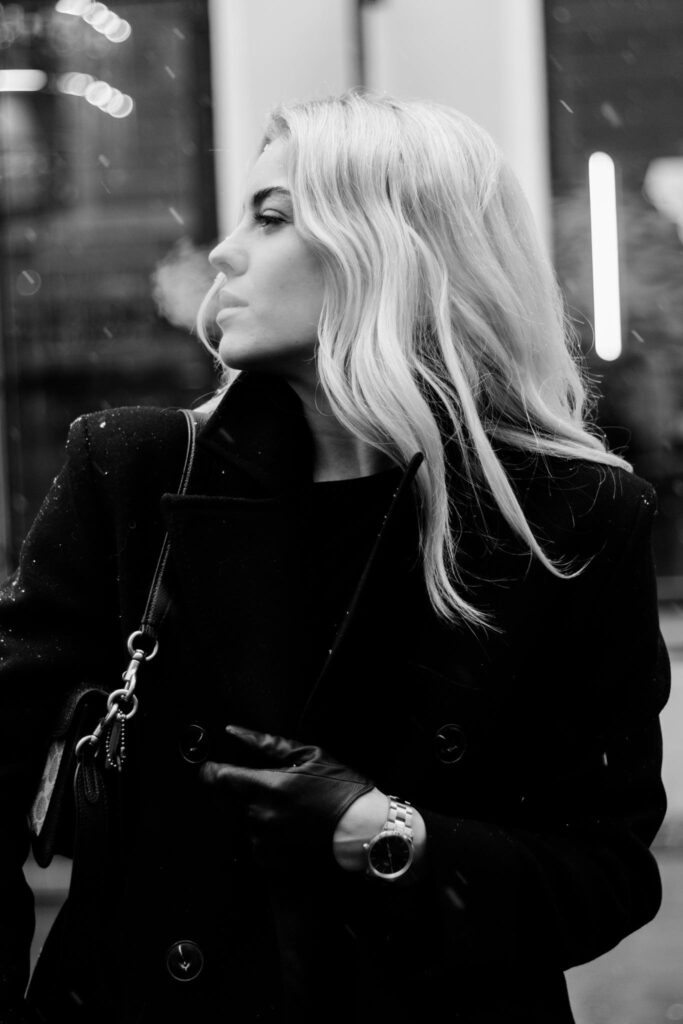
Of course, for each of us, life was divided into before and after when we all woke up to the sound of explosions on 24 February 2022. Could you go back in time and describe for us where you were that day, what thoughts and emotions were going through your mind?
This might sound crazy to most people, but at first I thought: “Finally everyone is going to feel what I have been feeling all this time”. I think the IDPs from the 2014 will understand me, because nobody paid attention to us. For most Ukrainians, the war began on 24 February, and it was only then that society began to talk about the problems of IDPs and post-traumatic stress disorder among civilians and the military. At that time, few people knew or cared about what was happening in Donetsk and Luhansk oblasts, including the authorities.
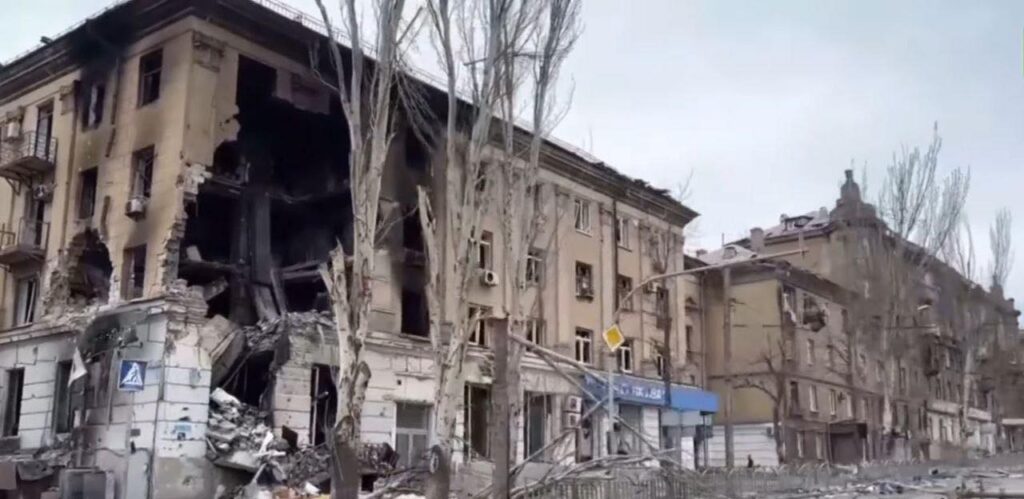
The hardest thing, as it turned out, was surviving the loss of our home. Everything my family had worked so hard for over the years was destroyed. My apartment, my grandmother’s apartment, my parents’ house, my grandfather’s house — nothing was left. I don’t want anyone to feel what I felt when my neighbours sent me a photo of a completely bombed and burnt apartment.
What did you do in the first days, weeks, months of the full invasion? Please describe your activities during this period, what organisations you joined, what activities you took part in?
In the first two days, my family and I decided what we were going to do. When we agreed that we couldn’t see ourselves anywhere but in Ukraine, I joined the Ukraine Volunteer Defence Headquarters in Chernivtsi. In those days, there was a lot of work to do, and we often returned home after curfew with other volunteers. At that time, the headquarters had many areas of focus: we helped displaced people in the city, sent humanitarian aid by truck to the east, and organised military training.
I know that you have been actively involved in volunteer work for a long time, raising funds to help our military, and even sending them yourself. Can you tell us a little bit about when you actually started this work and how it happened?
My mother taught me how to volunteer. We started at the age of 13-14. The volume was much smaller then, of course, but our whole house was covered with nets and chimeras that my mother and I wove. I remember cutting New Year’s salads on 31 December and taking them to the military, and there were meetings. After the full-scale invasion began, my first personal collection was for a thermal imaging scope for Aidar. Then, very quickly, in less than a month, we collected 174,000 UAH. Later, I collected and delivered a Pvs-7 (night vision device) to the Marines of the 501st separate battalion, whom I met by chance in the Donetsk region. Two weeks ago, Kostya, the soldier for whom the collection was intended, was killed.
Please tell us about your trip to Kherson after its liberation from the russians. What impressed and touched you the most, perhaps a meeting with someone (I saw your Facebook post on this subject) or what?
The city and the region is still under terrible bombardment, as we all know, and there are casualties almost every day, a huge number of wounded and dead since the beginning of the full-scale invasion, but the fact remains that our military was able to enter the city in November 2022 and regain control of the city authorities, and this was perceived both here and in the West as a symbol of a great victory and an important liberation.
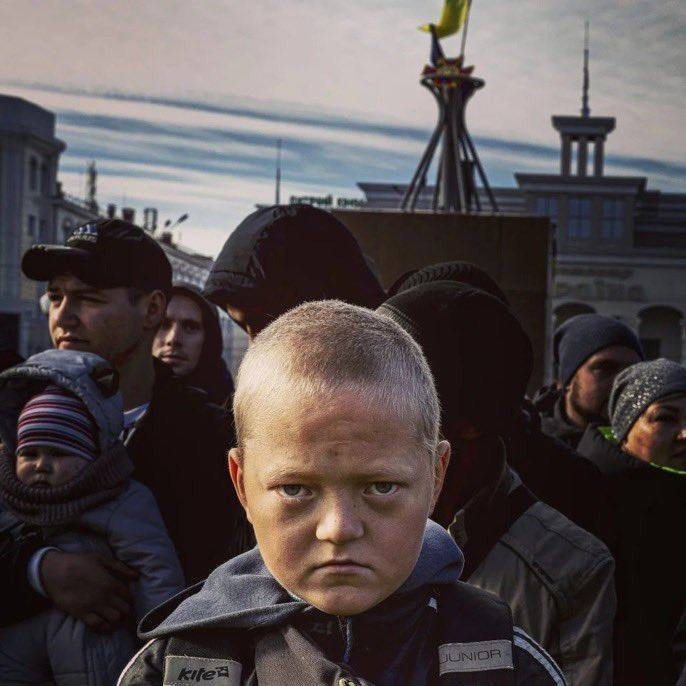
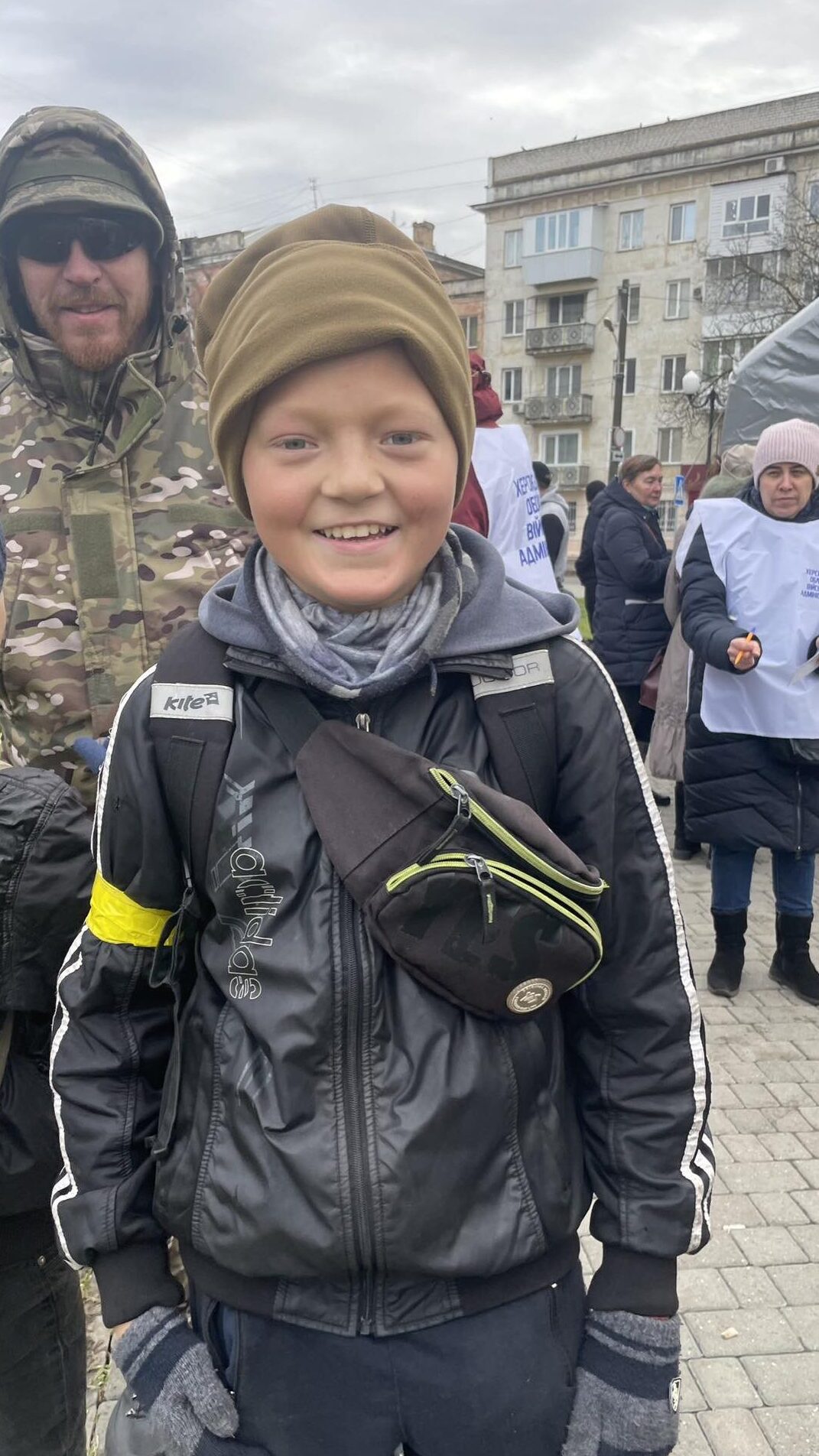
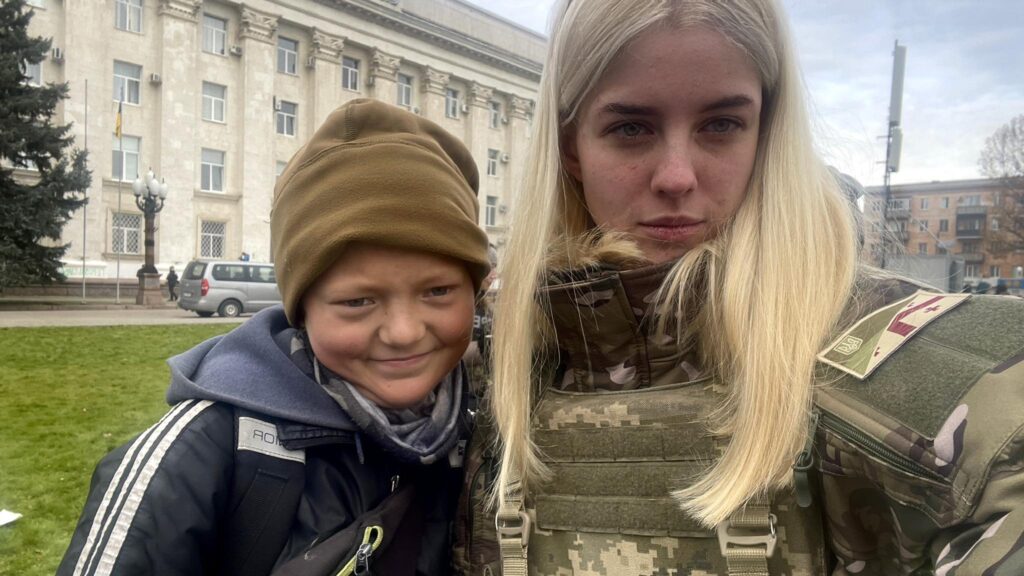
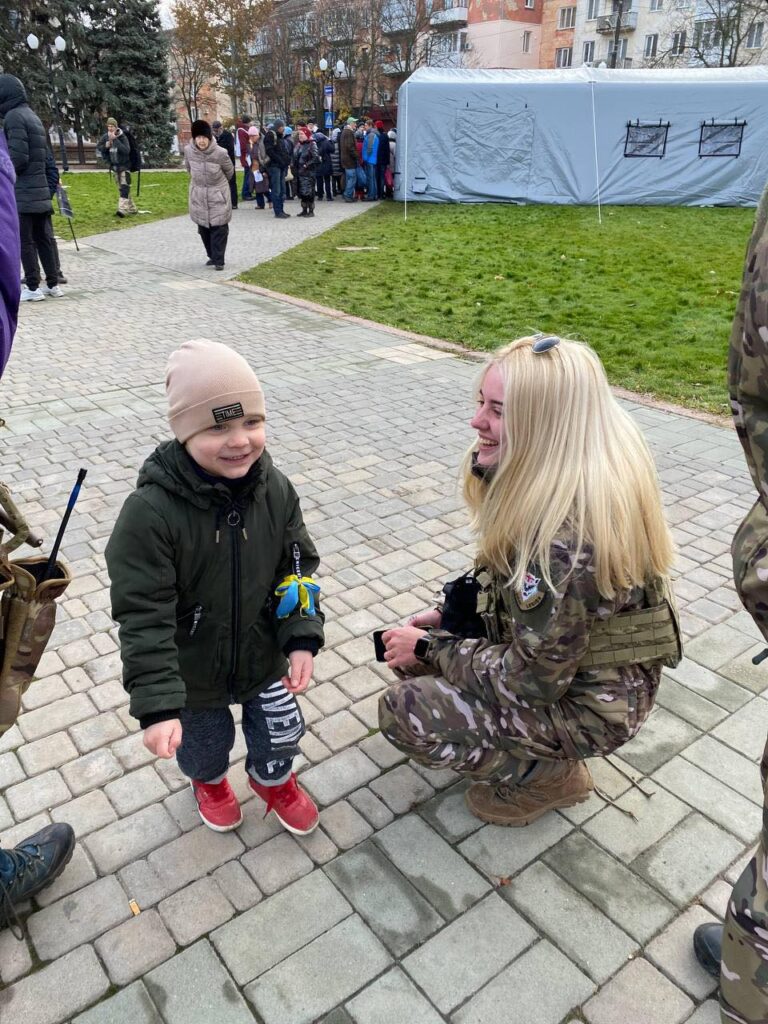
It was an incredibly difficult and emotionally intense trip. I was working with the Georgian Legion at the time, and we decided to go as soon as we heard about the liberation of Kherson. I contacted the local Red Cross, got the list of essentials, packed up and went. As well as providing humanitarian aid, we were also planning to evacuate civilians, so we travelled in a large passenger bus. About 17 people went with us. We were struck by the number of people who had been beaten and mutilated. Later, in the Kherson Regional Military Administration, I was told that many had been tortured. Unlike in Donbass and its frontline towns, where everyone is already used to what is happening, the people of Kherson were very surprised, to say the least. “While we were gathering people for evacuation in the central square of the city, people came up to us and just talked, talked, talked. Someone complained, shared the horrors of life under occupation, someone came to hug us. There was a wonderful boy, Hlib, whose photo went around the world, who came up to us to ask for chevrons. In that square, the grief of loss was mixed with the joy of liberation, and this impossible mixture of emotions was almost physically palpable.
Let’s move on to the present.
What work do you devote most of your time to these days? I understand very well that you are a very busy person and that you have a lot going on in your life, but what is the priority for you that you try to get done first thing each day? In particular, you said that you are a volunteer and military interpreter with the NGO “Sabre“. What exactly does that mean, could you describe it in a few words, i.e. do you work with foreign soldiers who have joined the ranks of the Ukrainian Armed Forces?
Today I am a military interpreter with the NGO “Sabre”. This organisation is very young, just over a year old, but in that time we have managed to achieve good results. Most of the participants are foreign military personnel, let’s say enthusiasts with different skills, who have come to Ukraine to share their experience with our military. “Sabre” provides training and consultancy services, as well as professional military training for various units of the Armed Forces, National Guard, National Police and Border Guard.
Please tell us about “C4 — Hot News Media (Chernivtsi)“, where you worked as a journalist and presenter. How do you remember your experience of working in the media, which interviews did you like the most and which ones stick in your memory? Perhaps you still come back to some words of your interviewees from time to time, or maybe you still communicate with some of them.
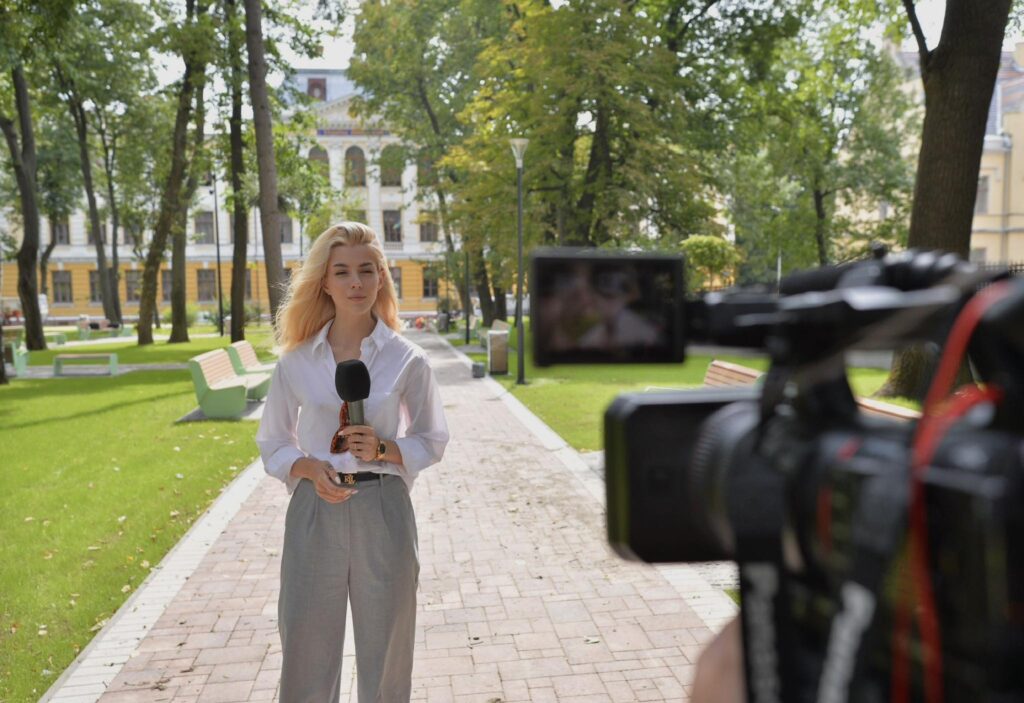
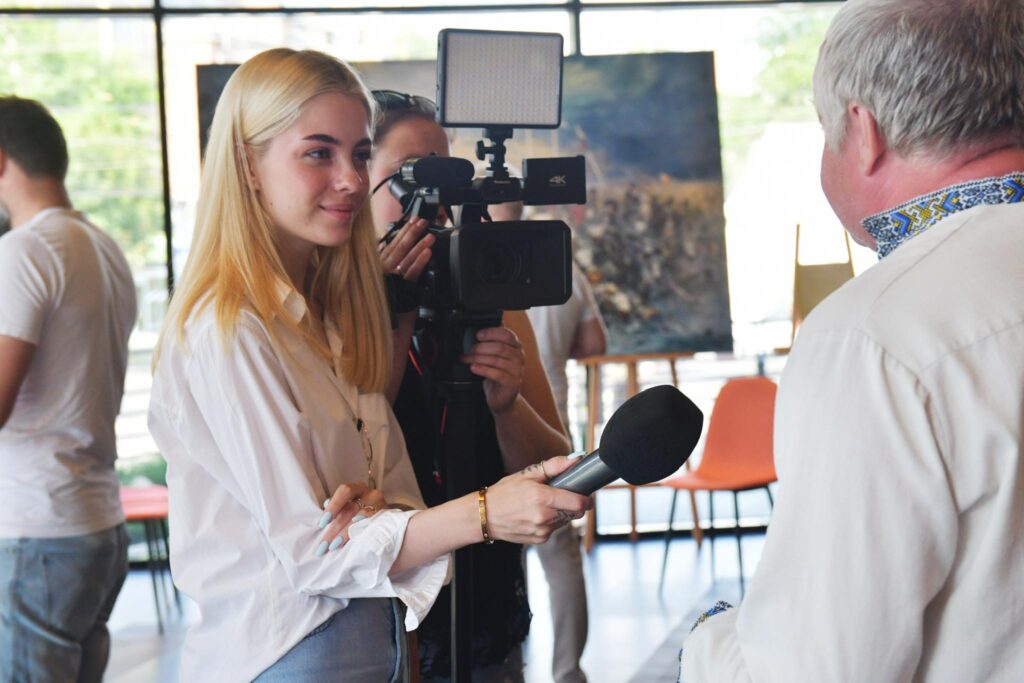
Of all my experiences, working at C4 was probably the most enjoyable. I can say this from the bottom of my heart, it was a great team and I still keep in touch with some of my colleagues. The most memorable project was the last one before I left: the management offered me to do my own show. We decided it would be a series of interviews with the military from Chernivtsi and the Chernivtsi region. Maybe it was a bit awkward, because it was my first experience with such programmes, but I felt in my element. Today, to be honest, I’m looking for a way to return to journalism without leaving my current job, so I regularly work as a fixer for foreign journalists (fixer — a person who fixes or mends something. Today, fixers are helping foreign journalists covering the war in Ukraine by finding stories, people to talk to and settling domestic problems — ed.). I miss my job very much, and it will soon be a year since I started working as a military interpreter for free, which has obviously hit the budget hard.
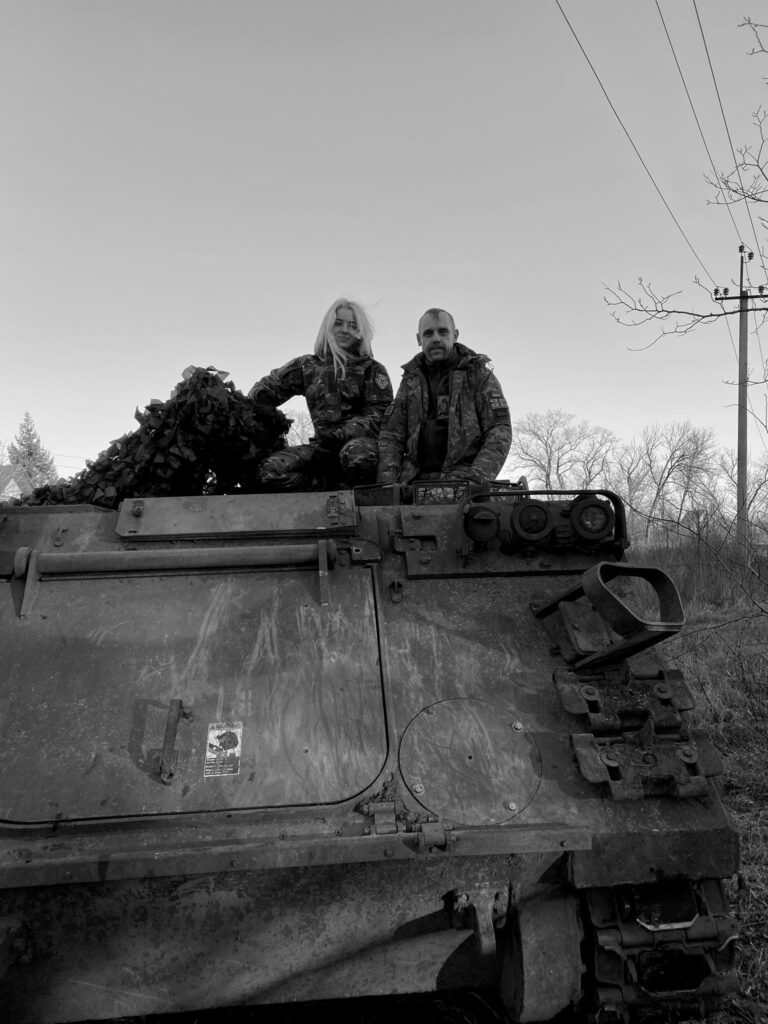
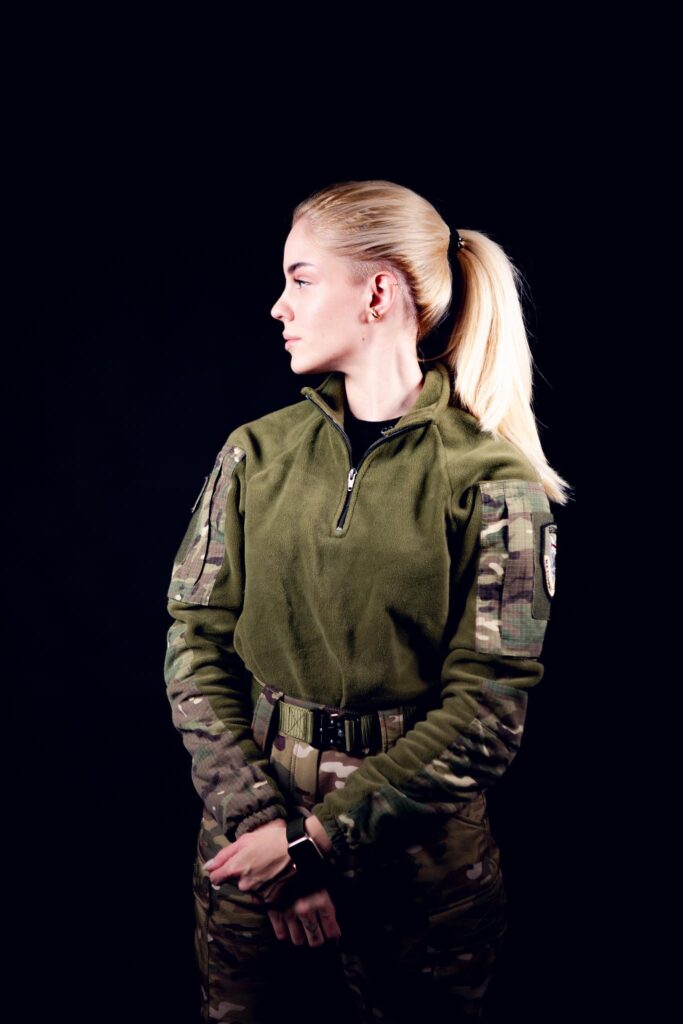
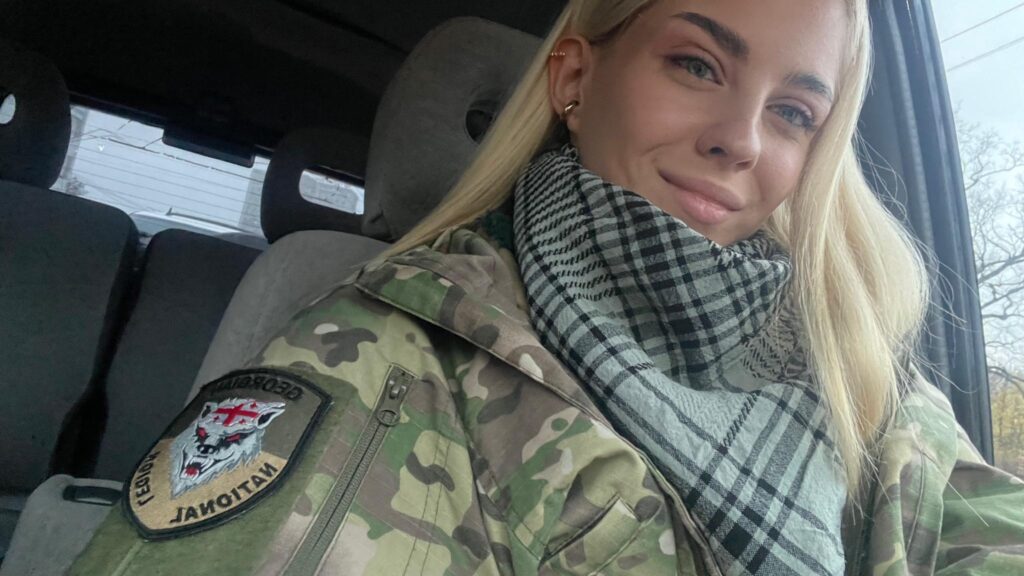
After receiving training from the Right Sector, the focus of my activities shifted — I felt uncomfortable, I realised how little I was doing, so after being offered a job with the Georgian Legion, I decided to move to Kyiv.
What is your biggest dream, what would you like to see come true during your time on this earth?
I don’t want to answer pathetically that I want peace, that’s obvious. To be honest? I dream of owning my own home. Probably not for me first, but for my mother. I want to know that there is a warm, cosy place in this world where I am always welcome and loved. For the last ten years, we have been living in rented flats because everything my family had, everything we had worked so hard for, has been destroyed, and even its remains are under occupation.
In general, of course, I dream of a free and strong Ukraine. I aspire to see not exhausted and tired Ukrainians fleeing the country because they don’t know how to survive here, but rather happy people building a better future together.
In your opinion, is the new generation of Ukraine, our youth, who are mostly forced to hide in bomb shelters and watch their friends die instead of conquering the world, deeply traumatised psychologically and morally by the war? Is it possible to change this at all? What should be done to ensure that when the war is over, our boys and girls can become new people with an optimistic vision of the world and their country?
I assume that for many people, it will be even more difficult to adapt to a world without war than to the war itself. It will take more than a year. We will all need experienced therapists.
But as history shows, although war creates traumatised and broken people, these people are the driving force of society. They have a strong sense of justice, they understand that they have to act to bring about the changes they want.
People on the home front need to understand that they are responsible for what happens in the country. We are talking about the government, about changes in the law, about new and old corruption schemes, about the embezzlement of the state budget. It’s also about the funding of the armed forces or the lack of it, and about the much-needed cobblestones in every town. The whole civilian population is and will be responsible for all this before the military. When they return from the war, it is our choice and our influence whether it will be a country ready to help them in any way. Or whether it will be very beautiful, tidy cities with facades and streets and veterans begging in the streets.
My peers, or older people, remember exactly how the veterans of the Second World War were treated. I was very ashamed to see the conditions they lived in when we went to congratulate them on their school holidays. I don’t want my children or grandchildren to be ashamed to look into the eyes of today’s military, and we can change that.
Translator: Ivan Chepaykin
The material was produced with the support of the NGO “Institute of Mass Information” as part of a project of the international organisation Internews Network.


