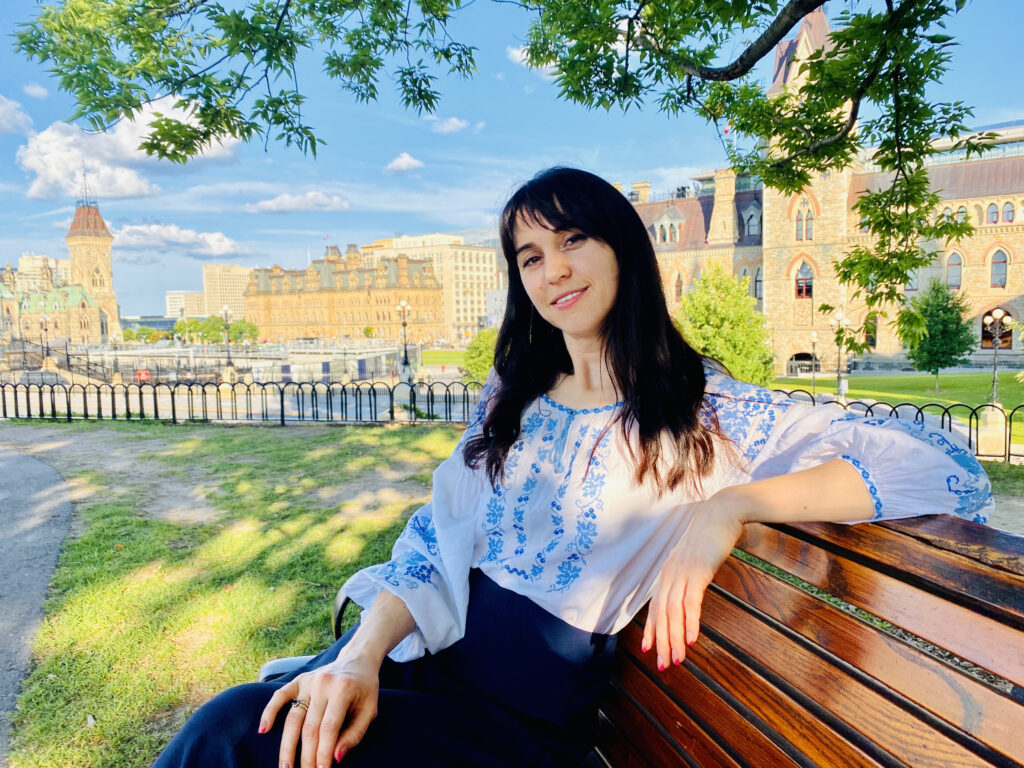
Alona was 33 years old when Russian forces launched a full-scale invasion of Ukraine that irrevocably altered the course of her life. Alongside her family, she endured the initial weeks of the invasion sheltered within a basement in Boryspil city, hoping to outlast the Russian bombardment.
“Recollections of fear and panic come to mind. We, along with our parents, sought refuge in a storage room as explosions reverberated across Ukraine. Those initial nights were spent falling asleep to the echoes of shelling, with thoughts that each dawn might not come. It was a time of expressing profound love for one another.”
In the midst of the escalating War, Alona and her sister made the significant decision to relocate to Canada. Though challenging, this choice was pivotal, and aimed at safeguarding their lives. By June 2022, they were on their way to Ottawa, Canada’s capital, to construct a fresh start.
“We had relatives in Canada, and I had a good command of English. So, we swiftly resolved to journey to Canada, where we had family unlike in Europe. Additionally, I had over 14 years of English teaching experience, which greatly facilitated the adaptation.”
During her initial weeks in Canada, Alona set herself the task of organizing essential documentation and permits, striving to swiftly secure employment and secure her own residence. The initial phase of adaptation was demanding: an extensive job hunt, access to limited medical resources, and grappling with disparate time zones. Nevertheless, Alona pressed forward, ultimately landing two jobs and securing her own apartment, forging connections with new Canadian acquaintances along the way.
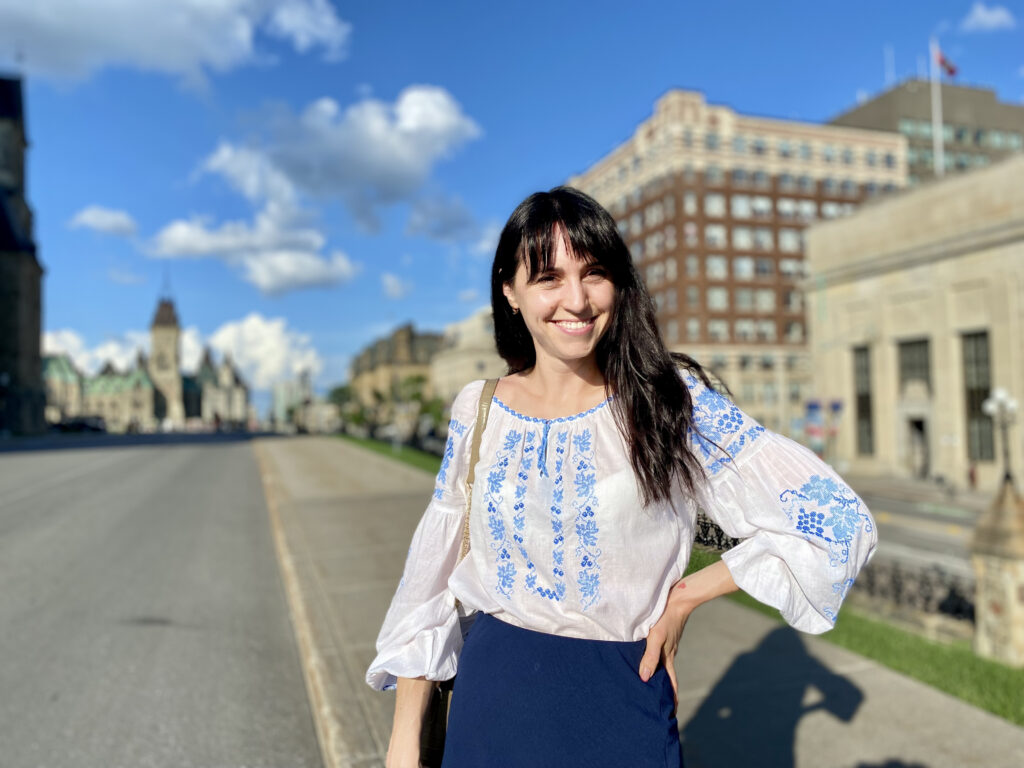
“I hold fond memories of my time in Ottawa back in 2016. The Canadians I encountered were warm, amicable, and genuinely kind-hearted. Presently, I witness their support for Ukrainians during the ongoing russian war, as they exhibit sympathy and concern. I now engage more with fellow migrants, individuals who share similar experiences we can exchange.”
Alona’s current roles include working with international students at an English language institution and part-time shifts at a restaurant over weekends. Additionally, she teaches English online to Ukrainians residing in Canada. Within this teaching role, Alona discerns a personal commitment and a drive to assist fellow Ukrainians who genuinely require it.
“I derive immense satisfaction from teaching; it’s my profession. Moreover, I comprehend the significance of my mission—to aid Ukrainians in enhancing their English proficiency. In turn, this facilitates improved job prospects, better conditions, and appropriate remuneration. Upon my initial arrival in Canada, I extended help to fellow Ukrainians, imparting English lessons, understanding that classes were often financially out of reach for many, who arrived with just one suitcase and minimal resources.”
Experience has revealed that the majority of newly arrived Ukrainians possess a rudimentary grasp of English. The language barrier impedes numerous skilled individuals from attaining desired employment. Unfortunately, immersion in an English-speaking environment alone doesn’t suffice, which fuels Alona’s desire to lend assistance.

Alona underscores that for most Ukrainian women, relocating to Canada stems from necessity rather than choice. A number of Canadians have opened their homes, affording these women the chance to embark on a fresh journey. Alona acknowledges that challenges abound, but these resilient women persist in supporting both themselves and Ukraine.
“Ukrainian women epitomize strength. They are truly formidable individuals—emotionally resilient and psychologically steady. Many have returned from war-torn regions emotionally scarred, some from occupied territories, and others from different cities. When circumstances permit, I share with Canadians the reality of the Russian war in Ukraine, presenting them with images depicting the aftermath of Russia’s actions in my homeland. I extend gratitude to fellow women for their contributions to spreading awareness about the conflict; their efforts bolster Ukraine. My aspiration is for Ukrainian women to foster mutual support, interaction, and collaborative projects aimed at aiding Ukraine.”
Alona envisions a future where she returns to Ukraine, where her husband eagerly awaits, to establish a family. She yearns to bring her children into the world on Ukrainian soil, amidst a population of heroes and unyielding individuals, on land that remains unconquered. To the Canadians, Alona wishes to convey her heartfelt thanks. She holds boundless appreciation for their assistance and their willingness to provide opportunities for recovery and employment. Her well-wishes extend to them all.

How Canada helps Ukrainians
After the start of a full-scale Russian invasion of Ukraine on February 24, 2022, millions of Ukrainians were forced to leave their homes. On March 3, 2022, the Canadian government announced the CUAET program for the emergency entry of Ukrainians into the country, temporary financial assistance, and access to numerous settlement and adaptation services.
As of August 5, 2023, more than 173,527 Ukrainians arrived in Canada under the CUAET program.
On July 15, 2023, the Canadian government stopped accepting new applications under the CUAET program and extended measures to support newly arrived Ukrainians until April 2024.
Translator: Mykyta Budnyk


