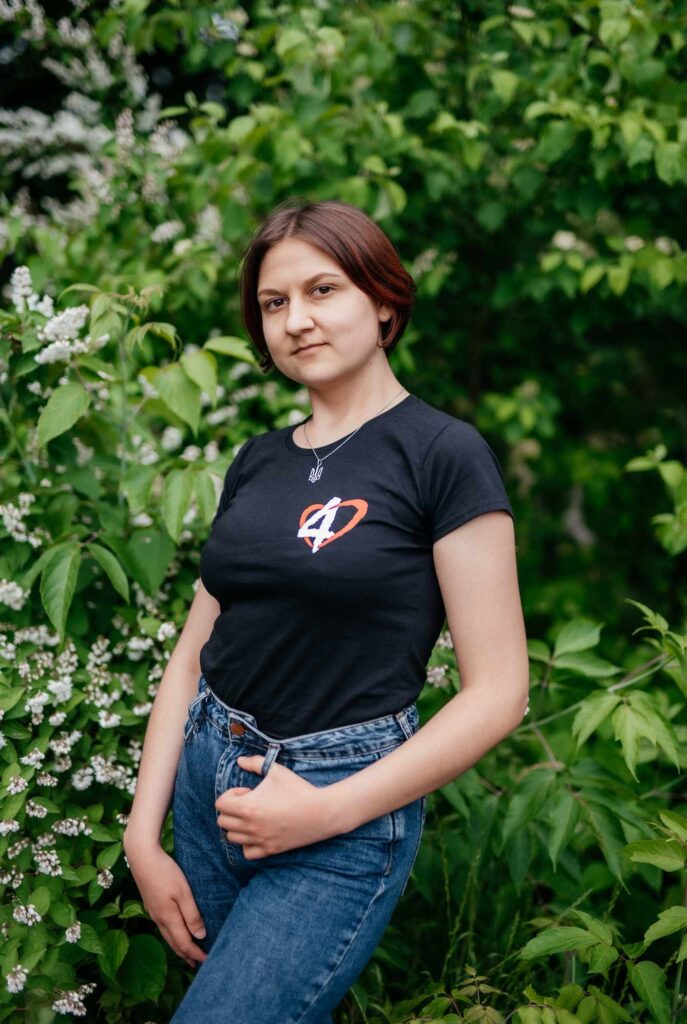
When we all woke up on February 24, 2022, to the sounds of explosions, life was divided into before and after. Can you tell us where you were on February 24, 2022, and what you thought and felt back then?
I woke up at 5 am to get ready for work. At that time, I lived in Khmelnytsky, and the editorial office of “Fourth Estate” was located in Rivne. At first, I didn’t check the social medias, but I found out that Russia had launched a full-scale invasion at around 7 in the morning when I was in a bus. My brother told me about the shelling of the airfield in Starokostiantyniv, Khmelnytsky region. The next thing I saw was the president’s video about the full-scale invasion.
What did you do in the first days and weeks of the full-scale war?
It was hard to just read the news. I wanted to do something useful and help in any way I could. I wrote to the editors that I could be useful in terms of information coverage.
By its specifics, “Fourth Estate” is an investigative media, so after a full-scale invasion began, we had to change our format a little, because at the time it was not up to “betrayal” of officials.
Then I was entrusted with the preparation of daily reports on how the full-scale war was going. I wrote short news for our Telegram channel, where I described each event in a few sentences. First, I divided into blocks what happened during that time in the Rivne region and in Ukraine. I prepared such news twice a day – there were morning and evening summaries.
Later, we wanted to stop doing such news, because it was not our profile, but when we conducted an online poll about stopping such posts, the majority of readers wanted to continue it, saying that gathered in one source information saved their time for reading all-Ukrainian media.
Therefore, apart from preparing materials, I now continue to write short news. But I only prepare evening summaries, where we tell what happened throughout the day.
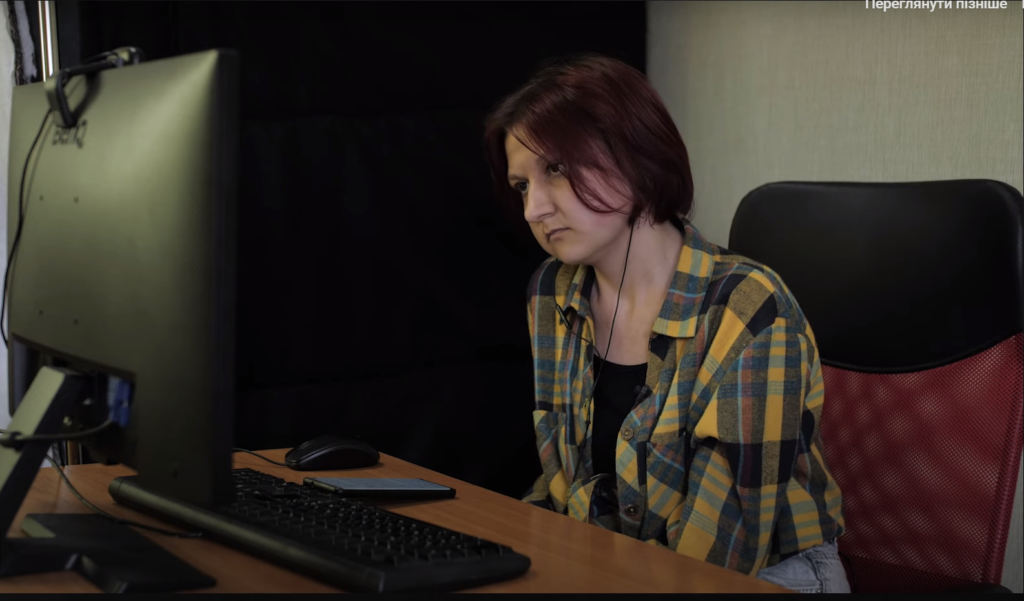
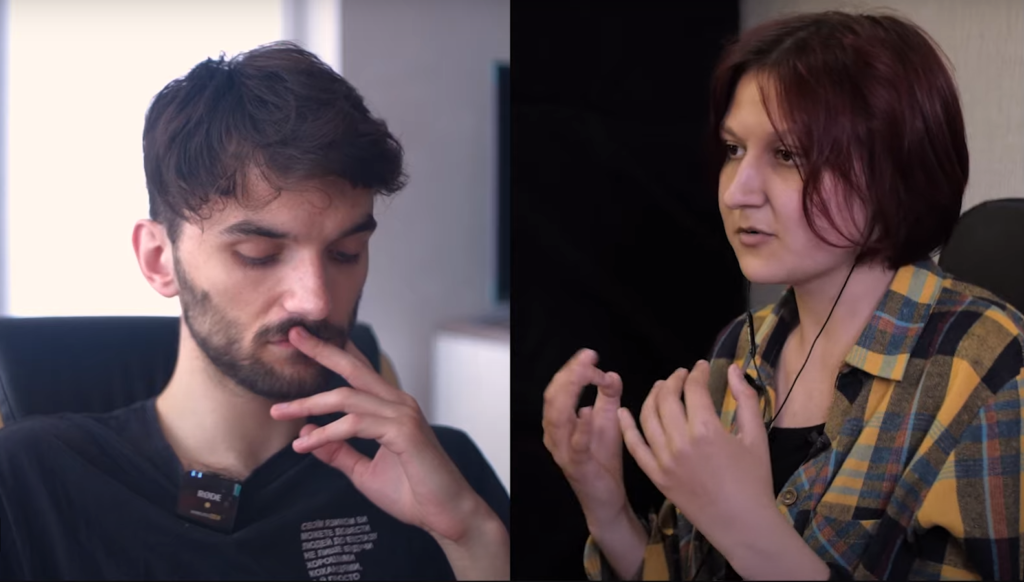
Now let’s move to today. What work do you pay most attention to right now? Tell us a little more about the activity of the “Fourth Estate” publication, where you work, what topics are raised most today, what was the most memorable during your work since the beginning of the full-scale war?
“Fourth Estate” is an independent investigative regional media that writes materials related to Rivne and the region. For about two months, the “Fourth Estate” editorial office did not conduct investigations, but wrote mainly materials related to the war.
However, later we returned to the usual format, because since the beginning of the full-scale war, not only did corruption not disappear, but on the contrary, there were more “holes” for its manifestations.
Before the full-scale invasion, I specialized in the topics of illegal construction, writing court reports and checking the integrity of deputies. However, since the full-scale war began, I’ve been working more on procurement topics.
I consider the investigations regarding the purchase of products to the points of invincibility in Rivne to be the most striking. They were bought by the city’s Department of Economic Development to feed the citizens of Rinve in case of a long-term blackout or an attack by the russians from Belarus.
Thus, the department decided that 10 and a half tons of animal fat of unknown quality should be bought for the citizens and spent more than a million hryvnias of taxpayers’ money to purchase it. Currently, the police is conducting a pre-trial investigation into this purchase under the article on possible appropriation, waste of property, or taking possession of it by abuse of official position.
What war topics are the most difficult and perhaps painful for you when preparing materials, communicating with people? What topics do you think are the most important to be heard by our people?
At the beginning of the full-scale invasion, we were doing interviews with IDPs. This task was the most difficult for me, because I had to talk to people who escaped from the occupation. When working with such topics, the most important thing is not the material itself, but the feelings of the person with whom you are communicating, so as not to re-traumatize them with their memories.
We need to prepare for such interviews with care. Therefore, I attended trainings on such communication beforehand. In fact, there are many nuances in conducting such interviews, which a journalist should know before the conversation.
Frankly speaking, it is easier for me to communicate with those involved in investigations, who are often rude and speak in raised tones. Because of having such a conversation, I represent the interests of the readers. And it is in the interests of the readers that I have to ask for as much information as possible. When you have to talk about sensitive topics, the feelings and safety of the interlocutor are more important.
Regarding the importance of topics, I believe that there are no unimportant topics. Because interviews with migrants help to record crimes of russians, and investigations contribute to the development of civil society and Ukraine in general. So all these materials must be heard.
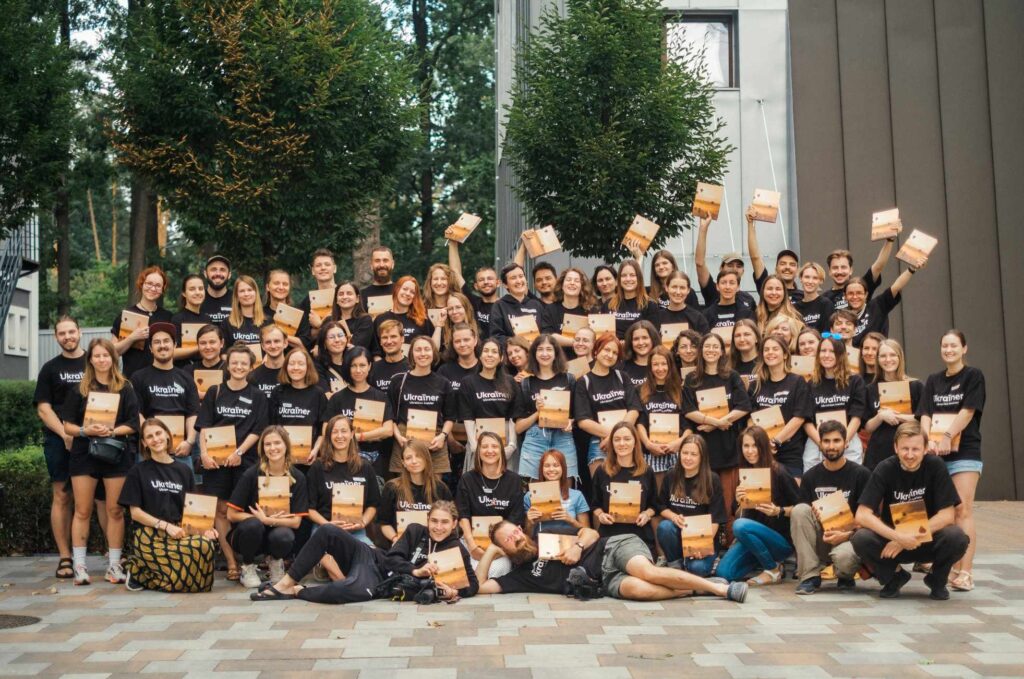
You also work as a volunteer in the very famous Ukrainian media “Ukraїner”. Tell me, what kind of work you do there and how that work has changed since the beginning of the full-scale invasion?
Actually, I only help Ukraїner when I have free time. I transcribe their interviews. I started doing it in my first year at the university, because I really wanted to get into journalism. But not to some “jeans” media, but to a place where journalistic standards are observed. That is why there were times when I wrote to mass media editors with a volunteer offer. That’s how I got into the Ukraїner volunteer team.
Now I devote a little less time to volunteering, but I still help, because this media does a very important thing – it uncovers Ukraine to Ukrainians themselves and to foreigners.
What do you do in your free time?
This year was very difficult due to russian shelling of energy infrastructure. At that time I was in the last year at the university, I worked, and started learning English.
There were problems with electricity in the Khmelnytsky region: the power was turned on for only 2 hours, and at that time we started having problems with the Internet. It was very difficult to pass the exams, work, and learn something new. This, actually, is the main reason why I moved to Rivne: there was a generator in the editorial office, where you could work whenever you wanted.
However, now the situation has normalized: I passed my exams, wrote a diploma project, and continued studying English. And to relieve my brain, I started running.
In your opinion, what role should the youth of Ukraine play today? What can each of us, young Ukrainians, do to somehow help in this long and tiring struggle against the aggressor?
I think everyone should just do their thing. And while working, volunteering, studying, you must find time for personal development. Because the better our skills, the more we will influence the development of the field where we work. And that will contribute to the development of the whole country in the future.
I will also say as an investigative journalist: it is important for us to cultivate intolerance to corruption. After all, the well-being of our country depends on it, and later – the well-being of our children.
Also, we must be able to defend our own interests. There is no need to keep quiet, for example, when a teacher does his job improperly. Such cases should be complained about.
Describe in a few words or sentences your vision of our victory and future of Ukraine after the war.
It is clear that it will be difficult for all of us after the victory, because we will need to recover the country. And what the new Ukraine will be, depends only on the work of each of us.
Translator: Zoriana Karpenko
Пости не знайдені.


