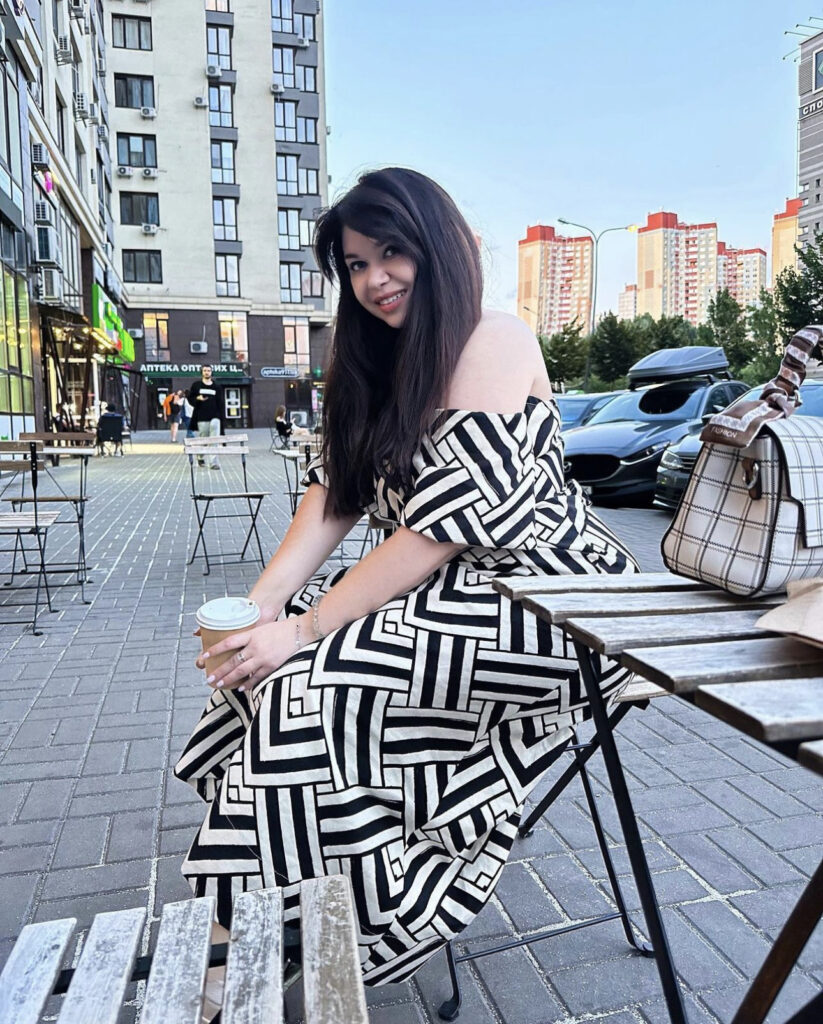
Greetings! Russian full-scale invasion of Ukraine divided the life of every Ukrainian into “before” and “after”. Tell me, how did February 24, 2022 change your life?
Indeed, with the beginning of the full-scale invasion of russia, the life of every Ukrainian has changed, our priorities have changed. People became different on the inside, we began to value life, family, and friends more. Today, we do not postpone meetings for later, because we don’t know whether the dawn will come for us tomorrow.
How was your February 24, 2022?
On February 21, we decided to travel to Madrid. This was my present to my mother for her birthday. Before that, we felt panic from acquaintances who constantly talked about the war, but we didn’t pay attention to it.
On the morning of February 23, our airline informed us that our flight was being rescheduled, which was quite confusing for me and my mother because there was no reason for the cancellation. I woke up on the morning of February 24, I looked down at my phone, and there were dozens of missed calls, messages from friends, acquaintances, and relatives. And they all were writing that the war had begun. We didn’t know how to return, our airline didn’t answer, and finally they sent an announcement that all flights had been canceled. And then my mother and I decided to find transportation on our own. On February 24, we spent the whole day looking for an way to return to Ukraine, but everything was in vain. Then I found a Ukrainian woman on Facebook who was collecting humanitarian aid for our military and would go to Ukraine in the evening. The road home was difficult and lasted 3 days. When we crossed the Polish border, everything resembled a scary movie: abandoned cars, frightened people, animals, children crying all the time… There were long queues to Poland, and not a single car to Ukraine.
Why did you become a volunteer?
Volunteering is what prevents you from falling into the abyss, forces you to live on, to keep your front. And when you’re already on the edge, you still hold on, because you know that somewhere on the front line boys are waiting for you, some kid is waiting for his toy, and a mother who wants to protect and feed her child. And then you understand that you have no right to betray them.
When did you start volunteering?
I became a volunteer as soon as I returned from Madrid. At the beginning, I helped the drivers with logistics, there were many people who needed to be taken out. I needed to find drivers, contact people from Mariupol, Kherson and other regions so that they could safely move to western part of Ukraine. Every day there were 300–400 requests from people from different parts of our country, we did not have time to process every request. I also remember that our teachers then decided to hold volunteer classes for children in our online school, so that they would at least be distracted a little.
What prompted you to become a volunteer?
My nature plays a big role here. I often do unexpected things. One such act happened when I saw a post by my former teacher about a young soldier who, together with the Azov soldiers, defended Mariupol and was captured. Then I decided to go to him and help him with something. This young man did not know me and had no one, because he was from an orphanage. When I arrived and explained how I knew him, he was very happy. Unfortunately, this guy lost his leg, and only survived because he threw away the mines in time. After the walk, when I had to return, he stopped me and said: “I don’t want to live”. Everything inside me just froze, because I look at the boy and see hopelessness in his eyes. After this meeting, I started raising money for a prosthesis, we had to collect UAH 400,000. In one week we collected UAH 26,000 for rehabilitation. Fortunately, with the support of his family and my Instagram audience, we were able to find him a training prosthesis. Later, with the help of other people, they found a very high-quality prosthesis which could help him run. Now the boy is very happy, because at a certain point he lost hope that he would ever be able to climb the mountain, and today it is quite possible.
On your social media, there are several collections focused specifically on Kherson. Why Kherson?
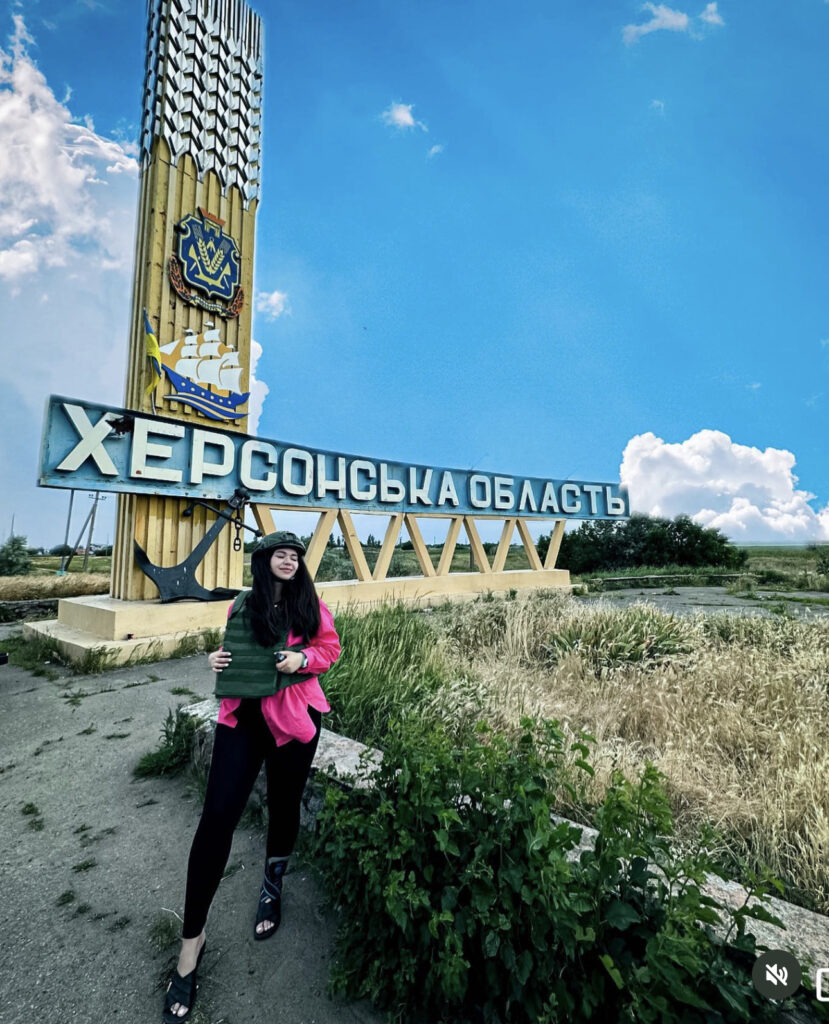
When the russians blew up the Kakhovska HPP, I could not work for a day. I cried, then I had a lesson, and cried some more. I couldn’t imagine how people, children, animals could just be drowned like that. And at one point, I gathered all my strength into a fist, wiped my tears and decided to go to Mykolaiv. Before that, I opened a collection hoping to collect at least UAH 5,000, and closed it with UAH 240,000. Nevertheless, the question was how to get there, because it’s not so easy to go to places where active hostilities are taking place. And then I remembered a volunteer I knew from Mykolaiv, who had his own volunteer hub, and we signed up. Of course, he was glad of such an opportunity. My trip was supposed to end in Mykolaiv. But the day before, a man calls me to give me his inflatable boat, but with one condition: I will personally hand it over to the military in Kherson. And then I decided to go to Kherson.
How did you get there and what did you buy for the first collection?
The day before the trip, my friends, relatives, and neighbors brought various things, products, and we put them all in my car. And then half the day passes, and I realize that there is no more room in the car, but there are still things. We talked to an acquaintance and contacted the “Bus man” car company, which quickly provided us with a car, and the owner of this company later drove with us twice to Kherson. I focused mostly on medical supplies. I spent each time about 25,000 to 27,000 hryvnias in pharmacies, the pharmacist and I sat for 5 hours making a list of all the necessary medicines. We also had to purchase tactical headphones, glasses, power banks (external batteries) which are necessary especially for the military.
What is the most difficult thing about volunteering?
It is very difficult to reach people, especially our officials. I have been to Kherson five times and every time before the trip I opened a collection. And each time it is more and more difficult for me to finish these collections, because some people help immediately when tragedies happen, and then decide that this is enough. And this opinion is very wrong, because as long as the enemy is on our land, we have to fight and help each other in every possible way. If you can’t donate, you can come to us and physically help: pack items or share products.
The second important point is to not give up. When you spread information, have to prove something all the time, and the amount of raised money is not increasing, you may despair. But shortly after, you return to the normal working rhythm of life, because you remember that there are the soldiers on the frontlines who continue to fight. And maybe it’s some kind of magic, but always the day before the collection closes, we raise the necessary money.
What impressed you the most in your work?
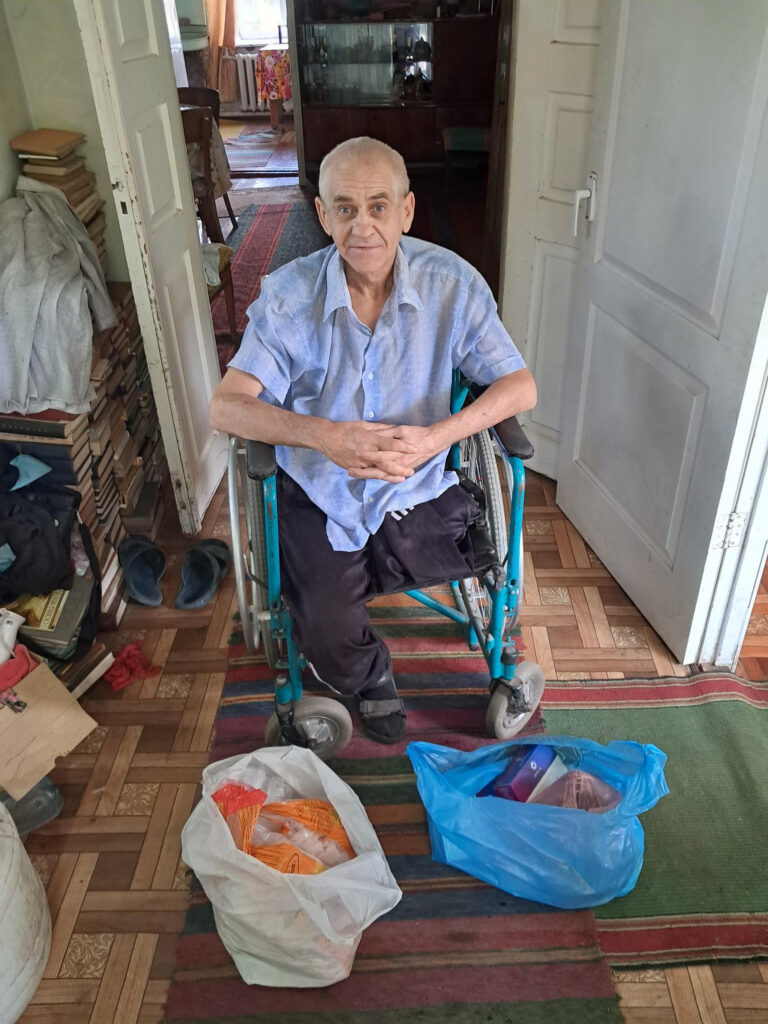
I remember a case when I was in the Kherson region and faced a misunderstanding of why humanitarian aid was not brought to distant villages. A woman approached me with a request to bring hygiene products for her neighbor, because she is disabled and needs certain things, and volunteers bring products to their village only once every six months. But the biggest shock for me was when my colleague and I and approached the owner of the volunteer hub and assured that there was a catastrophic lack of some things in some remote villages in the South, to which he replied: “How do you know that they don’t have it? Maybe they do, you haven’t seen it, have you?” And then I realized that you can rely on no one.
Children’s eyes of war are terrible. Did you have an opportunity to make the children at least 1% happy?
Yes, I can recall one interesting case. It was the second trip to Kherson, when we went to remote villages and visited many settlements. And at the end, when almost everything was distributed, a boy of 6 or 7 years approaches us and thanked us for everything. We gave him a toy, a package of food, and he asked us: “Can I give this toy to my younger brother?”. We nodded and gave him another one. And then he added: “My mom doesn’t have shampoo, could you give me some?” With tears in his eyes, he asked not for toys or candy, but for shampoo for his mother. I thought about it for a long time, why and for what children suffer.
I know you speak several languages. I wonder if it ever helped you with your volunteer work?
Of course, I have experience studying in China and speak Chinese fluently. The language helped me when we started to translate Ukrainian news into Chinese at my school and spread information in various public places among young people. And it actually helped, because the youth of China were able to better understand our real situation and help us.
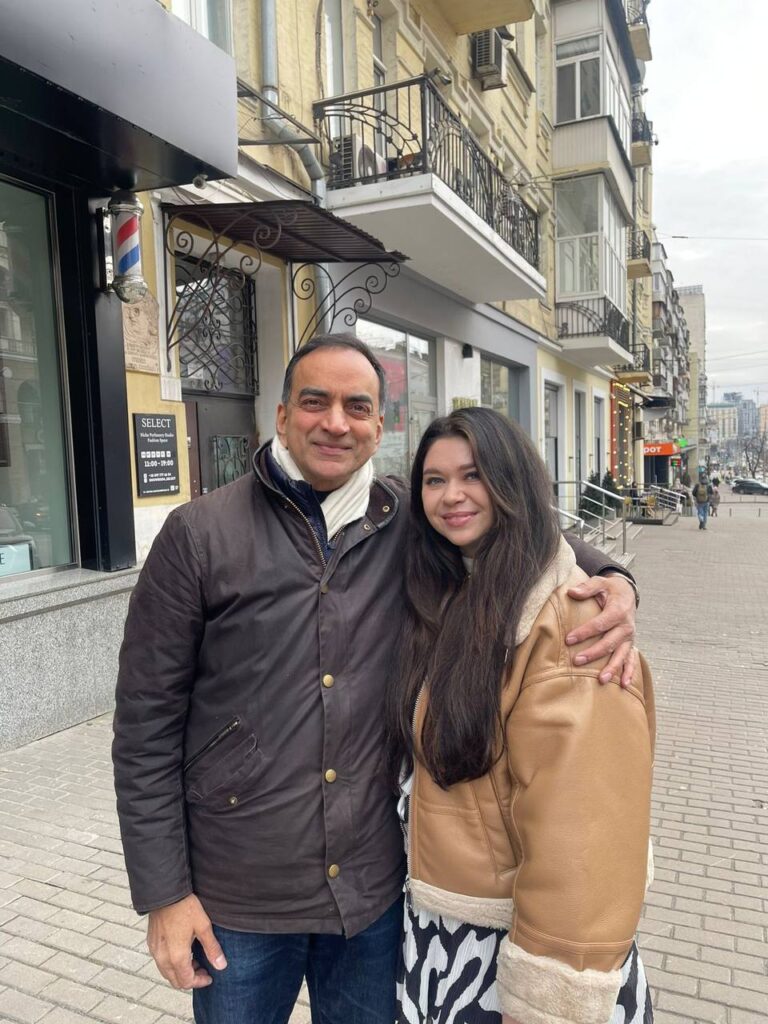
English came in handy for me when the foreign journalist Sanjay Suri from the CNN-News 18 TV channel wanted to shoot reports from Kherson and Kharkiv, but was terribly afraid to go. At the same time, I convinced him that it was important and necessary for our country and the world. And we went together despite the fact that at that time the most active phase of hostilities was developing.
For all the time of such a difficult but important work for our country, what rules have you personally defined for yourself?
The first rule: achieve the goal you set. Second: in a combat zone, you must own your body 100%, be attentive to everything, watch everything, hear everything, because not only your life depends on it, but also the lives of other people nearby. I learned this rule very well, when one day we had a flat tire near Antonivka, right on the road, where there was no tree to hide. The guys changed the tire for 30 minutes, but as it turned out, it was too long, because later the russians threw a mine near us. Fortunately, everyone remained alive and unharmed. I remember that before that moment I looked at the sky, and it was so clear, as if the war was not here. And I said to my friend: “Oleh, look how clear the sky is,” and he nodded and added: “The sky is clear, but don’t forget how many lives it takes every day”.
And finally: you have to be strong. You come to people who look at you with hope, and you have no right to show them that there is no such hope. You came to give them that ray of sunshine. Only after that can you lock yourself in the car and cry as hard as you can, but the most important thing is that they never have to see it.
Lastly, please continue my words: “For me, Ukraine is… where I can…”
For me, Ukraine is my home, it is a huge place in my heart where I can be happy and where happiness is! This is our home to protect. And we must protect and save all Ukrainians, they are our family!
I have a huge request for everyone who reads this interview: continue to support Ukraine! Don’t stop helping our people, keep donating, every 5, 10, 15 hryvnias sent will help destroy the enemy! We must all become united for our common victory!
Translator: Zoriana Karpenko


