Part I of the interview
As part of the “Ukrainian youth is changing the world” project, we tell the stories of achievements and proactive actions of young Ukrainians from different walks of life, with different backgrounds, different beliefs and lifestyles. Today, pediatrician Olha Rozhok shares the story of her volunteering at the Vdianchni charity foundation and her experience of being on duty at the Lviv railway station after the beginning of the full-scale invasion. This is the first part of the interview, which will comprise two parts.
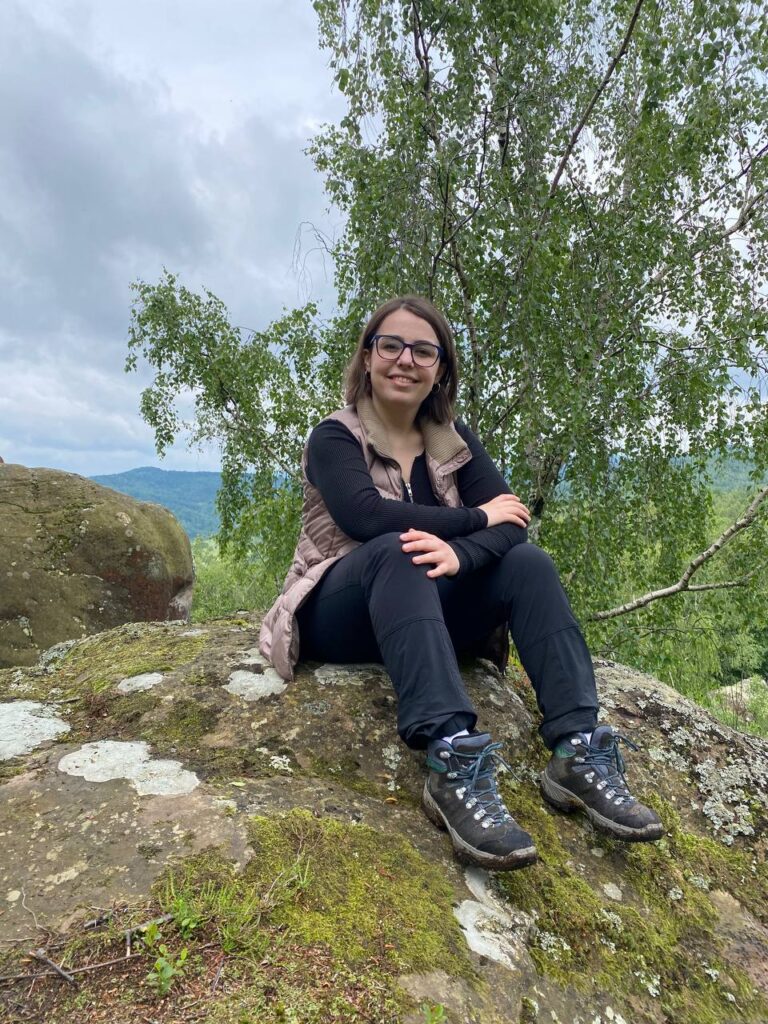
Tell us a little bit about yourself.
My name is Olha Rozhok. I am a doctor, the head of one of the departments of the Veselka medical clinics, and I am also a volunteer with the Vdianchni charity foundation. I have been working as a doctor for over 5 years. I have been volunteering since the beginning of the full-scale war. I come from Lviv. I live and work here. I studied to be a pediatrician in Lviv.
Why did you decide to be a pediatrician?
I never thought I would be a pediatrician. I just wanted to be a doctor. I’ve always liked to help people, so in the 6th grade I decided that I would become a doctor, and that’s how I went through life. I entered medical school thinking that I would be an obstetrician-gynecologist. But things changed, and I became a pediatrician. And I am very happy about it.
What, in your opinion, is the most difficult part of being a doctor?
The most difficult thing is to communicate with the patients. It is difficult to report some difficult diagnoses. You don’t want to do it, especially if you are empathetic. It is very difficult.
Is it difficult for you to work with children?
Working with children is actually very cool because they give more than they take. Even though you can be very tired physically after work, communication with children fills you with energy.
Apart from that, are there any other positive aspects of your work?
There are many! Children are very grateful. They are always truthful, so they will never lie to you. I mean, they will tell you that you are either great or not so much.
Would you mind sharing how February 24th was for you?
I met it in the morning when I got a call from my mom. She asked me if I knew what had happened. I said no. And then she said: “I don’t want to be the one to break the news. Check the news and get ready”.
I had to go to class that morning because I was still studying for my master’s degree at the Catholic University. One of our modules was due that day. Everyone was very worried. Moreover, we had already realized the day before that there had been some intensification of hostilities in the East. Many of our students have friends who are fighting. And on Wednesday we were already raising some money for them. Long story short, we knew something was going to happen.
On Thursday, we had all the classes and it was clear that everything was “excellent”. I packed all my things. I realized that it was unrealistic to take a bus. So I walked to my parents’ house. They live in Lviv, as well, but in a different neighborhood, about 6-7 kilometers away.
And for the first two months we all lived together, because we were afraid to be alone.
Were you prepared for a full-scale war to break out?
Actually, I thought about such a development. I bought some stuff so that at some point I could just pack everything in my backpack and go home.
How did you feel when you realized the scale of what had happened?
I remembered the scene when my friends and I were leaving the Maidan. It was November 30th, 2013, when students were beaten on the Maidan, and I was there with my friends. And we left the Maidan 15 minutes before they started beating people. It was actually very scary, because we got into a taxi and a Berkut behind us said: “Don’t let anyone in, don’t let anyone out”. We spent two more days in Kyiv in the epicenter of those events. We were afraid to walk on the Maidan with a blue and yellow ribbon.
When we were returning home by train, we talked about the fact that a full-scale war would begin and that we would probably not be spared. That is, we will be involved and will definitely feel it.
The war started back in 2014. Of course, it was not a full-scale invasion, but still. And when, on February 24th, 2022, the shelling started all over Ukraine, I remembered that moment. I remember coming to my parents’ house and feeling calmer, but in the evening my father and brother packed their things and went to the military registration and enlistment office, and I felt anxious again. After all, they went to defend Ukraine that very day.
How has February 24 changed your life?
In the first months, I felt uncertain. No studying, no work. From February to March, I was afraid. And then our university and my clinic started working as usual, and this routine helped. You work and you study no matter what. Although, I have to say it was very difficult, because many of our classmates went to war, and we were constantly thinking about it.
You realize that you are going to work to help children. In the first months of the full-scale invasion, I volunteered at the Lviv railway station. A lot of IDPs (ed. temporarily displaced persons) were arriving, a lot of people were fleeing the war and the shelling. It was terrible, especially in March and April. In May, it became a little easier, but there were still children who were frightened by any sound, they could not calm down. There were seriously ill parents whose children forced them to leave Kherson and Kharkiv.
We were on duty days on end. It was scary. We did not have such intense shelling here as in the East or South, but it was very difficult emotionally to see the number of maimed people who suffered from a terrible war.
This routine helped me somehow to keep myself together, not to come unglued and keep fighting. In the first months of the full-scale war, I turned my anger into jokes on my Facebook page. These were very aggressive jokes about the death of russians, but it helped me. We rejoiced in any small victories back then. This shared empathy and compassion really helped.
How long did you volunteer at the station?
Probably until June. There were much fewer people there in June. The worst period was the first weeks of March and February. The work was not yet fully organized. There was total chaos… Trains were driving for 20 hours. They were under fire, with a number of passengers who did not know how they got on. It was scary.
Doctors came, for example, from Kharkiv, as well as IDPs. They helped and worked. There were many foreigners. It was very difficult psychologically to see that suffering, but on the other hand, it was a kind of unity when we help each other, when a person gets off the train and is already offered help, given tea.
Did you check up on children at that time?
In fact, we examined everyone, because we also had cases of resuscitation. Of course, we examined everyone, but if there were children, we called them to the pediatricians.
The end of the first part of the interviewIn the second part of the interview, we will learn more about how our heroine started volunteering at the charity, what she has already managed to accomplish during this time, and what challenges she faces in her work as a volunteer today.
This is the first part of the interview, you can read the second part here by going to the link
Translator: Zoriana Karpenko


