Tell us something about yourself.
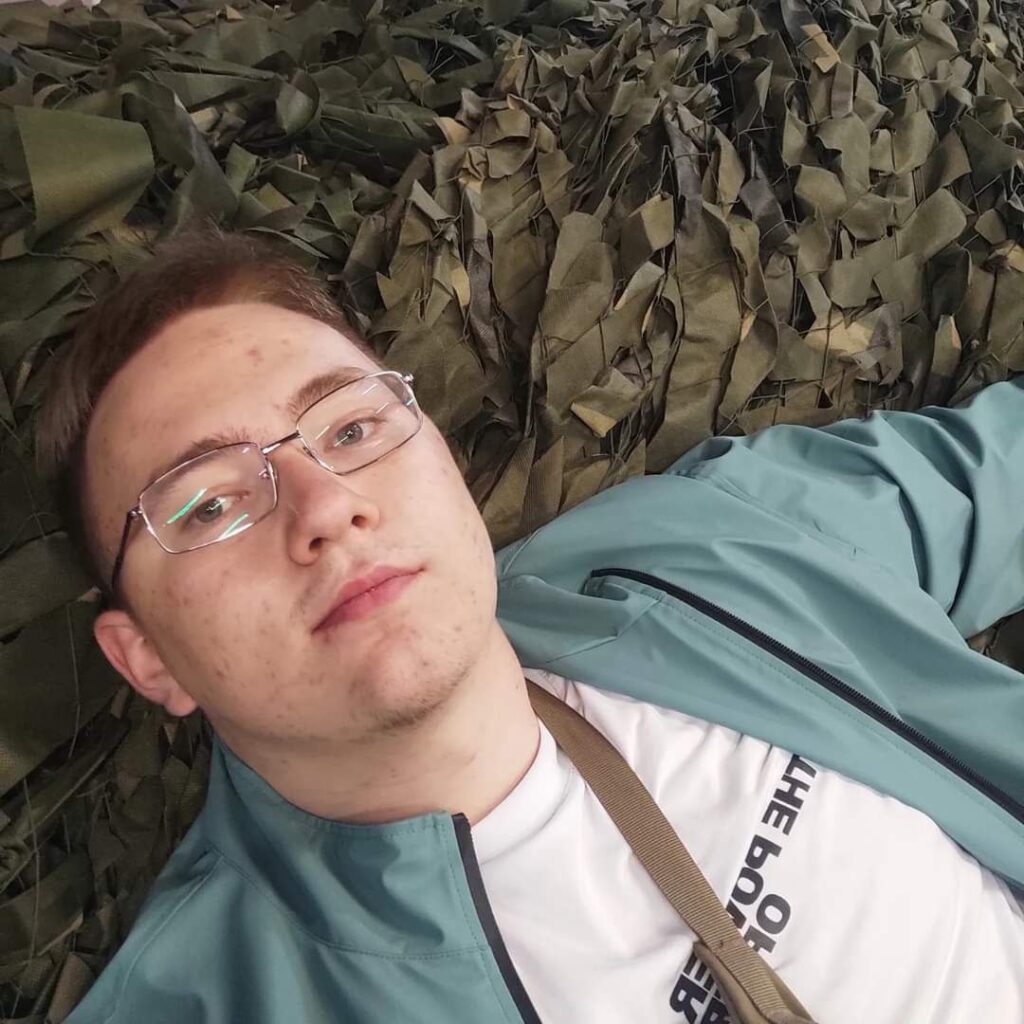
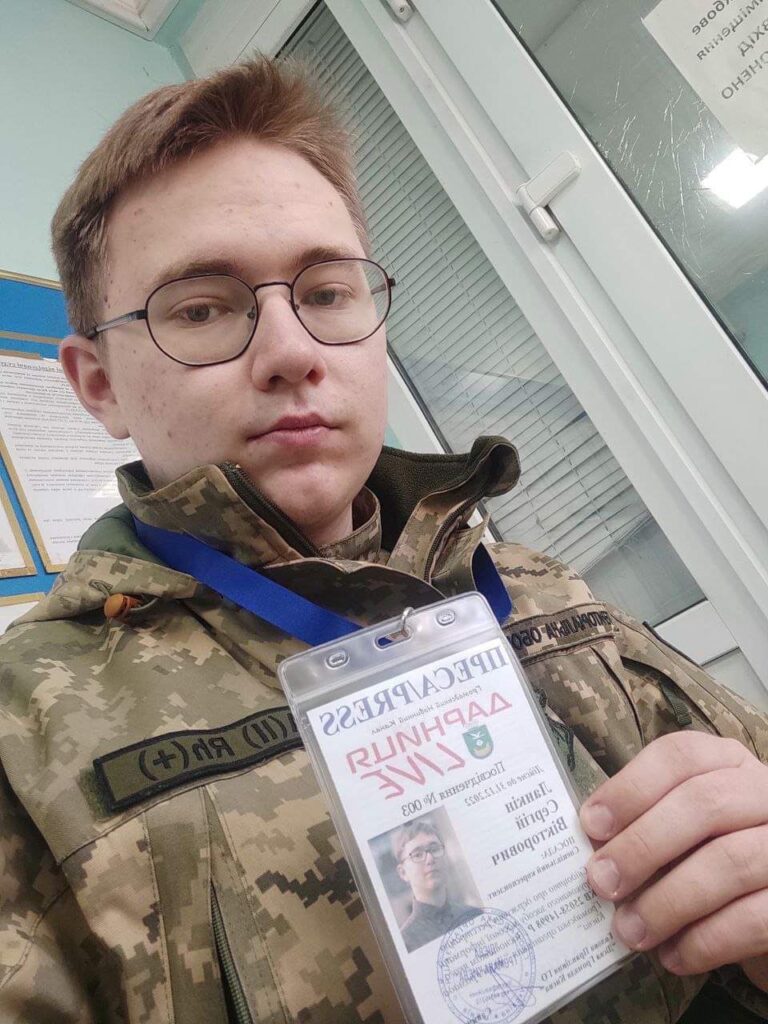
My name is Serhii Lankin. I am 22 years old. Now I am mainly involved in voluntary activities. I am a lawyer by profession. Currently, I am the head of the legal department of the NGO “Active Community of Kyiv” and the head of the legal service of the volunteer formation №42 “Obolon Legion” in Kyiv. I work as a lawyer and help the families of defenders in the Azovstal Defenders Association.
I started volunteering even before the full-scale invasion, although it was mostly civic activism within my Darnytskyi district in the aforementioned NGO. However, with the start of the full-scale invasion, I switched completely to helping servicemen, their families and volunteers. I deal with their legal problems. I also sometimes help with logistics, liaising with partners and representing the interests of our organisation.
Where are you from?
I am from the Darnytskyi district of Kyiv. And, in fact, this contributed to the initiative to create the NGO “Active Community of Kyiv”. Its members were community activists from our neighbourhood. But with the start of the full-scale invasion, we changed our focus from civic activism to helping the Ukrainian Armed Forces.
Where did you study law?
I studied for four years in the bachelor’s degree programme at the Igor Sikorsky Kyiv Polytechnic Institute. Now I am continuing my studies for a Master’s degree.
How did you survive the first day of full-scale war?
I met with my girlfriend on 24 February. Before that, it was quite an interesting situation, because in the last month before the invasion, the media space was very tense.
After it all started, the first thing I did was go to the grocery store. I bought some food. I contacted my family. I took my whole family abroad and started volunteering. There were a lot of lawyers who got together to provide legal assistance to IDPs, military personnel and volunteers.
Have you left Kyiv since the war began?
I went to the Zhytomyr region for two months, but at the end of April I returned to Kyiv and started working fully. Since our NGO is tied to Kyiv, we did not work in this format for long. The head of the organisation went to serve first in the Azov military training centre, then in the Third Assault Brigade. And we were busy with supplies, solving various problems and opening a logistics centre in the Darnytskyi district. Later we opened a network centre, which is still in operation.
What were your feelings when you learned that a full-scale war had begun?
I have already said that I analysed all the news reports available on the evening of 23 February. And in fact there was no objective information that indicated that a full-scale war was about to break out.
But when it did start, it was a shock to me, as it was to everyone else. But as time went on, I began to realise that we needed to work together and help other people, especially our military. And so, over time, I managed to adapt and systematically work towards victory, helping where I could. A few days later, after I had recovered and regained some emotional stability, I realised that I wanted to be useful in my profession. Unfortunately, it was quite difficult to find myself, but I managed. And now I feel calm because I feel useful.
Tell us more about how you started volunteering.
I can go back to 2021, when I actually contacted journalists who were working in our NGO. We have a news channel called Darnytsia Live, created by community activists who broadcast news about their neighbourhood. It happened that my house had some problems with the utilities. I argued with them for a long time. Thanks to my education, it had some effect, but I lacked media coverage. I got in touch with activists. When they ‘brought me together’ with the then head of our district administration, other activists and concerned citizens, I realised that changes both in your immediate environment and in the world at large depend only on you.
From that moment on, I became involved in activism. Certain inner convictions led me to start providing free legal aid to people. That is, our NGO prepared requests and initiatives to improve the lives of people in the city at the request of citizens in our neighbourhood. It’s worth noting that Darnytskyi district was on the 10th place in the ranking among the ten districts of Kyiv. So let’s just say that correcting this situation was our common mission. Helping ordinary citizens living in poor conditions became my personal mission.
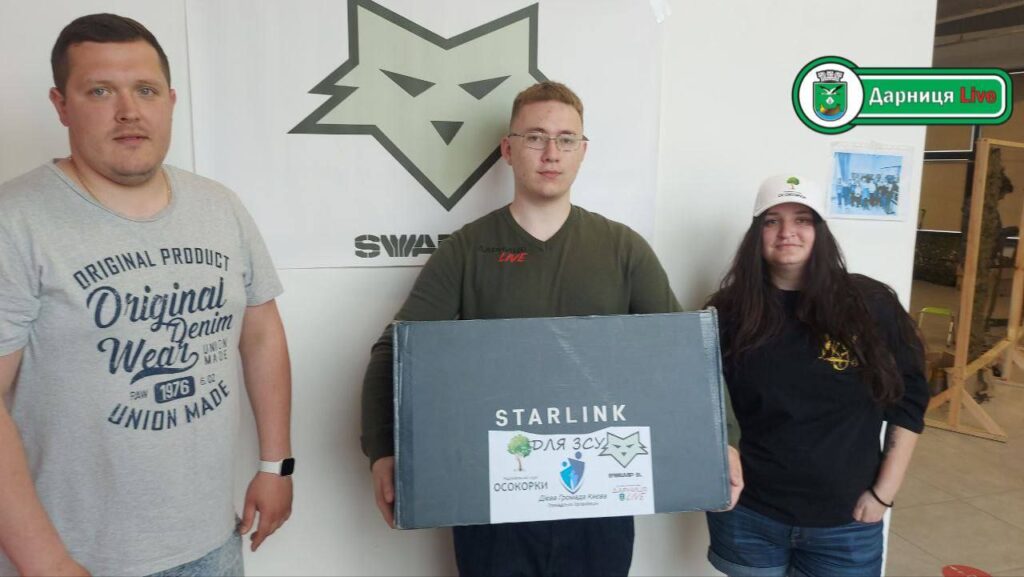
After the 24th of February we decided that we could open a volunteer centre to provide camouflage for the military, based on our connections, communication and logistics. We started with a 60 square metre space shared with us by the NGO Osokorky National Park. This was where the first camouflage suits were made. Over time, a caring company came to us and shared a large 300 m² room where camouflage is woven in a continuous mode. We have given them 20,000 m² of these camouflage nets. Between 50 and 100 people come every day. In a month’s time, almost everyone in the area will come and weave camouflage with us to help the armed forces. We also involve the local authorities and concerned citizens in these processes, as all the needs of our organisation are met solely through donations. As I mentioned earlier, we have a telegram channel through which we raise funds.
In the course of time, I managed to establish contact with the Association of Families of Azovstal Defenders. Within the framework of this association, I provided legal assistance to the families of prisoners of war and defenders. As you remember, last May there were many events in Azovstal. And after our defenders from Mariupol were captured by Russia, we faced a lot of problems, both legal and more mundane: for example, we had to provide them with psychological support to go through all these events together with the Association and other lawyers who wanted to help within this initiative. We have held various public meetings and consultations. We have also been approached by many friends of both the volunteers and the military. I honestly can’t count how many, because someone calls every day. Sometimes you don’t even ask their name because they just have a few questions. They help absolutely free of charge.
Today, my main focus is on maintaining our volunteer centre and helping the association’s families. Despite the fact that the Azov command has returned and is currently conducting combat operations, more than 700 defenders of Mariupol are still in captivity. And we are all fighting together for their release.
What is your role in the work of the NGO “Active Community of Kyiv”?
As the head of the legal department, I am responsible for all legal support for the NGO’s activities. My policy is that we work only within the law. After joining the NGO, the first thing my team and I did was to officially register all volunteers.
We work with all military units on request. This means that we control the flow of documents. We have a written letter from the military unit, a deed, all the receipts, and we report everything accordingly. I advised the volunteers on their questions. We also prepare various appeals, letters and requests to the authorities. We do all this because I believe that local authorities, the public and volunteers should be partners in defeating a common enemy. I help the head of the NGO prepare orders and regulations. He is also in the military and usually does not have enough time for all this. These issues are dealt with by myself and seven other lawyers from my home KPI. Together we study and solve all the problems that arise from the members of the NGO.
This means that people who come to us to weave nets, or who later become members of the organisation, can expect to receive free legal aid not only from specialised institutions, but also from us as students and members of the NGO. Accordingly, we do not charge anything for this.
As I mentioned earlier, our organisation also helps related organisations. We have experience of consultancy work with the Azov Patronage Service. We regularly advise the Association of Defenders, as well as any other organisation that contacts us. We are open to everyone.
But there are some unpleasant moments, I will not hide it… Unfortunately, with the beginning of the full-scale invasion, it was not possible to register properly or to keep all the relevant documents. Our country has passed some laws that have helped us to partially maintain the flow of documents between 24 February and the end of 2022. However, as we want to maintain the trust of the people, we are reporting and preparing all documents without fail. We try to comply with all the official procedures that are required of us today. But to be honest, sometimes it is technically very difficult for the guys, for example when you send camouflage nets. We have the relevant acceptance documents that have to be signed. Unfortunately, it is not always possible to sign them when the package is delivered to Lyman, Kramatorsk, etc. So we are trying to ensure this as much as possible.
We also want every penny collected by volunteers to be documented so that we can be trusted. Unfortunately, we have had cases of unscrupulous volunteers collecting money in cash and not reporting it. There are volunteers who, even with good intentions, do not always have the ability to collect documents separately.
I would also like to point out that we have a registered media and a team of journalists. Despite the full-scale invasion, our team of journalists and our editorial office are fully operational. We are helping journalists to prepare different kinds of appeals, requests and requests for information free of charge, and we are explaining the law to them so that they are also protected by the law.
Tell us about your background as a journalist.
Before I joined the NGO at the age of 21, my colleagues, our editor-in-chief Vladyslav and the head of the NGO Artem, were doing live broadcasts and writing various publications to shed light on certain issues that the local authorities did not want to pay attention to. But they lacked the legal element to obtain confidential information or, again, to draw the attention of the relevant authorities and bring people who violate the law to justice.
So my work as a journalist in the NGO is mainly in the legal field. Sometimes, for example, I attend some court hearings. Our news channel is covering the case of the murder of volunteer Oleksiy Shcherbyna. We go to court together and support the families. In short, Oleksiy was a volunteer who was killed by three criminals in October 2022. He supported the nationalist movement and was a member of the Svoboda battalion. We are covering all the information on this investigation. We are also conducting a series of investigations into volunteers who collect funds that go directly into their pockets. We make official requests. Sometimes we even have to work with lawyers, because if you say something that someone in power doesn’t like, they can put pressure on you and threaten you. That’s why my main job is to provide qualified legal assistance. I have helped journalists to work within the law. It is also extremely important to be able to justify everything legally if you find that something is happening outside the law. In fact, my other role in the work of the NGO is to cover interesting court cases. I also do my own investigative journalism on topics that interest me and are relevant to the state.
So you produce your own journalistic material?
Yes, I do. For example, the case of Oleksiy Shcherbyna… We had a case where two of the three defendants in this case were released on bail of 20,000 USD at one of the court hearings. For comparison, there is the life of a volunteer, a volunteer like Oleksiy was. He has two small daughters and a wife. And then there are the criminals who drove Lexuses, who had a pile of weapons in the car they found, and who had three houses each. We have reported this news. We are the main source of that news. So we had it at the beginning of the day and by the end of the day it was in Ukrainska Pravda, Hromadske and other media. Our public pressure forced the press service and the Kyiv City Prosecutor’s Office to file an appeal against this particular meeting.
There was also a case when people contacted us about the neglected state of the Lybid River, which is located in the Shevchenkivskyi district of Kyiv. They sent us some exclusive photographs of the river. We published them and appealed to all the relevant authorities and the Office of the President of Ukraine. As a result of our appeal, the Kyiv City State Administration was given an order. They made the purchase. And now the river is being cleared. The pearl of the city of Kyiv, the Lybid River, which was unfortunately buried in concrete, continues to exist. This is how we fight for the environment in our neighbourhood.
How do you manage to juggle so many responsibilities in different organisations?
Generally speaking, this is a complicated question. It would be very loud to say that I manage. In fact, I have to plan everything in great detail. Every day is planned, if not to the hour, then at least to a certain extent in terms of tasks and priorities. The advantage is that I have assistants: other legal advisers who are members of our organisation. The legal service also has other volunteers who help with legal issues. So, in principle, we can delegate some tasks and discuss others in more detail. Yes, sometimes there are cases where, for example, a volunteer or a charity comes to you and wants to solve a certain problem, but after talking to them you realise that it can be solved in a different way or that it has already been solved practically. And there are no risks that the organisation sees for itself.
So, first of all, I try to plan, set certain priorities and involve more people in my activities whenever possible. Because there is a certain specificity to the activities in the organisation, it is more difficult to replace me or my colleagues, for example. But in fact today we have the opportunity to share the workload between the whole team, between all eight members of the NGO and the legal advisers. So far it is working well.


