Tell us a bit more about yourself
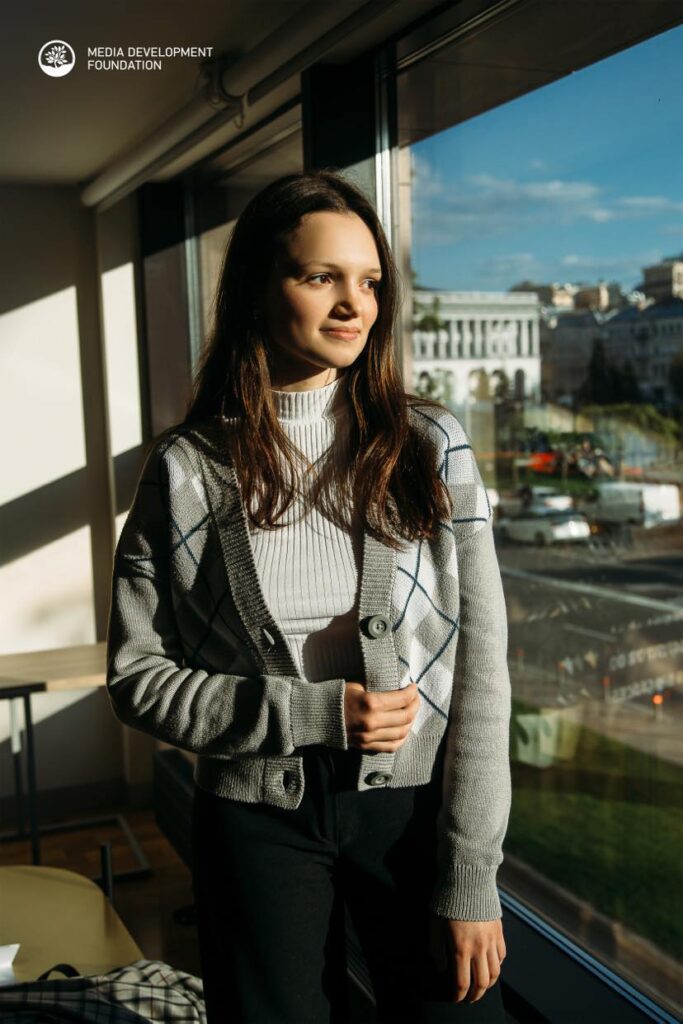
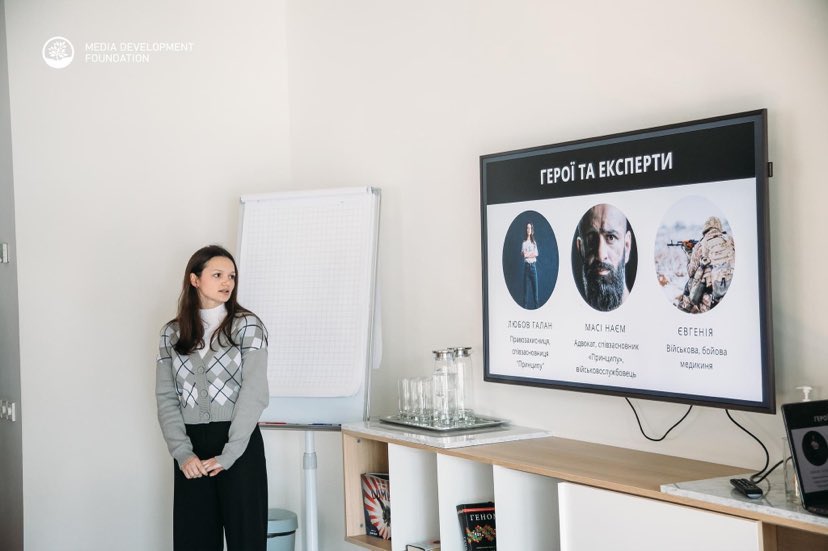
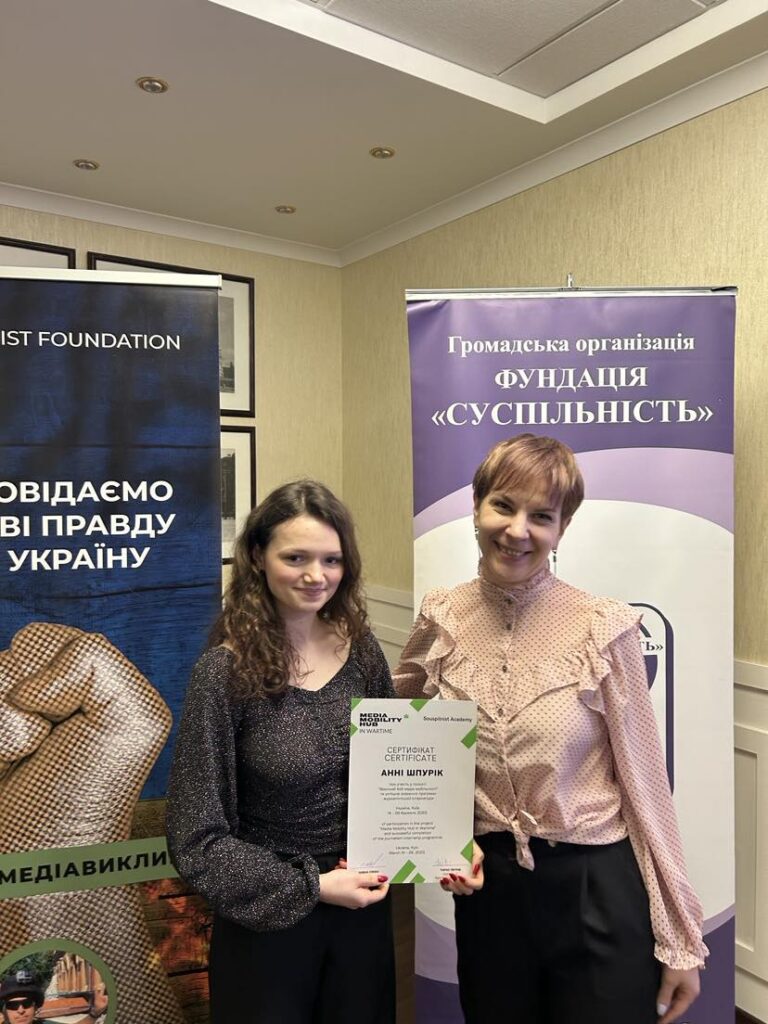
Anna Shpurik, 20 years old. A fourth-year student at Sumy State University, majoring in journalism. Originally from the Dnipro region, I have been living and studying in Sumy for three years. I work as a freelance journalist for the Sumy online magazine Tsukr. I am a participant of the 23rd Media Mobility Hub of the Souspilnist Foundation. I have also taken part in the Oleksandra Horchynska Sensitive Journalism Course and the Journalism Summer Camp, programmes run by the MDF (Media Development Foundation).

Of course, for each of us, life was divided into before and after, when we all woke up to the sound of explosions on 24 February 2022. Could you go back in time and describe for us where you were on that day and what thoughts and emotions were going through your mind at the time?
I woke up on 24 February in the Krasnopilska municipality of the Sumy region, in the small border village of Lisne (about 7 km from the Russian Federation). I woke up to the sound of explosions as the neighbouring village was being shelled by the Russians. The following days were quiet. But at the beginning of March, the electricity went off. I found a worn-out old copy of ‘1984’ in the attic, and as long as there was light I sat outside reading it, just wondering what was going on. We hid under the sound of the explosions, sat in the cellar for three hours, slept and talked a lot – that’s how the days passed. The next few weeks were actually spent under occupation, as the neighbouring village and the checkpoint to Krasnopillia were controlled by the Russians. I had no personal contact with them. But I saw their tanks pass by our house. They were not interested in anything in our village, so they moved on. One day (it was around the beginning of April) rumours spread that the Russians had “escaped”. The boy’s father went to check, but they were not at the checkpoint or in the neighbouring village of Ryasne. And then, on 10 April, we decided to go to Sumy for the first time, at least to buy medicine and hygiene products. I remember being very scared. We didn’t know if it was safe to go there. But everything turned out well, and my boyfriend and I stayed with relatives in Sumy, while my parents went back to their homes.
What did you do in the first days, weeks and months of the war? Were you involved in any organisations, movements, events?
As you can imagine, I did nothing in the first few weeks. We were afraid to go out of the gate, let alone leave. But already in the summer of 2022 I had the opportunity to do an internship at the local NGO Bureau of Policy Analysis. In June, I travelled to Trostyanets with a film crew to make a documentary video about the town, which was under Russian occupation at the time.
Please tell us about this internship opportunity with the Souspilnist Foundation. I remember participating in their programmes myself, and it was a very interesting experience for me. Could you please describe your experience working with the team of “The Ukrainians”, one of the most popular publications in Ukraine, and what you remember most from it?
Interning at the Souspilnist Foundation is simply the best opportunity I’ve been given in the last year. It’s great to feel independent in an unfamiliar place and with a new job. For example, I did an internship in the Ukrainians’ NZL project. I wrote news there. It was a very cool experience for me because I had never done anything like that before. My editor, Iryna Konchak, gave me so much knowledge and professional skills on how to write short formats that I fell in love with it. I continued to work with NZL outside the Hub for a few weeks. It was an incredible experience. I did an internship at Ukraїner at the same time. This is another cool media company. I had only dreamed of working for them before. I was very warmly welcomed by the team and given a tour. I wrote a very important article on the problems of the military rehabilitation system during my internship, and want to leave a link to it here.
What war issues do you personally find most difficult to cover, and how do you overcome this internal confrontation? Which of your stories have had the greatest value and significance for you, which have improved someone’s life in some way, helped to raise an issue or informed about certain painful and relevant issues?
In fact, during that time, I never once felt that it was difficult for me to talk or write about anything, no matter how painful the story was. I just realised that if I talked about a particular issue, I would be helping people or changing someone’s decision. One of my most illustrative materials is a text on military rehabilitation. In it, I highlighted the difficulties faced by wounded soldiers: bad attitude of doctors, long queues, terrible hospital conditions, extortion, etc. Another important story for me was the renaming of the 2nd Kharkivska Street in our city to Warriors-Internationalists. This news prompted me to create an explainer with experts’ opinions on the renaming of the street and the term “internationalism” in general.
What contribution would you like to make in this very crucial period of Ukrainian history, what changes would you like to bring to your community, your team, your audience?
I would like to develop quality journalism that meets all standards and serves the public. I would also like to involve as many people as possible in the development of my city and country. For example, to talk in simple terms about forms of civic participation, to get people involved in discussions and to create their own initiatives. I am also interested in introducing non-formal education for the older generation, because I want my grandmother to have the opportunity to study and do whatever she wants.
Looking at your life before and after 24 February: Have your views and visions changed since then?
First of all, I realised that I had been wearing rose-coloured glasses all this time. And I’m very ashamed, because when people were dying in 2014-2021, I basically overlooked this fact. I just lived my normal everyday life, I didn’t join any movements that had to do with collecting money and providing aid for our soldiers, I didn’t even defend the pro-Ukrainian position among my friends and acquaintances. Perhaps I was too young, perhaps I was simply irresponsible. After 24 February, I realised that I was a small but powerful tool for the development of our country. And there are many of us. This inspires me every time to donate, to volunteer, to write important texts and to document our contemporary history.
Translator: Ivan Chepaykin


