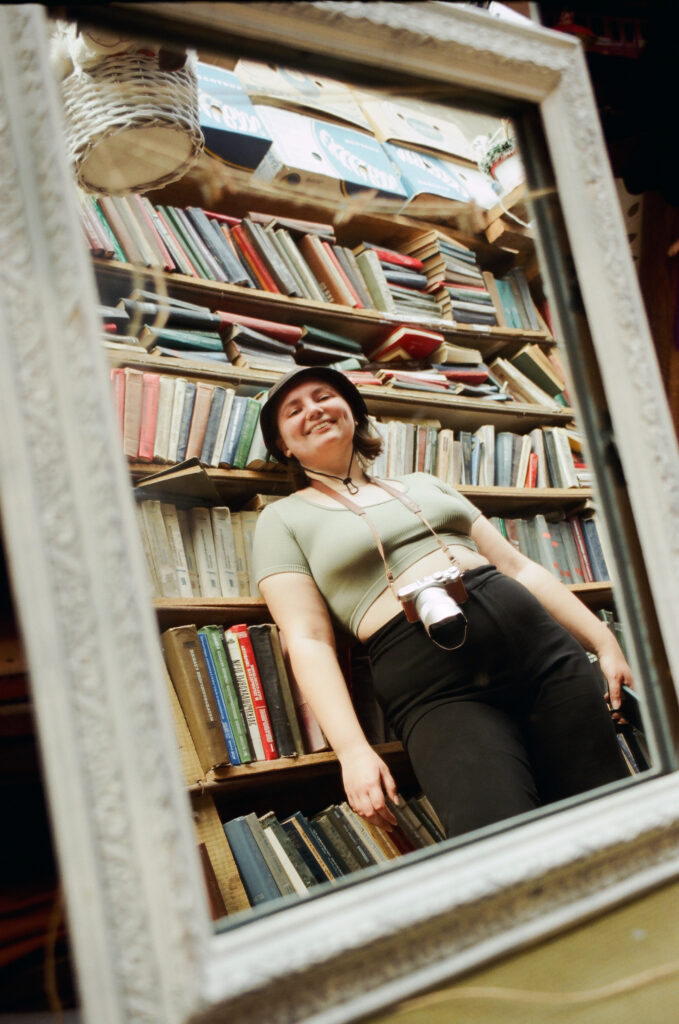
Maria, how do you remember 24 February 2022? Were you anxiously packing your suitcase the day before, or were you watching the news?
The suitcase was packed in the spring of 2021 when the first alarm bells went off, I think it was the news of an alleged “exercise” involving a large number of Russian troops being brought to the Ukrainian border. Nothing happened, so I relaxed a bit. Tensions rose again in the winter, and by the beginning of February 2022, my suitcase was ready again.
In fact, I was scheduled to leave for Kyiv on 24 February — I had to go to a filming. On the night of 23 February, I packed my rucksack for the trip, with my anxious suitcase next to me, and I lay there silently crying, listening to the Ukrainian president’s address to the Ukrainian people and to the Russians. There were no direct statements in the speech, but for me it was the peak of the intensity of my feelings.
On the 24th, my boyfriend got a call from his friend saying: “It’s started…”. I woke up and saw that our airport in Kherson was smoking, there was a flight there.
We bought some food, packed our things and went to my boyfriend’s parents’ house in another part of the city, because our flat is near Antonivskyi Bridge. We delivered food to my mother who lives in an area near the airport, she works in a hospital and despite the shock and the danger she still went to work.
Although it took you almost a year to pack your suitcase, and you had a train ticket on 24 February, you still didn’t leave Kherson. What was your motivation?
Yes, we did not leave and spent another six months in the occupation. Perhaps because we had no idea what was going to happen next, we were very confused and scared. Even though we had prepared, the full-scale invasion came as a shock. I also realised that my boyfriend and I had tickets, but our parents did not, and they were definitely staying in Kherson. That was the main thing that stopped us from leaving immediately. So we stayed, and after a few days it was no longer possible to leave without hindrance.
The Ukrainian forces were soon out of the city, replaced by the occupying forces. Their presence was noticeable: there was a lot of military equipment, all civilian transport was stopped at checkpoints and all men’s documents were checked. Initially, the Russian military did not behave aggressively in the streets, but they came to the homes of Kherson residents, searched them, took them to torture chambers, and a number of people disappeared. The situation was much more serious in the villages of the region — the occupiers were much more aggressive there. Nevertheless, in Kherson we felt a strong moral pressure and there was a lot of tension in the city. Since April, they have already begun to influence our self-governing state institutions, listening to conversations in the streets, picking up a person at a bus stop because they heard that he or she was pro-Ukrainian, or breaking into an apartment because they learned that an ATO/JFO participant lived there. The arrested people were interrogated, beaten, some were taken to Russia, and I don’t know what happened to them.
That’s why you couldn’t hear Ukrainian on the streets, there were no pro-Ukrainian conversations. It was kept for closed rooms, when they were sure no one was listening.

You took pictures of Kherson when you were there. Were they artistic shots or deliberate photo-documentation?
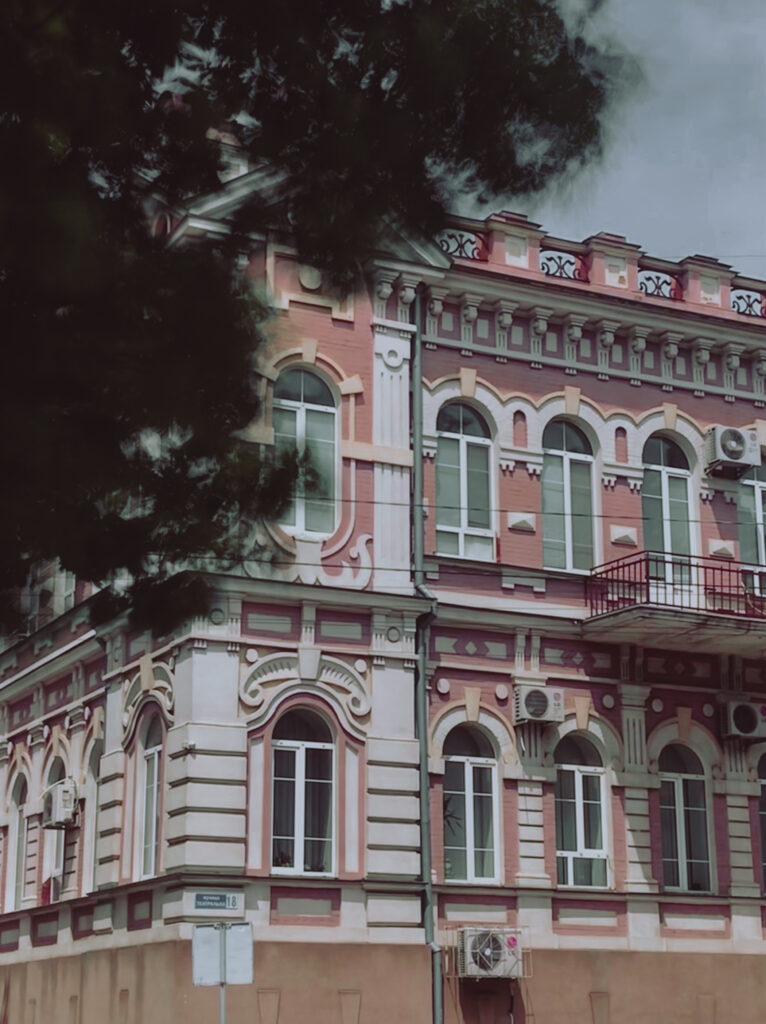
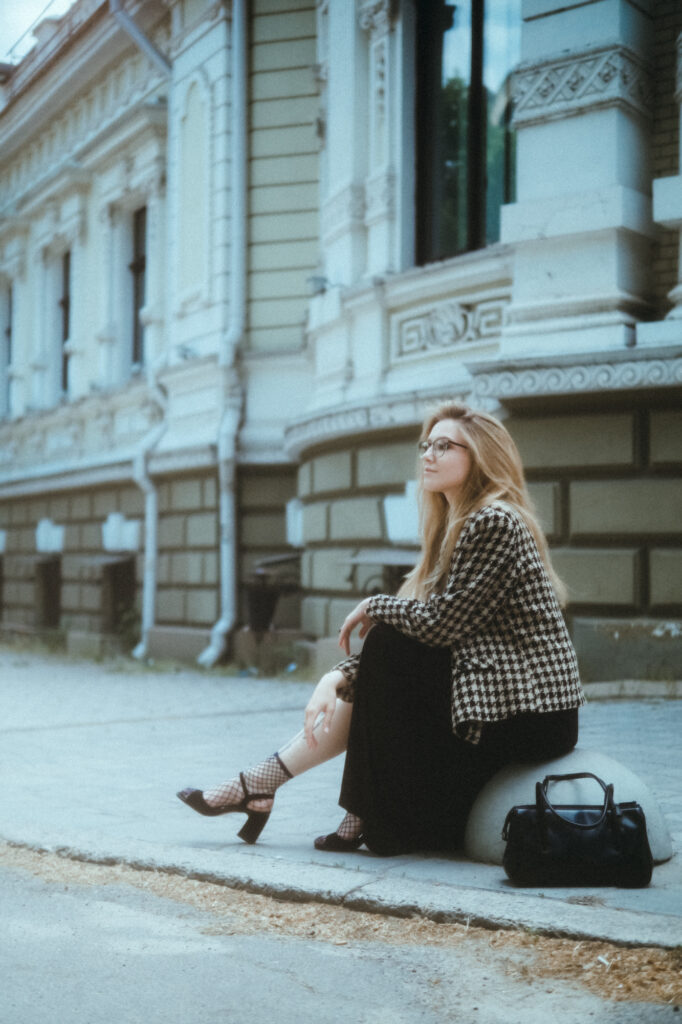
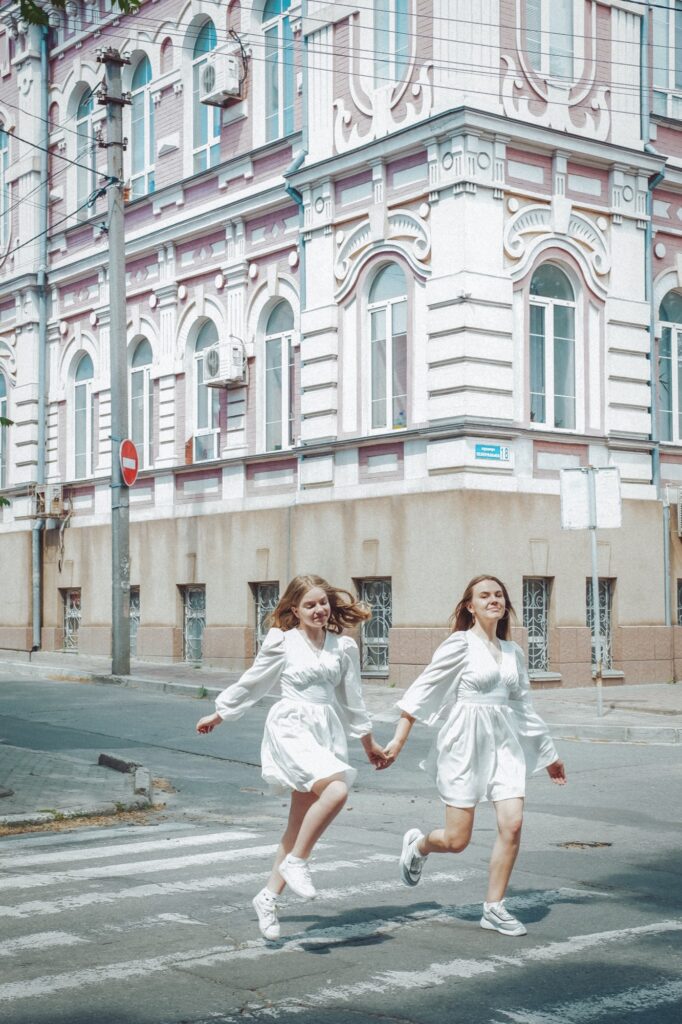
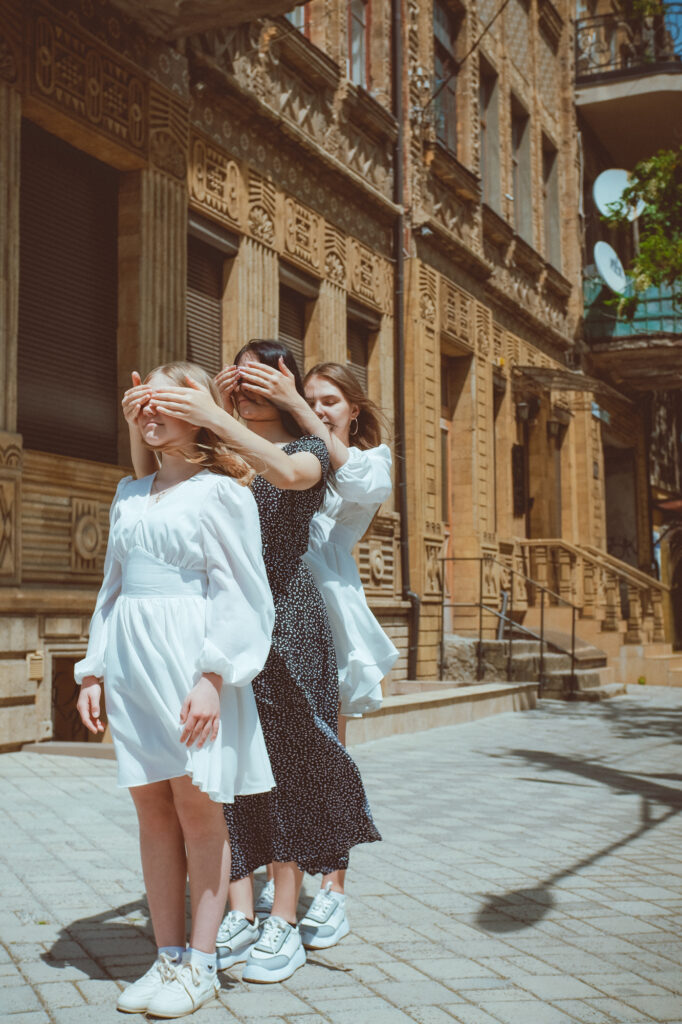
Every time I went to the centre of the city, I realised that the occupation would inevitably end, and then Russia would destroy our city, just as it is destroying all the other settlements in Ukraine. So every time I walked through the empty streets of Kherson, I wanted to capture Kherson as it was, still intact. So I photographed the cityscape. I even did some street photography for a few girls. So I managed to leave them with a memory and capture Kherson as it was. Unfortunately, many of the buildings I photographed then have been destroyed.
How safe was it to photograph one of the pro-Ukrainian rallies in Kherson?
It was one of the biggest pro-Ukrainian rallies at that time. My boyfriend and I dared to attend it as participants. I took my camera, not knowing if I would use it. We were secretly passing information about Russian military equipment to the Ukrainian military, which was scary. But we decided that we live once, so we had to go.
When I saw several hundred people in the square, I knew I had to get my camera out and at least take some pictures, because it was an incredible feeling of unity. Opposite us were Russian soldiers with riot gear and machine guns. But we were among like-minded people who, like us, are waiting for Ukraine, who say that Kherson is Ukraine. In the wake of this euphoria, I don’t know how else to describe it, the fear disappeared completely. It was in this euphoria that I took out my camera. At first I took pictures of people in the crowd: someone holding a blue and yellow flag, someone holding a poster. And the more pictures I took, the more people came, the more I wanted to take really meaningful pictures. Towards the end, I took the plunge and went out in front of the crowd of Kherson residents, standing between the Ukrainian side and the Russian military, to show the full scale of the rally. And at that moment I wasn’t afraid. The military tried to drive their vehicles through, but the people stopped them with their hands, they obeyed and did not open fire. It was the last time that the Russians did not use violence and did not disperse the meeting. The next time (we were not there) they opened fire and Ukrainians were already injured.
It was dangerous to keep the pictures, but in the midst of all these events, the fear was somehow lost. Now I think I acted rather recklessly, I probably should have hidden the footage more securely. But I am very happy that these photos got quite a strong response: from my Instagram page they spread to various public and social networks. They were seen by about four thousand people. Various media wrote to me, asking for an interview, asking me to share what was happening in Kherson, and asking for permission to use these images. There was even a response from a number of people who were present at the rally and who saw themselves in my pictures.
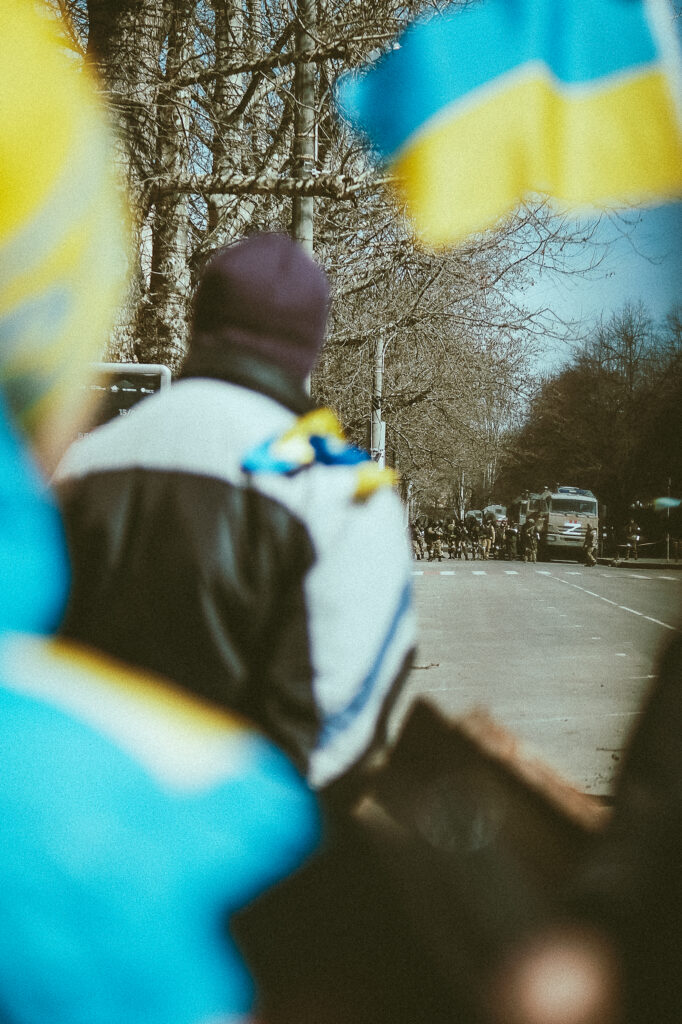
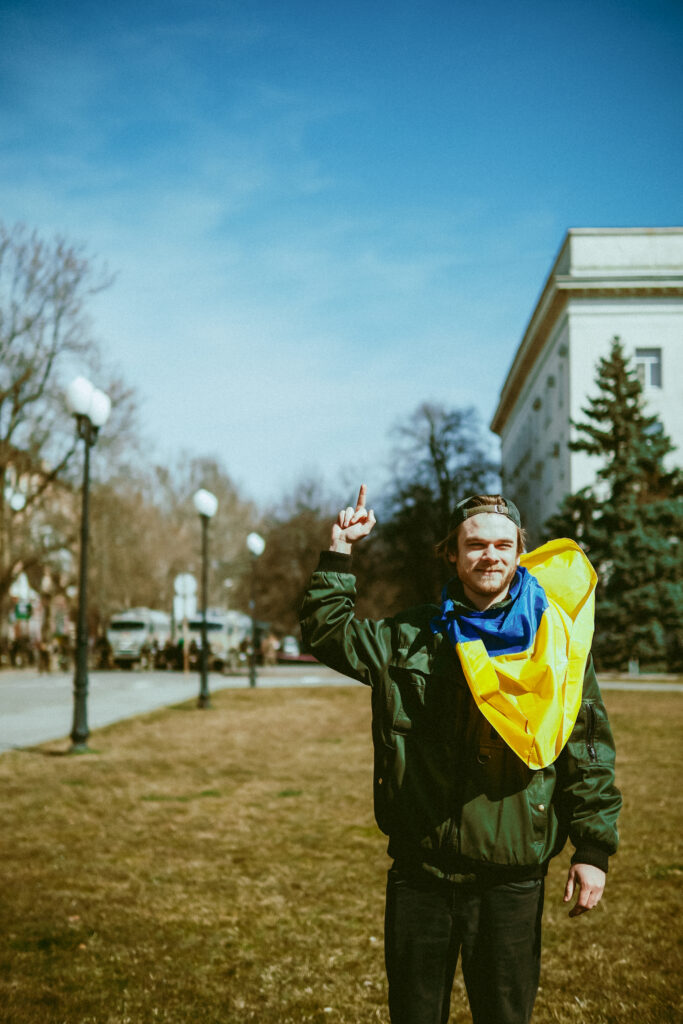
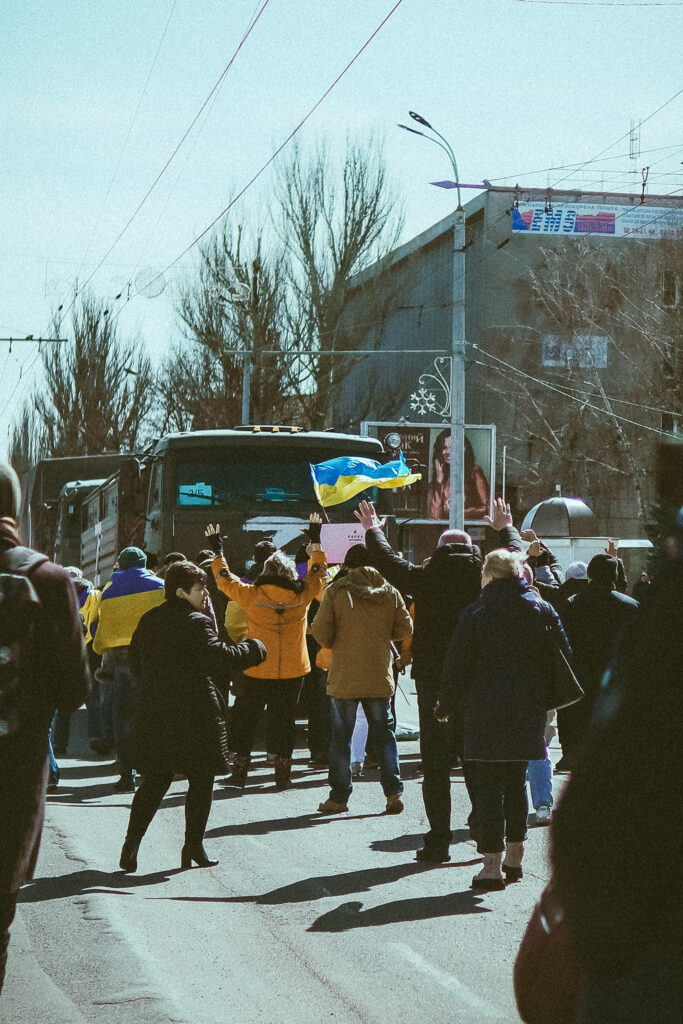
My actions had no negative consequences, I was lucky that they only checked my documents and not my mobile phone and photographic equipment. But I deleted the photos from my phone, changed my name on Instagram, because in my posts I talked a lot about life under occupation, the mood of the people of Kherson and shared my angry feelings about the occupiers.
I realised that we were under occupation only when we left the occupied city. When people speak Ukrainian everywhere, and you are not afraid of the military, because they are your own. Only then did I realise how tense I was, not feeling safe on the streets or at home.
Did you have the opportunity to leave during the six months of occupation?
I did not think about it. My friends left, there was such an opportunity. I knew how to leave, but I didn’t think about it until the end of the summer.
What changed when you decided to leave?
The decision was made a few days before we left. Our close friends were leaving in August and suggested that we do the same. By then it was clear how the grip of Russian influence was tightening, how the occupiers were becoming more confident. I was more worried, not for myself, but for my boyfriend, because there was active talk of holding a referendum in Kherson, after which the occupiers would be able to take Kherson men to the front and force them to fight on the side of Russia against Ukraine. In addition, we did not have jobs, and many of our friends called us to Kyiv and promised to help us find employment. Besides, I no longer felt that I was contributing to the resistance movement by staying there. So in two or three days we packed our suitcases and rucksacks and left. Our parents stayed and were in Kherson until the end of the occupation.
The de-occupation of Kherson took place in November, when you were already in Kyiv. How did you receive the news?
I was on my way to the metro for a shoot when I read about the liberation. At first I didn’t quite understand if it was true, and then I burst into tears. I worked on the last of my resources and when I got home I cried a lot. There was no relief I had been waiting for, because Kherson was completely without communication: there was no electricity, no internet, no mobile phone service, and I did not know what had happened to my mother for several weeks. The connection was restored after a week and a half. Due to the poor quality, I could only hear one word out of five from my mother, but it was clear that she was fine, and I finally let go.
After the liberation, she returned to her hometown several times, mostly for relatives’ birthdays. I saw the ruins in the city with my own eyes. I took pictures with my mobile phone, again to show my followers how Kherson lives. But in general I didn’t manage to walk around the city very much because it’s still not very safe — there are a lot of arrivals, most of them before the alarm goes off.
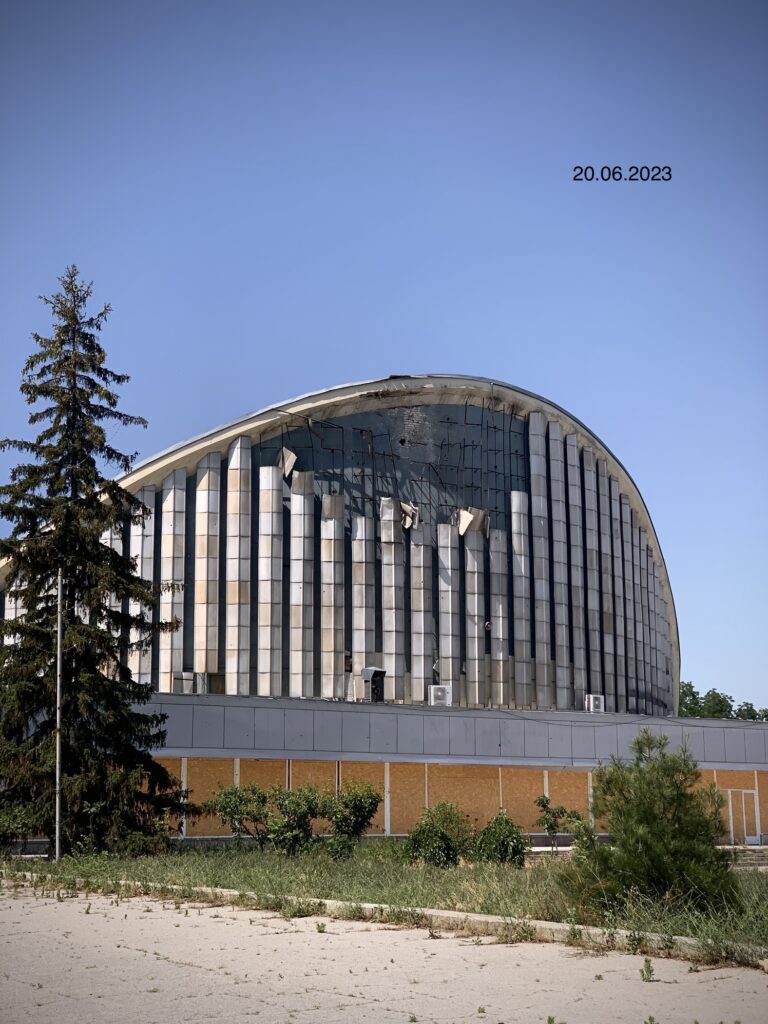
Your photos from occupied Kherson still have an effect today. Tell us about it.
Yes. I have seen that telegram channels with a large number of subscribers have recently published my photos, as well as some Ukrainian and European media. I have given interviews to Moldovan and American publications. Once I was approached by a man who was going to write about the occupation and asked for permission to put my photos on the cover of his forthcoming book. Government agencies have also asked for permission. I don’t refuse anyone, I don’t take money, because the main purpose of these pictures is to spread information about the Ukrainian resistance. And I am glad that they serve this purpose. At the same time, I am glad when my authorship is acknowledged, but unfortunately this does not always happen.
I also filmed a creative project during the occupation. It helped me to express the pain I was feeling at the time. It was inspired by the idea of the photographer couple Liberov. To implement the idea, I collected photographs of the extraordinary events in Ukraine at the time and decided to show them through a projector. The wall served as a backdrop for the show. But not only that. Most of the images were projected onto the girl who was the subject of the photographs. In this way, she became part of the photographs, as if she were a participant in what was captured on them. In this way I conveyed the idea that Kherson is under occupation, but we, its inhabitants, feel the pain of every Ukrainian in Bucha, in Irpin, the pain of every arrival, of every victim.
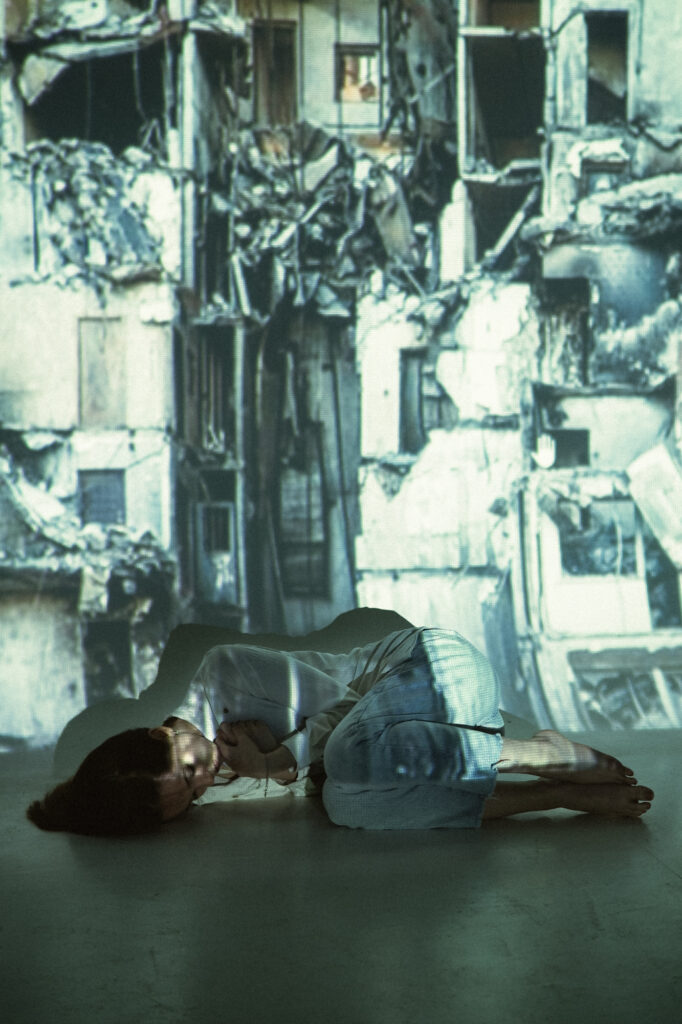
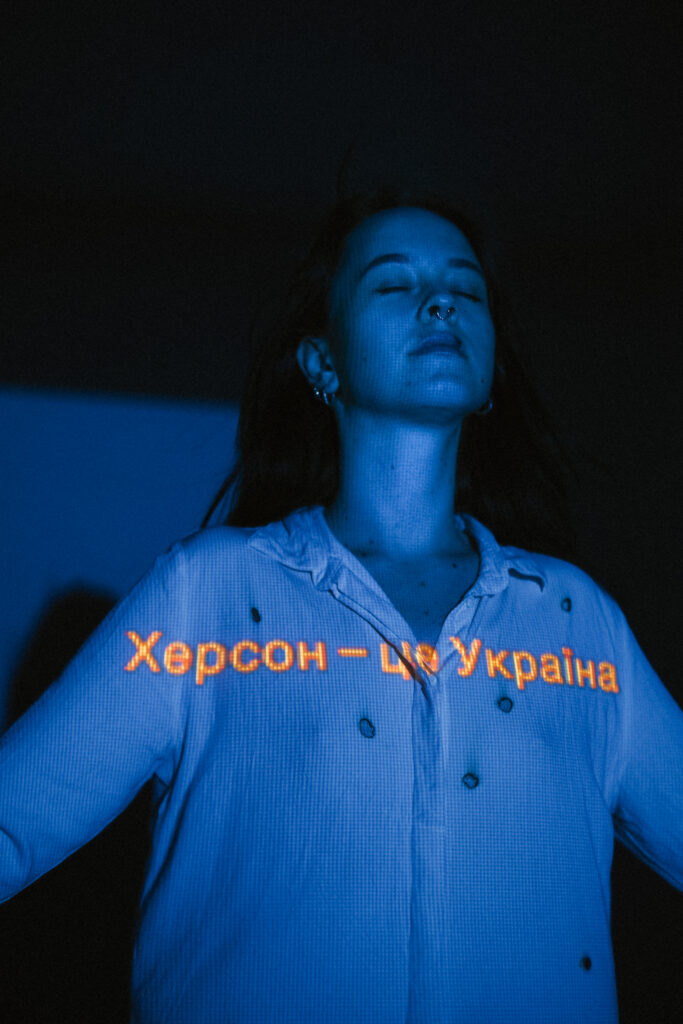
While we were filming, Russian military vehicles were driving right under the windows, and we were filming about how Kherson is Ukraine.
I’d like to make something else like that, but I’m waiting for it to react and become a continuation of my feelings. I’m looking for an appropriate format. I am open to cooperation. I will be happy if someone understands that I can realise their idea, and it responds to me in return.
How are you helping the Ukrainian army?
Every month I donate 15% of my earnings to volunteers I trust. I share verified information on my site. I help when they need to film something to organise a fundraiser. Several times I have donated my footage to the Ukrainian army.
Let’s say we finally win this war and your job is to capture the victory. How would you do it, and what would be in those photos?
I don’t really think about the moment of victory, because now it’s hard to imagine the conditions in which it will take place. On the one hand, of course, it will be good news, but at the same time there will be a lot of pain.
Of course, I would like to say that the first thing I will do is to go through the whole Kherson region and film it as it will be at that moment. But I’m afraid the area will be so mined that it will be impossible to drive on non-main roads for years.
I am waiting with all my heart for my native Kherson region to be free again and for me to be able to see my country as fully Ukrainian, safe and secure.
Translator: Ivan Chepaykin


