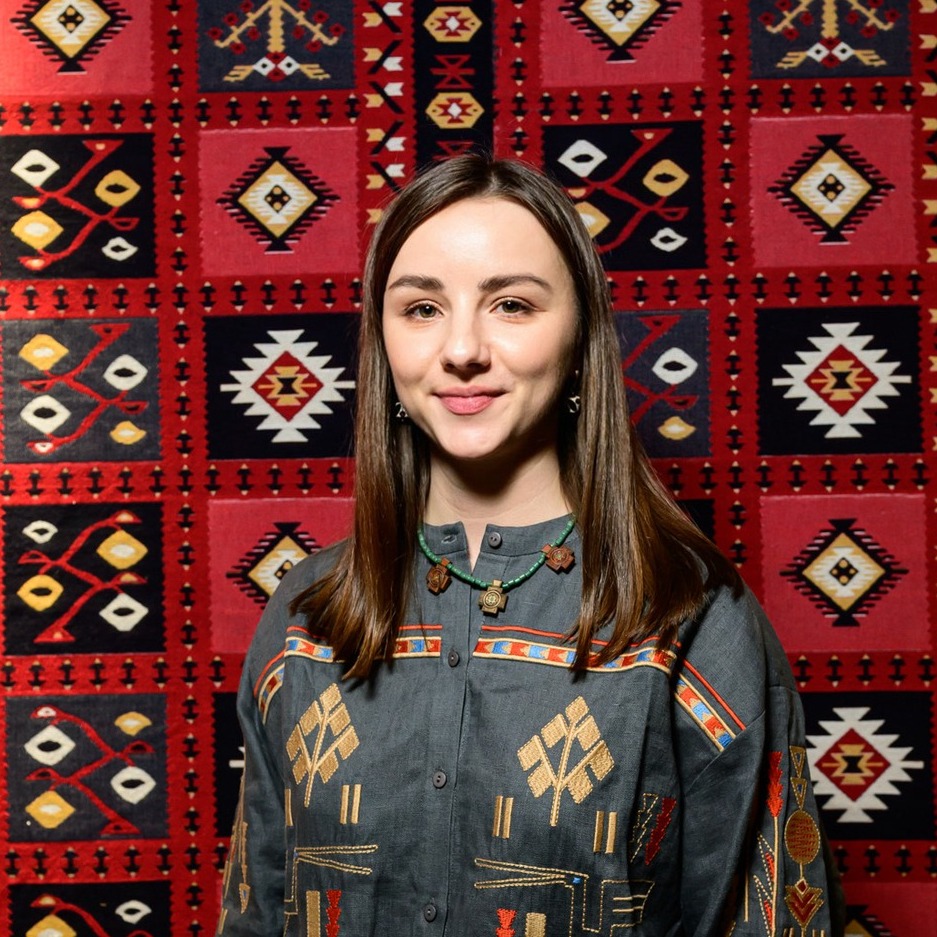
Hi, please tell us more about yourself.
My name is Oleksandra Panyak, and I am the Head of Media Relations at TRUMAN. I am a contributor to Forbes, Ekonomichna Pravda and The Page. Previously, I was Head of Communications at Ascania Group of Companies and also managed the social project “Lviv is a Safe City” of the NGO Samopomich. I graduated from the Ivan Franko National University of Lviv, Faculty of Journalism.
24 February 2022 divides the life of each of us into “before” and “after”. Can you go back in time and remember where you were on that day? What were you doing in the first days and weeks of the full-scale war?
On 24 February, I left Kyiv for Lviv. For the first two weeks, it was difficult to recover from the war and the events that had taken place. I just existed, scrolling through the news and my Facebook feed. When the initial shock wore off, I pulled myself together and started doing what I do best — building relationships with journalists.
During the first month of full-scale war, I established communication with more than 50 foreign journalists from the UK, the US and European countries. I provided them with contacts in the Ukrainian military, businesses, and volunteers. I also took an active part in organising publications about Ukraine so that the whole world could see what was really happening here and what cruelty Russia was capable of. The Russian propaganda machine is working every minute, so it is very important that Ukraine is present in the global information field with true stories.
Has your view of the world and what you did before and after the war changed dramatically, especially since the full-scale invasion began? In other words, can you say that this day, 24 February 2022, has really changed your life forever, or has much remained the same, your work, your goals, your views on things, etc.?
If so, I’d be interested to know how it has changed your view of things, maybe it made you completely rethink something, give up something?
In the first weeks of the war, I was full of anger and hatred. I didn’t understand how all this could be happening (I’m talking about Bucha and Irpin) about 30 kilometres from my home. My heart broke with grief and my eyes filled with tears for the people whose lives, homes and loved ones were taken away by the war. I live with these feelings every day now, but at the same time, I am grateful that my family and I are alive.
This war has shown that there is no compromise. There is no compromise with people who want to kill us and destroy us as a nation. Now most of my work is focused on helping Ukraine, covering charity initiatives, helping foreign journalists tell stories about Ukraine, getting the right messages about this war across to foreigners. The whole job has changed, probably like many others who work in communications. There is only one goal now — victory. And I like to think that I am doing my best in my position every day to bring that closer.
Could you tell us a little more about the Truman Media Relations department that you head? What does it do, what are its objectives for this year? What have you achieved so far?
Our team of five specialists — four in media relations and one in influencer PR — focuses on building cooperation with Ukrainian and foreign media to cover various projects and initiatives. The team’s work takes a variety of formats: we organise interviews, help with research and produce in-depth analytical material.
Over the past two years, we have arranged more than 5,000 publications on various projects with Ukrainian and foreign media. Among the media in which we have been published: The Guardian, The Wall Street Journal, American Forbes and dozens of other global media.
One of our favorite projects is working with the Economic Security Council to help foreign companies leave the Russian market. After the full-scale invasion, many European companies withdrew from the market, but many of them are still operating there. We are not just talking about well-known B2C companies such as Auchan or Nestle, but also companies operating in critical infrastructure. For example, the defence industry or the banking sector.
It is usually very difficult to influence a company’s decision to leave Russia. But there is one effective method. For large international companies, the opinion of the media is important and has a significant impact on the business decisions of foreign companies. As a result, the publication of investigations into a company’s activities in Russia often becomes a de facto guarantee of its eventual departure. For example, the German technology giant SAP and the French holding Thales, which used Russian servers and banks, left Russia after our publications. Italy’s Danieli and America’s Cisco also announced that they would stop doing business in the aggressor country.
How do you communicate with leading foreign media such as the Guardian and the New York Times? I’d like to know more about what’s happening behind the scenes so to speak: how do you work with the editors of the world’s leading media and build publications?
In the first weeks of the invasion, I made warm contacts with more than 50 foreign journalists, and these connections have been a great help in my work since then. Thanks to this cooperation, journalists trust me as a source of information, which greatly speeds up the process of publishing material. There have been cases where I have written to journalists on the weekend, and they have published my material on the same day. Such good results are possible thanks to their trust in me and my sources.
It is worth noting that it is not easy to reach the editors of global publications. They are inundated with requests from PR professionals all over the world. So to get your letter noticed by a particular editor, you need to be able to write it well and know what day and time to send it.
You also need to think about segmentation. There are journalists who write about business, politics, culture, sport and other topics. It is important to send information to the right journalist who really understands and writes about your topic.
In general, the main rule of successful communication is to be useful to each other. If you share interesting and useful content with a journalist that will be of interest to their readers, your pitches will be successful and the material you send can become the basis for publications in the global media.
What do you think is the most difficult, time-consuming and demanding aspect of your work? Is it getting an article or research to be seen not only by Ukrainians, but also by foreign readers of the world’s leading publications?
The hardest part is waiting for the material to be published! Speaking of such complex formats as investigations, they can take from two to six months. And to be honest, I’m never sure if an investigation is going to work until I see the result.
We have had cases where a journalist has ‘taken’ a subject, asked us not to give it to anyone else to maintain exclusivity, but after two months of working on it, has refused to publish it for various reasons. And we lost valuable time.
Today, it is not a problem to attract the attention of foreign journalists with a story about Ukraine. Journalists are ready to communicate. The difficulty is to get a story published. And there are hundreds of reasons. Some of them are completely out of your control, but you have to take them into account. For example, when we were working on an investigation into the Italian company Danieli, there were general elections in Italy, so our topic was becoming less relevant to journalists every day. And more recently, we were due to publish a story in a leading British media outlet about the Victory of Dignity charity project, but the journalist postponed and then cancelled the publication because of the outbreak of war in Israel. At the time, journalists were concentrating all their efforts on covering the war. The same situation has happened again with the topic we are working on now. The issue is that a Spanish journalist who is preparing the publication is in Israel and has been forced to postpone the publication of the text we have been waiting for over a month.
Events in the world are changing rapidly, and it is important to understand that, unfortunately, we will not always be in the spotlight of the international community and therefore of interest to the Americans, the British, or anyone else. So we have to find the keys to solve this problem and do everything we can to ensure that the world always remembers us and writes about us.
Which of those investigations do you remember best? Perhaps there are stories where you would like to see a case pursued to bring the perpetrators to justice? Or maybe it is any kind of story, not necessarily the actual investigation, that sticks in your mind and that you were very happy to see in the foreign media.
Of course, we put most of our effort into publications about investigations into foreign companies in Russia. Let me tell you about one of the most important ones.
At the beginning of March, Le Parisien published a story about the French company Thales selling thermal imagers after 2014, which were later found in abandoned enemy tanks in Bucha. In June that year, the company was involved in another scandal: analysts from the Ukrainian Economic Security Council found information that Thales provided cybersecurity to the largest Russian state-owned banks under sanctions, such as Russia’s Sberbank.
To understand the scale of the company, Thales provides protection to 19 of the world’s 20 largest banks, helping to protect 85% of global banking transactions.
We provided this information to Le Parisien and a few months later they published an extensive investigation into the company’s activities. A few months later, the company announced its withdrawal from Russia. According to our colleagues at the NEC, Thales’ withdrawal could cost the Russian Federation about $35.5 million and significantly reduce the security of its banks.
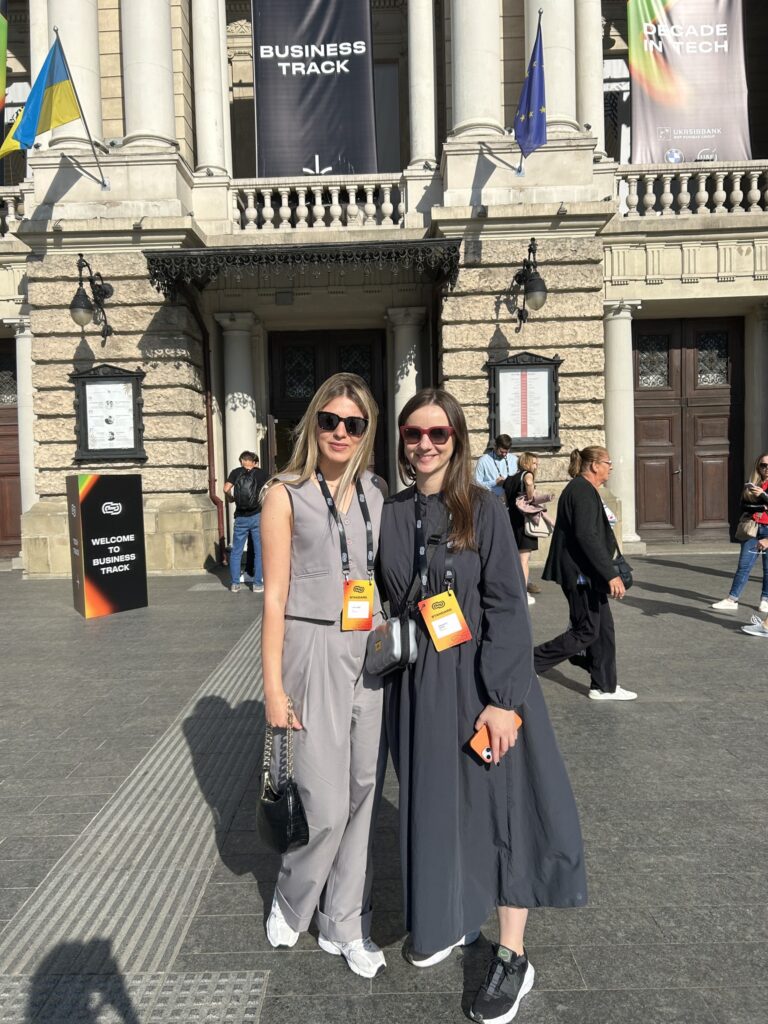
What else would you like to do in your youth that you would be proud of?
I think “youth” is a flexible term. You can be young at 20 or at 65. It just depends on how you feel and how you perceive yourself and the world.
I want to be useful every day in my work. That seems to me to be the smartest way — to do well what you are good at, in the place and time you are now. And there will always be challenges.
My dream is to live in a country where there is no war, where everyone has a home and a family, where everyone has the opportunity to get an education, a job that matches their skills and a decent retirement. I want to be part of positive changes, part of the struggle for a decent life for everyone.
What does Ukraine mean to you, and has this word taken on new meanings or connotations for you since the start of the full-scale war?
Ukraine is each and every one of us. It is you, your friends and colleagues, your parents, your whole environment. Today we are the resistance against an oppressive and cruel regime, the strength and power of the military and the energy of volunteers. Never before have I felt that Ukrainians are so united and ready to face a common enemy. I believe we will win, and the regime of our neighbours will soon collapse.
Translator: Ivan Chepaykin
The material was produced with the support of the NGO «Institute of Mass Information» as part of a project of the international organisation Internews Network.


