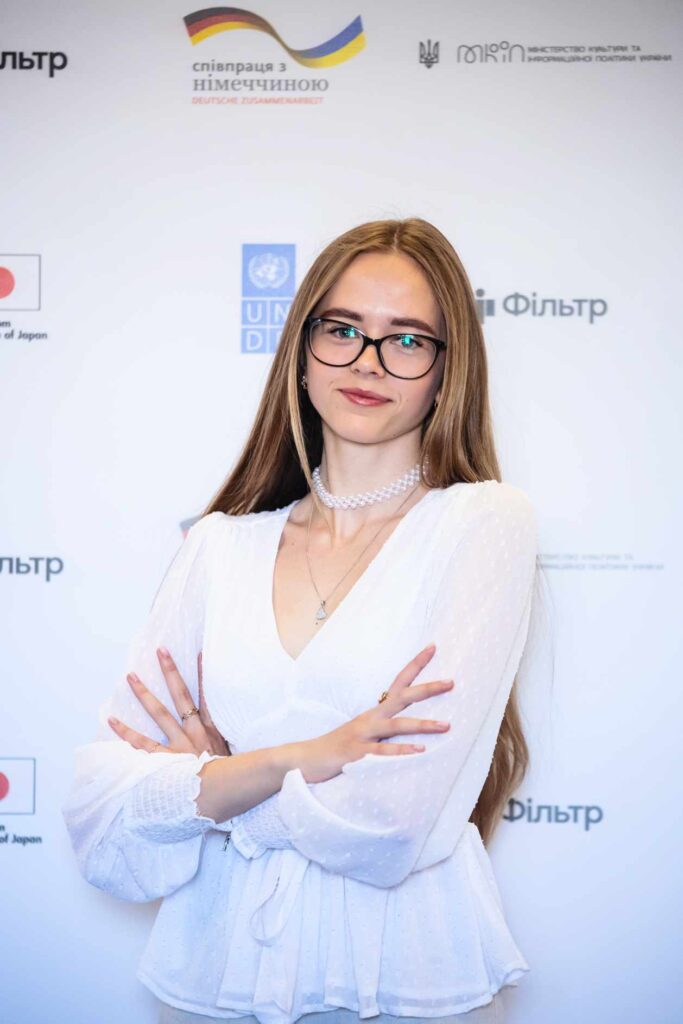
Hello, please tell us a bit more about yourself.
Hi, I’m Anna, I’m 21 years old.
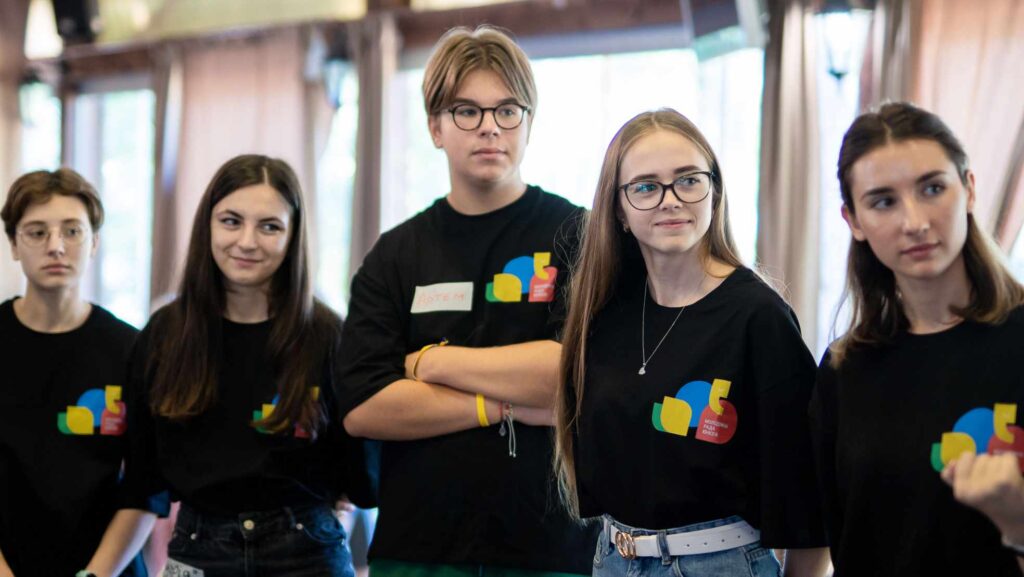
I am a 4th year student at Oles Honchar Dnipro National University, majoring in International Relations, Public Communication and Regional Studies. I am currently implementing my own project, the “United Youth Academy of Youth Diplomacy“, which aims to promote the idea of developing youth diplomacy in Ukraine. Its goal is to support young leaders who aspire to or are already working in international relations. As part of the project, we conduct educational work and implement initiatives aimed at achieving the main goal. Continuing with the theme of youth diplomacy, I am an assistant in the same field at the Bohdan Hawrylyshyn Family Foundation. Here we organise International Espresso for young people — meetings over coffee with experienced speakers on topics related to international relations. The Foundation’s well-known “Youth Delegates to the UN” programme is about to start, so we will be working with it. I am also involved in the work of the creative project “We Are Here“, which aims to tell our complex history in simple words, our culture in a non-trivial way, and our identity in a deeper way.
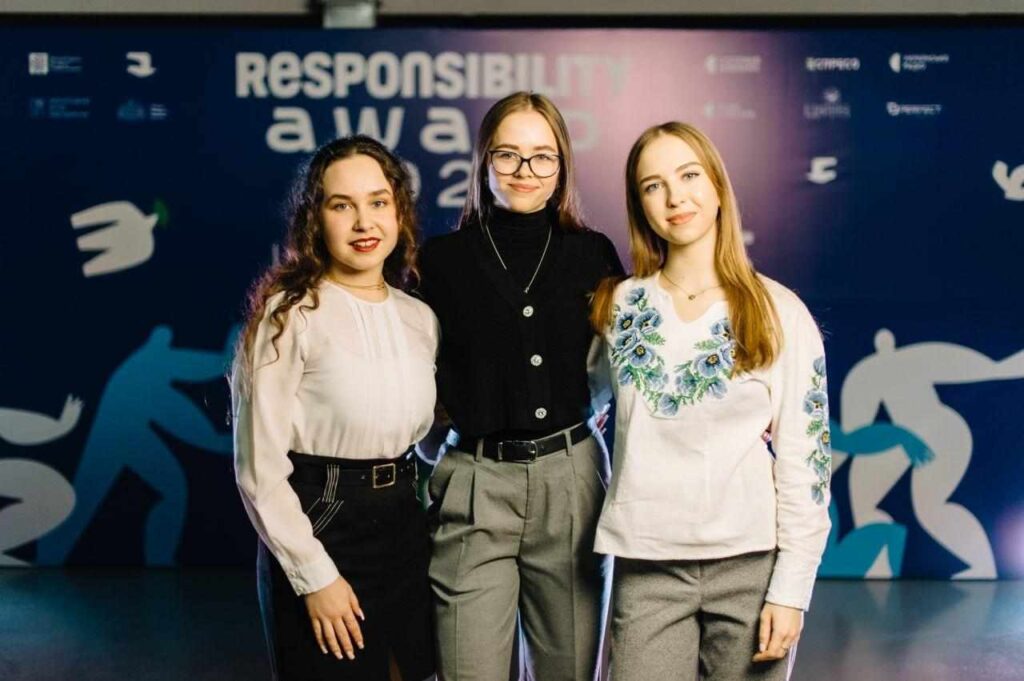
Now I am also a member of the Youth Council of the Ministry of Foreign Affairs of Ukraine and the Youth Council of UNICEF. This helps me to be at the centre of events that affect young people and to contribute to the development of the youth sector in Ukraine.
The 24th of February 2022 has divided the lives of all of us into “before” and “after”. Can you go back in time and remember where you were on that day?
What were you doing in the first days and weeks of the full-scale war?
I remember that day very well. I was in Dnipro, far from home (I come from the Sumy region), and I woke up at about 5am to loud explosions. To be honest, I didn’t feel panic or much fear. It seems to me that somewhere deep in the subconscious, against the background of the news at the time, every Ukrainian was aware of the possibility of a full-scale invasion. I opened the news and saw the rocket launches and the advance of the enemy troops. The most important thing for me at that time was to know whether my parents and I were safe in the Sumy region. It was almost impossible to leave by public transport, so on 25 February my parents came to Dnipro to take me home. The road was relatively quiet, but in the evening the russian tanks entered our village. It was frightening, we didn’t turn on the lights, and we were afraid to go to bed because we knew that the enemy was in the village.
After the Ukrainian armed forces had liberated Kyiv region, the Russians withdrew from our village as well (they were probably not ready to fight, but were going to attack Kyiv after its occupation). As the situation stabilised, my family and I began to systematically send humanitarian aid to the army and the IDPs.
I remember that in early March our local school started cooking for the men from our village who had gone to war. At the time, it was somewhat reassuring for me because I realised that I could at least be useful in some way.
I’ve also read that you and your team co-founded the United Youth project. Its aim is to help build a community that is educated in international politics. Could you please tell us more about your project, what you have already achieved and how it is developing today? What are your aims for this year?
I like to talk about United Youth because this project has become very special to me and has brought together a team of very cool and important people. We started it with the support of the Office of Action’s scholarship programme. They helped us a lot to get off to a good start and make us known as an interesting new project.
A few months into the project, we decided to move away from youth policy and focus on youth diplomacy. It was challenging and positive that the topic of youth diplomacy and our approach to promoting it was completely new. We entered this niche without any research or regulatory framework for the development of youth diplomacy. Step by step, we studied the experiences of other countries and realised that youth diplomacy is a very promising field that will become more relevant and popular in the coming years.
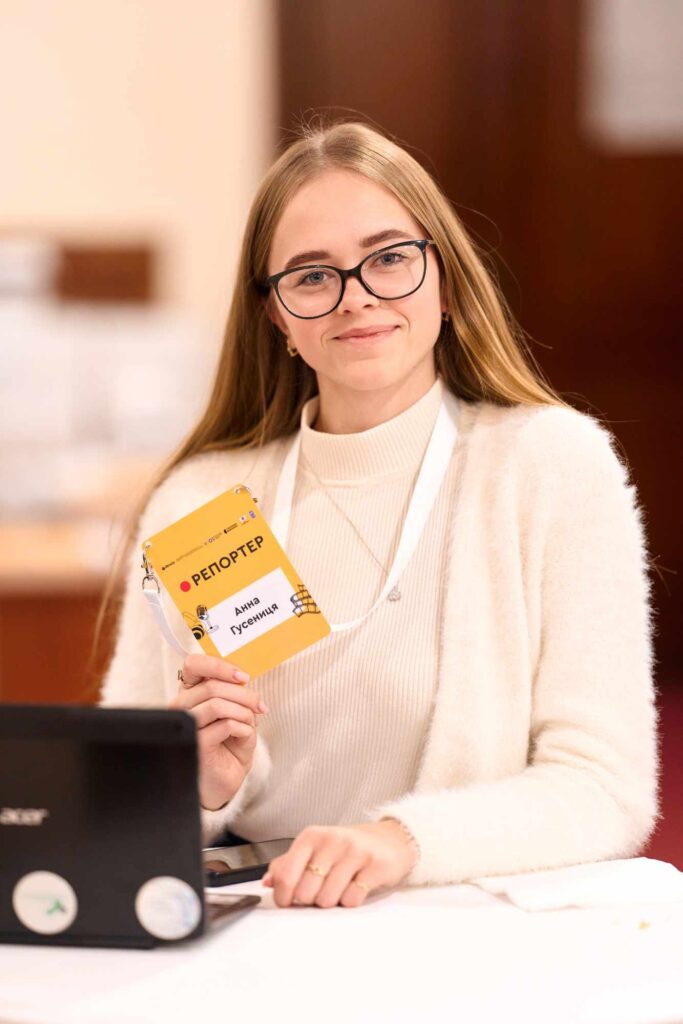
The full name of our project is the Academy of Youth Diplomacy “United Youth”. Our main goal is to promote the idea of youth diplomacy in Ukraine. In order to achieve this goal, we have set ourselves specific tasks, including: educating young leaders who are interested in international relations; increasing motivation and support for young leaders who are active on the world stage; and interacting with young people abroad to promote messages that are important for Ukraine. It is important to note that the usual definition of youth diplomacy is diplomacy aimed at young people abroad. However, our team is committed to the idea that interaction between young people is beneficial. Therefore, when implementing youth diplomacy and focusing on a foreign audience, we should not forget about Ukrainian youth, who are the ones who actually have to implement it.
In terms of achievements, it took us a long time to get up to speed and understand what we wanted. That’s why we spent about six months working on strategic tasks, and in the summer we held a youth tournament to solve diplomatic cases called Crisis Point. Almost 100 people applied for the initiative and 25 were invited to the training. The main aim of the tournament was to prepare young people for situations they might face in the international arena. The young people worked in groups and had to solve tasks such as the following: “Your group has been asked to prepare an appeal to the International Olympic Committee to exclude Russian and Belarusian athletes from the 2024 Olympic Games in Paris. What will be your main points? The participants had to use their knowledge, creativity and diplomatic skills to solve the case in a short time. We also selected a winning team, and each participant was mentored by young leaders who had already reached certain heights.
Another initiative of which we are very proud is the Young Diplomat Award 2023, an award for young leaders that recognises their contributions to the development of international relations and diplomacy. The award has become an important way to highlight the achievements and contributions of young members of the diplomatic community to the development of Ukraine and its international relations. We received 40 applications, selected 15 candidates who were voted for by the public and evaluated by an expert jury. More than 1800 people participated in the public voting. The partners of the prize are the Bohdan Hawrylyshyn Family Foundation, the Hennadii Udovenko Diplomatic Academy of Ukraine under the Ministry of Foreign Affairs and the Ukrainian-Danish Youth House. The prize was awarded to Artur Koldomasov, an analyst at the Detector Media Research Centre and a member of the Pan-European Youth of the Kyiv region. He has interned at the Canadian Parliament, the Permanent Representation of the Holy See to International Organisations in Vienna, the Ministry of Foreign Affairs of Ukraine and the Embassy of Ukraine in the United States. See photos here.
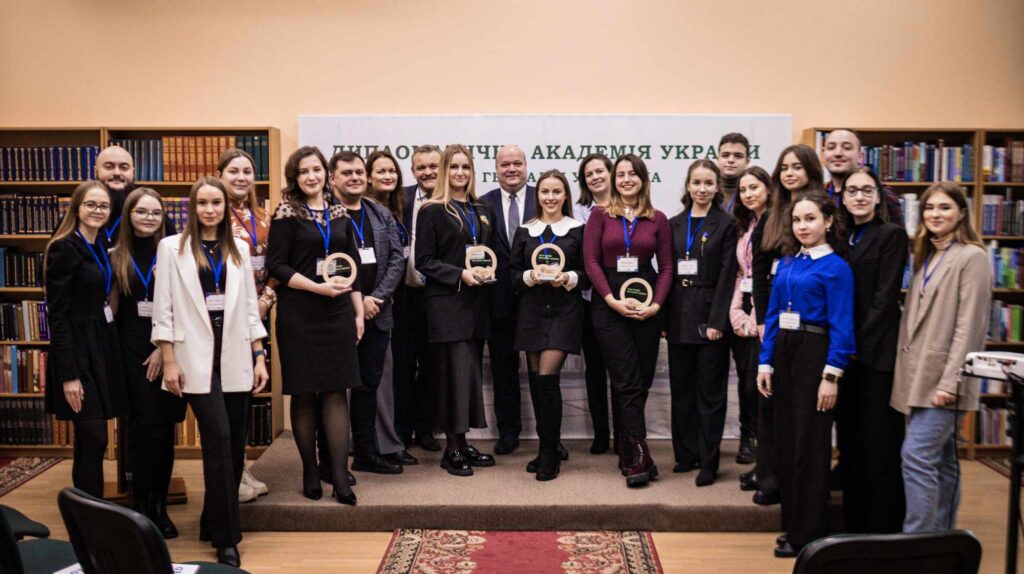
Talking about the goals for 2024, I think they are quite ambitious). We want to become a non-governmental organisation to be able to apply for grant programmes that will help us attract more participants and make even better initiatives. We are definitely planning to run the Young Diplomat Award 2024 and Crisis Point 2024, but we have many more ideas that you will be able to see implemented very soon!
The end of the first part of the interview. Please follow this link to read the last part of the conversation with Anna.
Translator: Ivan Chepaykin
The material was produced with the support of the NGO «Institute of Mass Information» as part of a project of the international organisation Internews Network.


