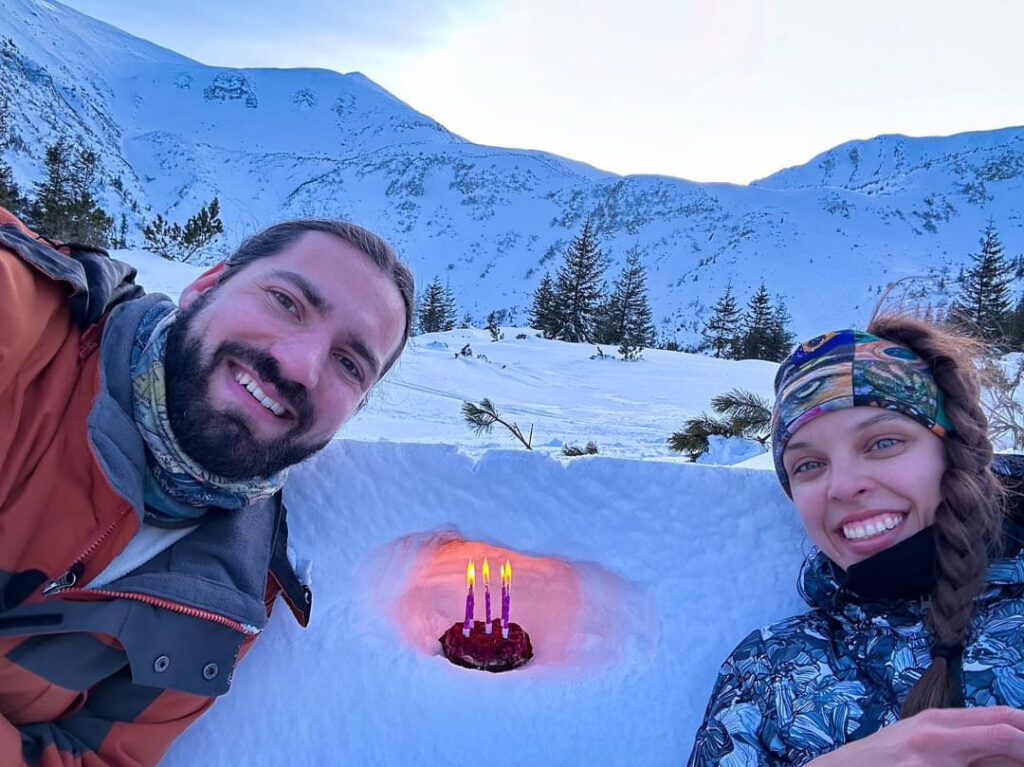
Dmitriy, Anastasiia, how busy was your life before the invasion?
Anastasiia: I’m an interior designer by profession, but I spent a lot of time on graphic design. As a concept artist and scriptwriter for Magic Innovations, the company I work for, I have created great projects with my team in many countries around the world. Have you seen the news about the New Year’s Eve 2021-2022 light show at the Burj Khalifa skyscraper in Dubai? Yes, that is our work. We have also implemented many ideas related to holograms, 3D mapping and are working on a modern interpretation of light in design.
Since the beginning of Russia’s full-scale invasion of Ukraine, we have received fewer orders, but we continue to work. For example, we worked on the America’s Got Talent project that viewers saw this summer. Together with Ukrainian choreographer and dancer Oleksandr Leshchenko, we created a composition for the TV show. It combined choreography and a light show, and in this way we told a story about Ukraine and our struggle.
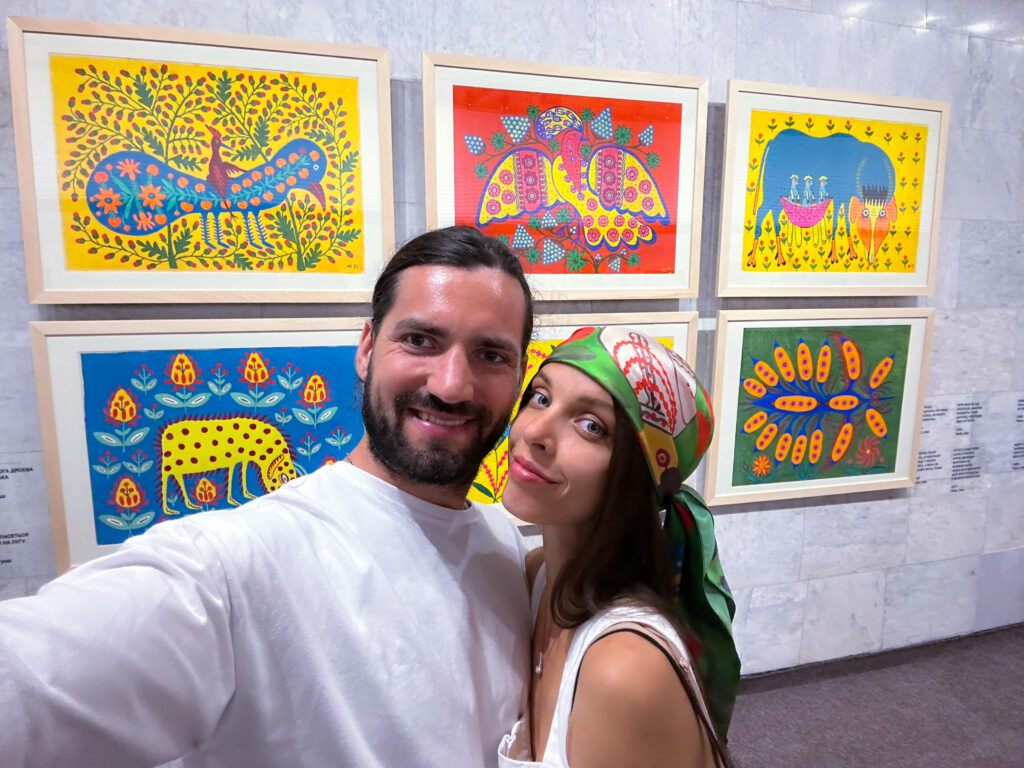
Dmytro: I am originally from Kryvyi Rih. I have a degree in computer science. I worked for a long time with financial markets as a financial expert. As a purchasing manager, I work with everything related to exports and imports with the Republic of China.
I met Anastasiia 7 years ago in Kyiv through a love of mountaineering. We travelled the world together, spending a lot of time in Asia: we visited Indonesia, the Philippines and lived in China for four years.
Our main hobby is scuba diving. We do both free diving and scuba diving professionally: we go to the depths, communicate with underwater animals and fish in an environmentally friendly way. We have swum with sharks, whales and dolphins.
Anastasiia also likes to capture all this in photographs. She recently had an exhibition of her underwater photographs in Lviv.
We have built our lives around combining work and travel: Anastasiia’s work is remote, and I work with Eastern countries, so I have been there.
Our travels were interrupted four years ago by the coronavirus epidemic, and the full-scale war has extended that interruption indefinitely.
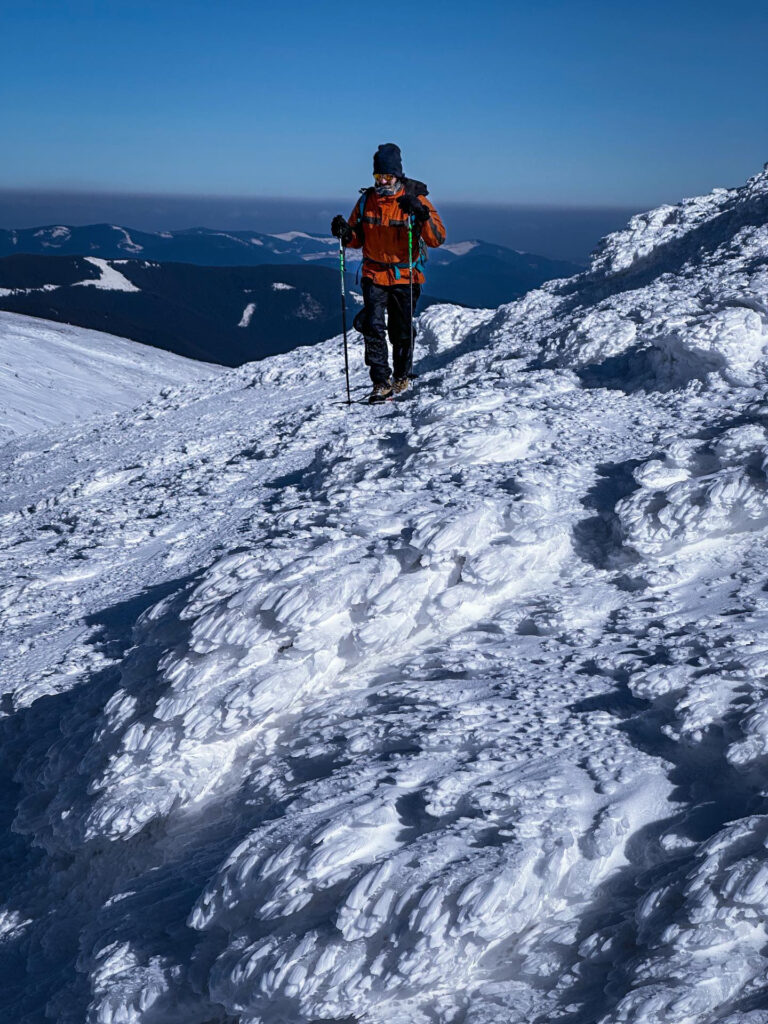
How did the day of 24 February 2022 begin for you?
Anastasiia: We got married just before the war started. After the wedding we went diving in Sri Lanka. Dmytro’s birthday is on the 23rd of February, so we came back to Ukraine and went to my parents’ house in Ivankiv for the holiday to spend the day together.
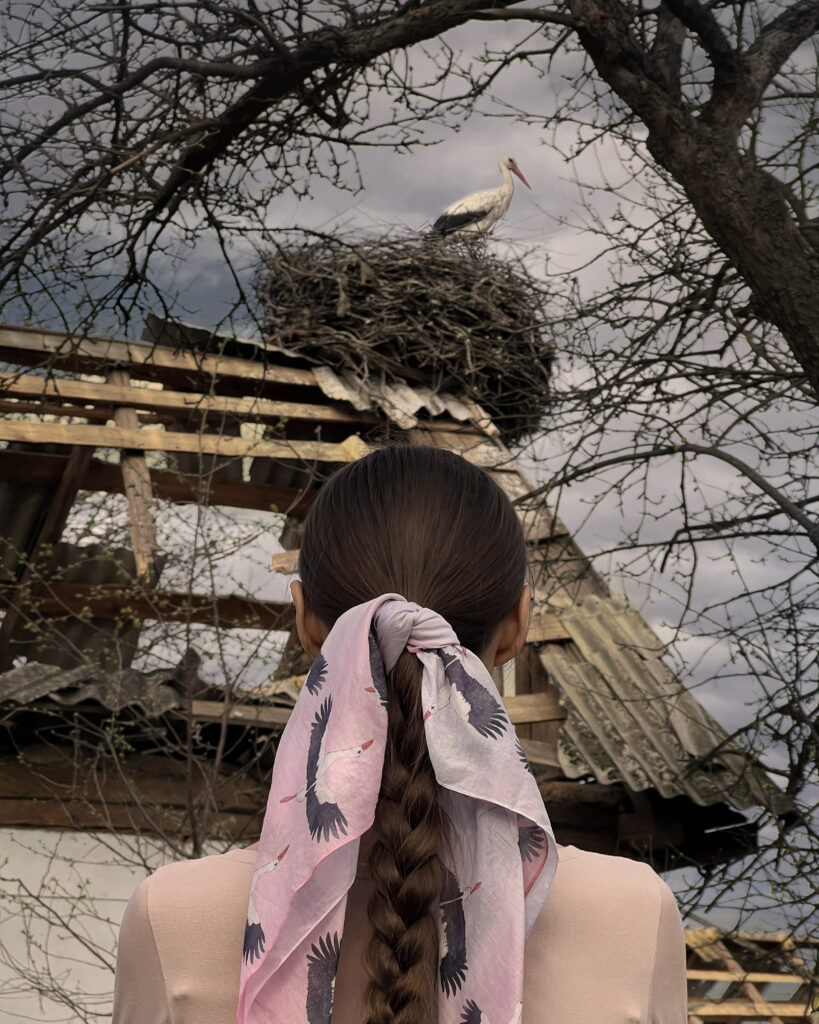
My native village is located in the north of the Kyiv region, not too far from the Belarusian border. And when we woke up on 24 February, we could already hear the first explosions in Ukraine. We began to persuade our parents to leave, although none of us realised at the time that enemy troops were also coming from Belarus. Everyone was confused. In addition, my sister and her family from Kyiv were coming to join us. And while we were still deciding, in the afternoon of 24 February, enemy tanks entered Ivankiv.
On the main road that runs through Ivankiv from the north of the country and then splits into several roads leading to Gostomel, Borodianka, Irpin, Kyiv and the only bridge, columns of Russian vehicles were continuously moving along. I remember seeing helicopters and fighter jets in the sky, hearing gunfire and explosions. The key places of the battle were at the beginning and at the end of our Ivankiv. And all the sounds came to us, because our house is the last one by the river, and the echo is good here. I remember how a shell hit the field opposite us and it started to burn, and a fox swam down the river, running away from the fire. On the 25th of February, a shell fragment hit our courtyard and the Ivankiv Museum of History and Folklore. Inside the museum were 14 paintings by Ukrainian artist Maria Prymachenko, from the neighbouring village of Bolotni. We admire the neighbours who live next door to the museum and who rescued Prymachenko’s works from the burning building.
The only place our family of nine people and three large dogs could hide was in a small cellar measuring two by four metres.
There was no water or electricity in the house because the Russian troops had first destroyed the infrastructure. The only thing left was gas, so we were lucky to be able to boil water from the river and heat the house. We had a connection for the first ten days, then it disappeared and none of our relatives had any idea what was going on with our lives.
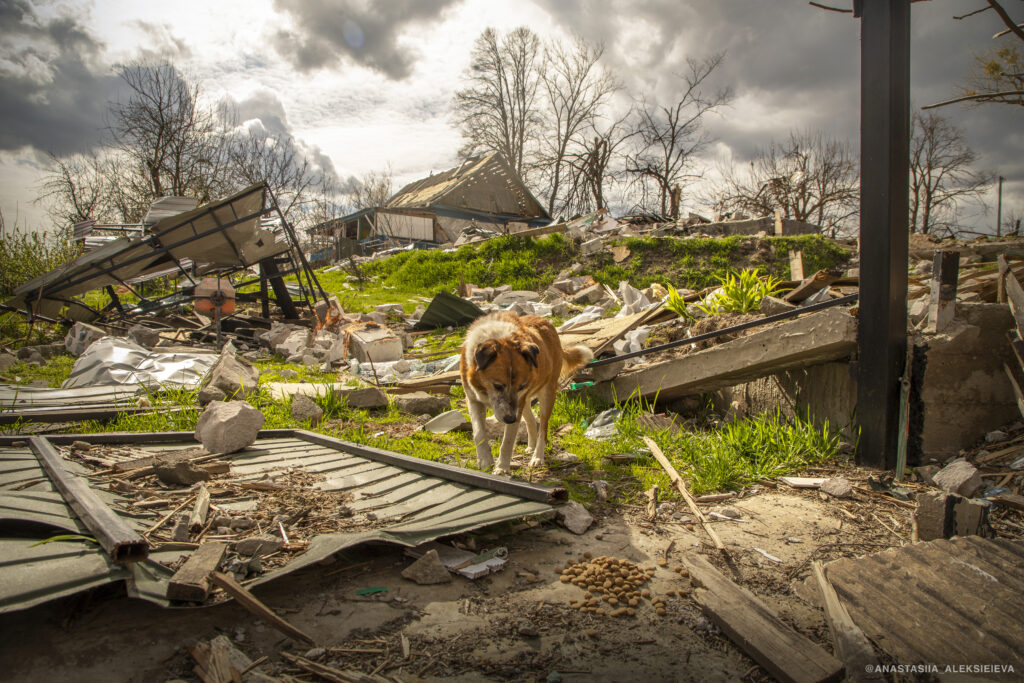
How did you support each other?
Dmytro: We stuck together, how else could we? In situations like this, the mind probably acts critically, so there are few emotions left. You either love it or hate it, or do it or don’t do it. There is no room for doubt.
We were always trying to do something. In the early days, we replenished food supplies by running to the shops at night, fetching water from wells and looking for those who needed help, as many pensioners were left without food and water.
The two biggest problems we faced were the lack of information and the lack of experience of how to react and act in extreme conditions of war and occupation.
It is extremely difficult when you do not know what is going to happen in a minute.
Now we can analyse the events of those days and see that everything went well for us. Yes, well, because you can live without water and food supplies, it’s not really a problem, the main thing is that our family has not been touched. Our house is in a cul-de-sac and it was just inconvenient for the occupiers to get in. But the military broke into other villagers’ houses, stole things and searched for people. Our father’s friend turned grey in one day after such a visit.
How do you want to tell your children and grandchildren about the occupation?
Anastasiia: I would probably tell them how it all happened, as calmly and unemotionally as possible, so that the child can judge the situation for himself.
God forbid this should happen again in the future, but it is important to me that my children and grandchildren are intelligent, able to think critically and have developed emotional intelligence so that they can get out of a dangerous situation. That is the only way to protect your psyche. Because the Russians have worked hard to destroy it with their atrocities.
Dmytro: I would also say that the most unbelievable scenario is possible.
Do you remember the day of the liberation? What was it like? How did you find out about the liberation of the Kyiv region?
Anastasiia: As my sister says, it was the best day of my life. It was her second birthday.
It was unexpected for us because we had little news. We had limited electricity, but my father, an electrician, conjured up something with batteries and made the radio work once a day, and people came from all over the street to listen to it. So we understood that the cleansing had already begun and that the Ukrainian army had launched a counter-attack, but we honestly did not think that Ivankiv would be liberated so quickly. We were more focused on how to survive the occupation.
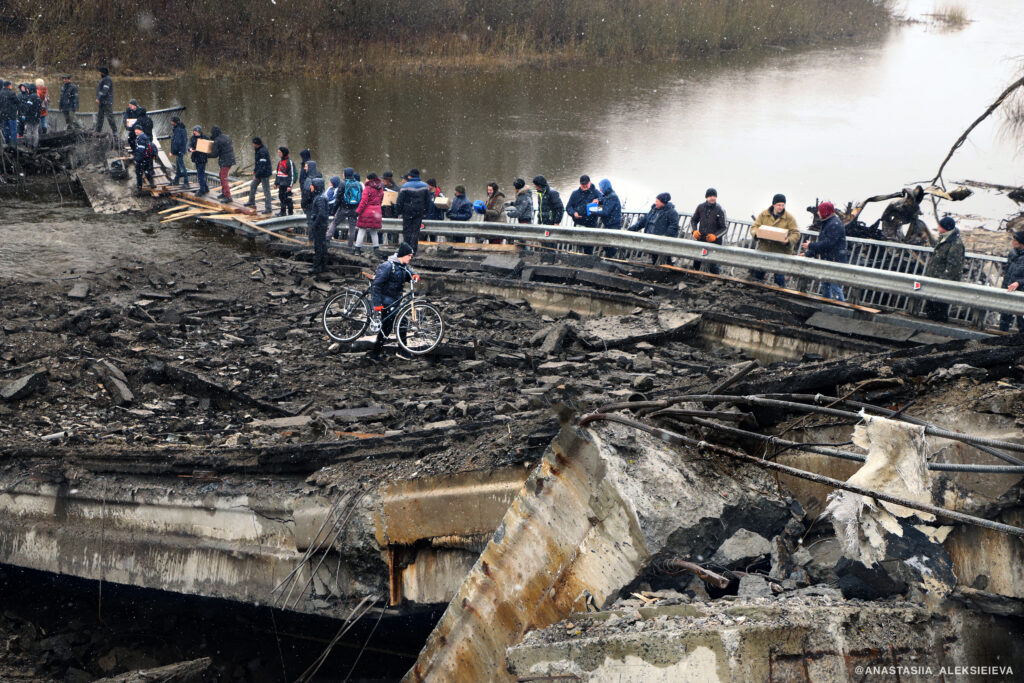
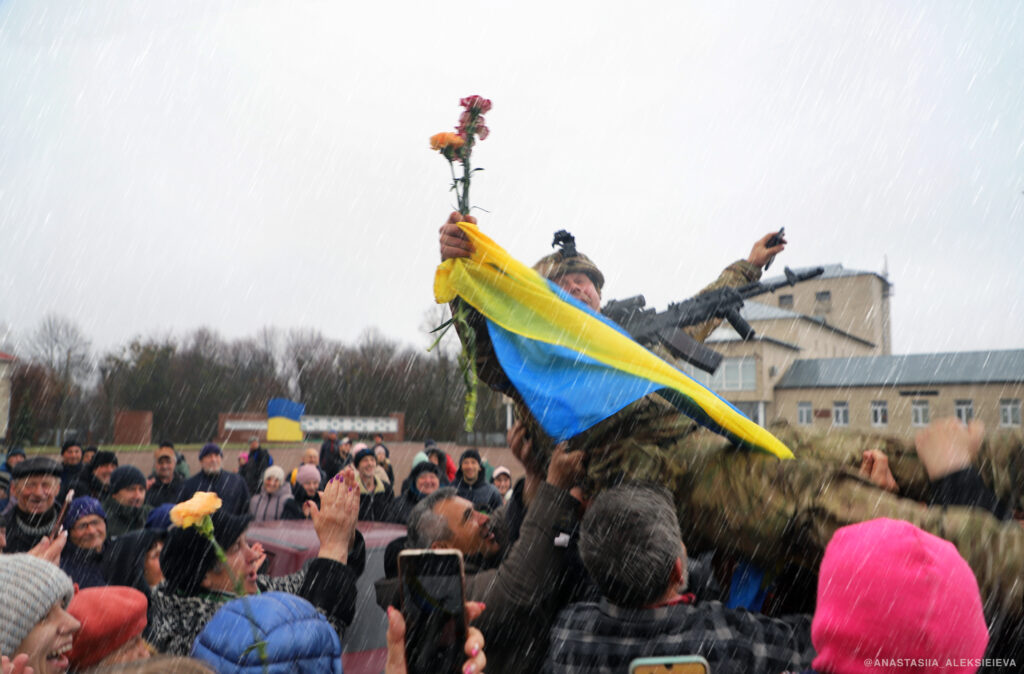
When we woke up on 1 April, we heard our neighbours screaming in the street. We ran out and saw the first scout, who said that we had been liberated. He was wading across the river because the Russians had blown up the bridge the night before.
Although it was cold and raining, men and women ran out in shirts and robes, some even with flowers. People were crying and beaming with happiness.
When this happened, did creativity immediately come back into your life?
Anastasiia: After the liberation, many volunteers started working in Ivankiv. We helped people find their relatives, rescued them, transported them, collected money for surgeries for animals injured in the explosions, collected medicines for the village hospital and asked our friends for help.
They helped us and we wanted to thank them in some way, to give them something in return. Since I am an artist, I made postcards and started to give them as souvenirs.
Dmytro: When we had more opportunities and could go to Kyiv more often, where production was resuming, we started thinking about other options for small souvenirs. That’s how we came up with the idea of making patriotic foams, sketches for which were created and designed by Anastasiia. It was not for profit, we gave them away.
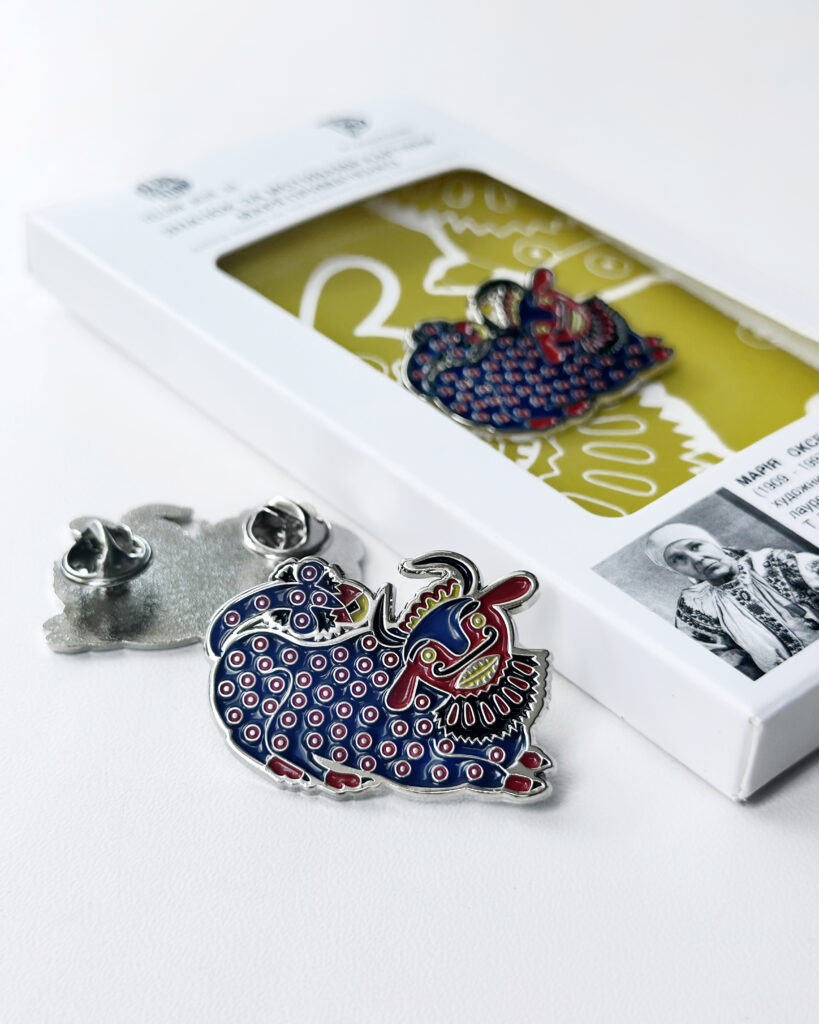
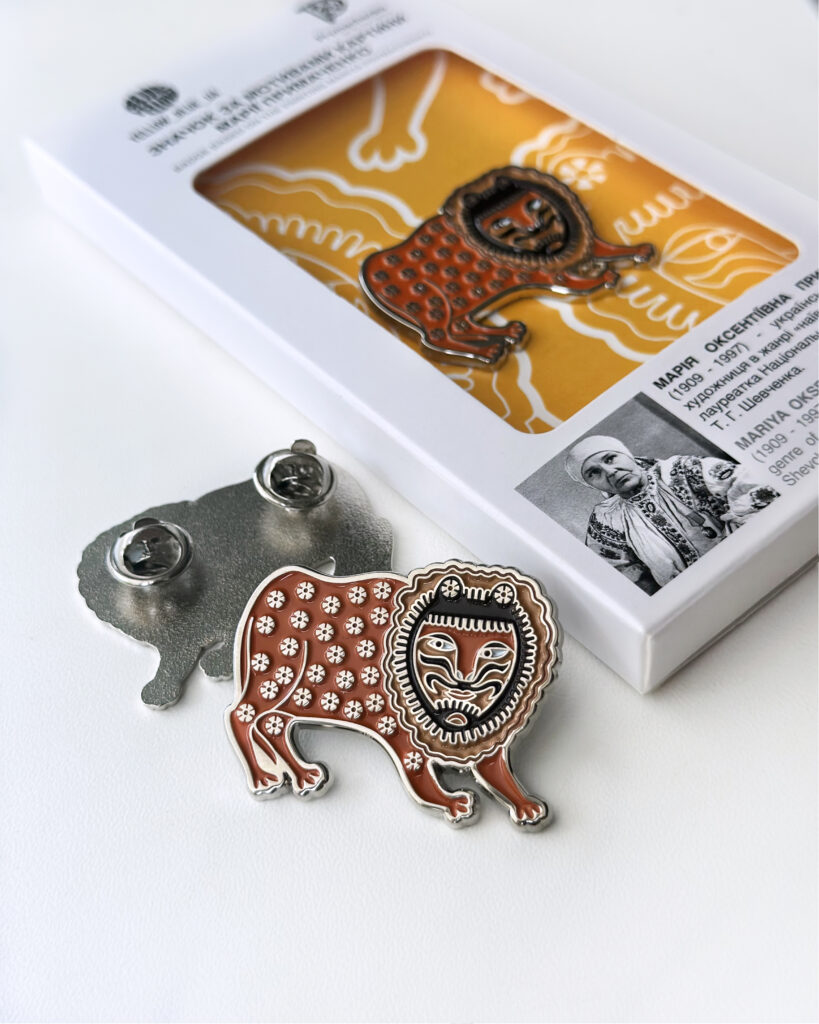
And at the end of the summer of 2022, many of our friends started asking for these foams to give them to someone else. It was already on a large scale, so we decided to produce foams on a commercial basis and donate a percentage of the profits to volunteers and the army. We sell foams for the military at cost price. We feel honoured when we receive orders from the defenders of Ukraine.
Anastasiia: I have been connected to Prymachenko since my childhood. My father comes from the village of Bolotni, near Ivankiv, where Maria Oksentievna herself comes from. We studied her work at school, and I wrote a thesis on her work and folk painting at the Minor Academy of Sciences of Ukraine. At that time the artist was no longer alive, but her son was, and he taught me to paint.
So it was only natural for me to come up with the idea of capturing the outstanding works of my compatriot on foam, in order to spread and popularise Ukrainian art in Ukraine and around the world.
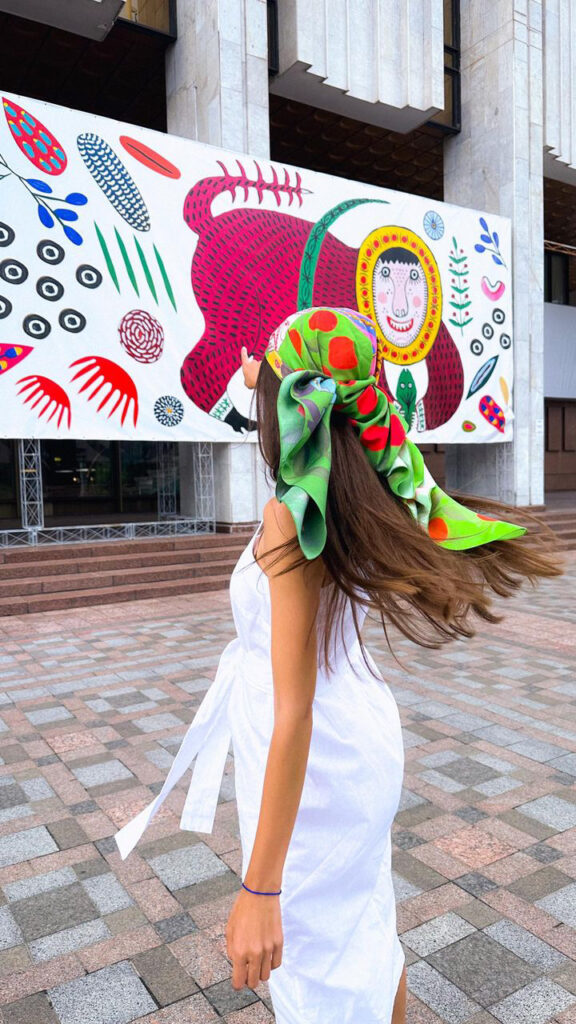
Maria Prymachenko’s grandchildren live in Ivankiv, not far from my parents. We officially approached the Prymachenko Family Foundation and asked for official permission to use the artist’s paintings on our products. Everything was agreed – from the image to the packaging, and we pay royalties.
In March 2023, we launched the first foams with Maria Prymachenko’s artwork.
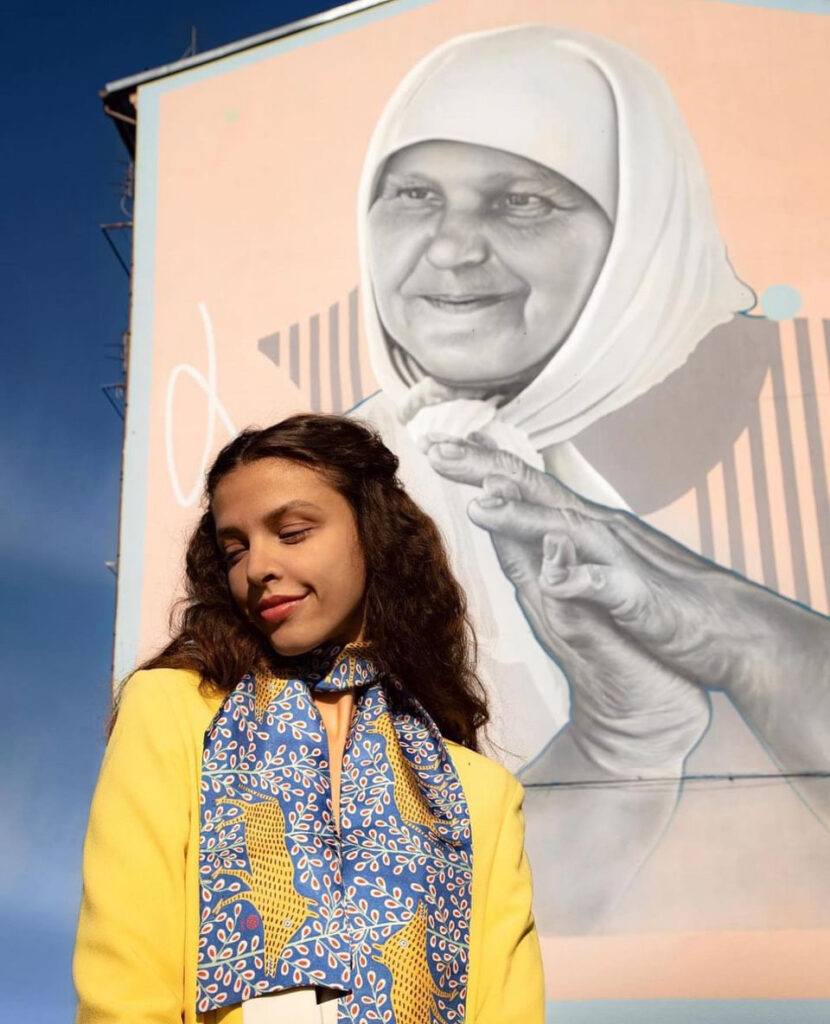
We still do not see this as a business. We create soulful things that customers like. It makes us happy and it makes people happy. It is extremely important for us what kind of feedback our customers write, what emotions they get.
Do you ever feel discouraged or tired because of your activity?
Dmytro: First of all, I would like to point out that we are young. In my opinion, when you are young and energetic, you try to constantly develop, read, get new opportunities and you have a sense of purpose in life. It may be difficult for you, but you really have everything to work and change the situation for the better.
Anastasiia: I don’t like the word “overcome”. I prefer the word “try”. Try to understand, try to get better at stuff. It’s hard for us, but we don’t despair.
We have no thoughts of leaving Ukraine. We miss travelling. It was a life we enjoyed and we will continue it after the victory. Although we used to spend most of our time outside Ukraine, our home is here and we always come back here.
I want Ukrainians to see opportunities even in the dark. And after the darkness there will always be light.
Translator: Ivan Chepaykin


