I’m Svitlana. I was injured by a drone. A piece of muscle was torn out here. This happened at the end of November last year. I was living in Kherson at that time. Back then, drone strikes were just beginning for us. The drones were dropping explosives. I think it all started with me.
I was walking to work in the morning. I’d heard people talk about drones flying around and dropping things, but I’d never seen one myself. Then one morning, I just left for work, heading to my bus stop, and I saw something in the sky, something that looked like a small plane. At first, I didn’t understand what it was because I’d never seen a drone in real life. But then I realized it was a drone, and it was flying right at me. The last thing I managed to do was run under the bus stop, where other people were already waiting. Literally a second later, I heard it hover right above the stop. There was a click, and I realized my left arm hurt a lot. It was cold, I was wearing a warm jacket, maybe I somehow covered myself. A fragment hit my arm, went through the jacket, and got stuck under my right rib, in the liver area. I joke that it’s a good thing I’m not skinny, so it didn’t pierce anything vital. But at the time, it was no laughing matter. There were four of us at the bus stop. We were lucky that a bus was scheduled to arrive in five minutes. It pulled up, and they got all of us on board. On the way, someone called an ambulance, and it met us halfway and took us to the hospital.
It happened so fast that I didn’t have time to process anything. I tell everyone that the drone just came out of nowhere. I later learned that drones hide on the roofs of buildings, waiting for more people to gather in order to cause more injuries or deaths. It was just a split second. Maybe I should have run the other way or gone somewhere else, but it was just the road, no trees, just the bus stop. I thought it would fly by. But it hovered right over the stop, seeing that there were a lot of people there. They just wait to strike when there’s a crowd.
It was lucky that public transport was still running then, because afterward, there were mass strikes, especially in the Eastern part of the city where I lived. Now, buses aren’t allowed there because it’s very close to the left bank of the river, which is occupied. The drones fly freely into that whole area. Back then, buses were still running and could pick people up. The same day, a bus was hit, and people died. So I was, let’s say, lucky.
When it all happened at the bus station, I first lost my hearing because after an explosion, your hearing goes away. In that panic, I only remembered one person, it’s my aunt. We were living in her private house in that area. She still lives there. I immediately called her, told her a drone had hit me, that I couldn’t hear anything, and that I was on my way to the hospital.
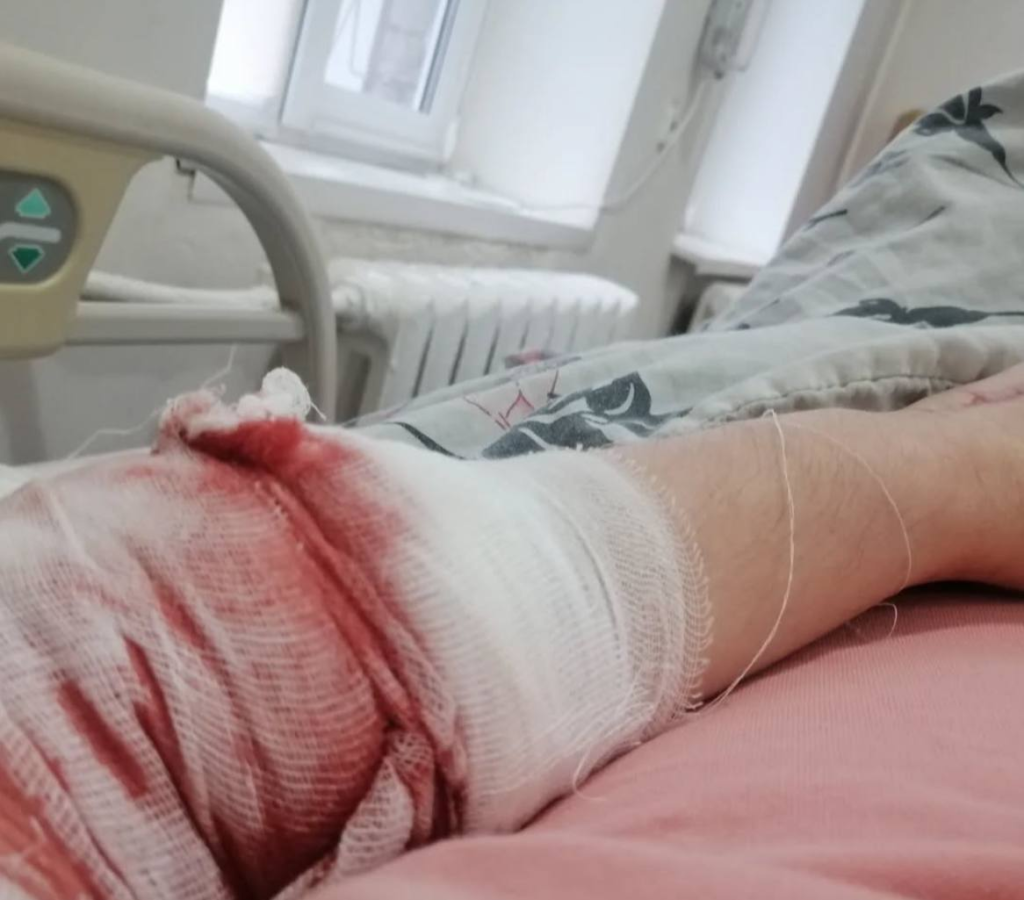
The shock hit me even harder in the hospital. I work as a сosmetologist, I work with my hands, and here was my hand, injured. Before they even took off my coat or cut my sweater off, I was already asking the nurses, “Are they going to cut my hand off?” They laughed and said, “No, you survived, they won’t cut your hand off.” But I hadn’t seen the injury yet and I was convinced my hand was gone. My mind kept repeating: “I’ll be without a hand. How will I work? What will my clients do without me?” I was in a state of shock, thinking about stupid things instead of my life and health.
I’d like to tell you about Kherson, because people don’t talk much about it now. Incredible people live there. Young people are opening coffee shops, flowers are being sold on the streets, some stores are working, someone is keeping businesses running in times like these. I’m proud of those people, they’re so strong. Kherson represents people with strong spirits to me, because they live 24/7 under constant shelling, shells and drones flying from the left bank. People have adapted to this so much, they’re amazing. It’s hard to even imagine how strong they all are there.
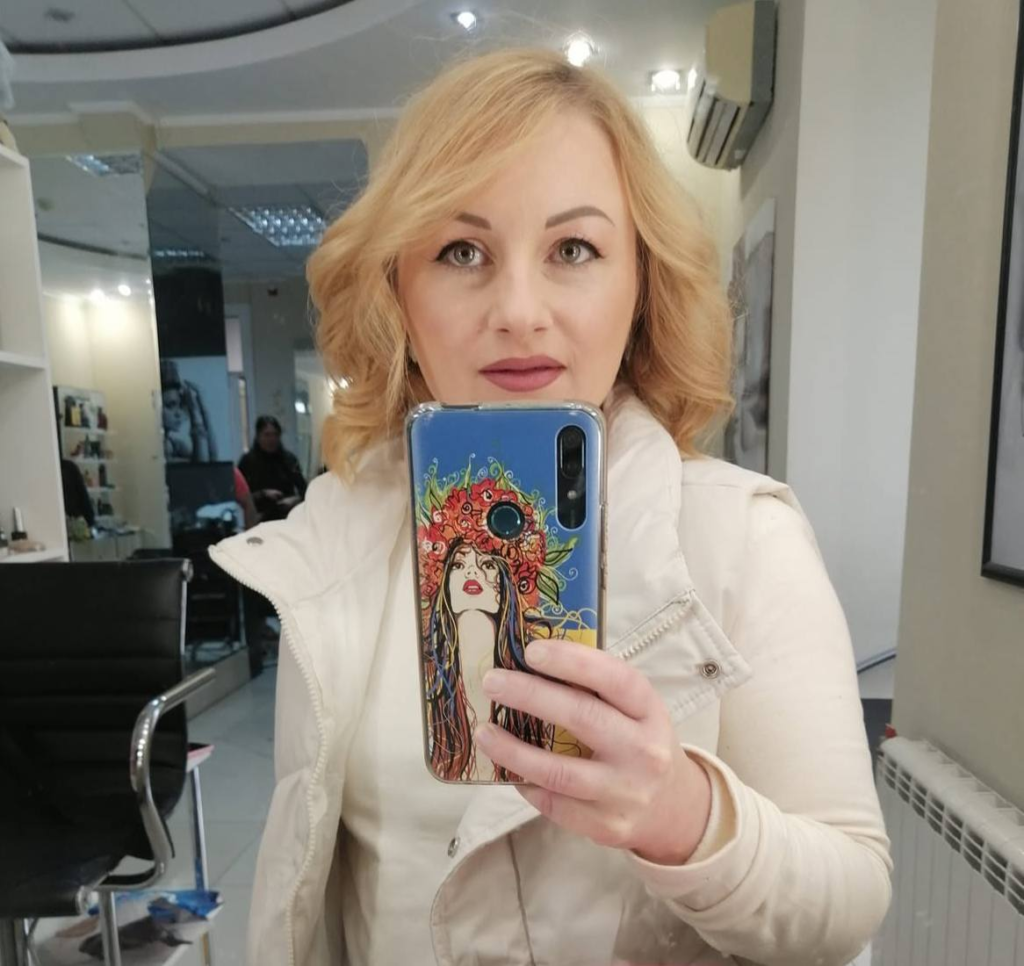
After the injury, I still wasn’t thinking about leaving. I had my job; I was there during the occupation and after the de-occupation. No matter how many times my family told me to leave, I didn’t want to. I was okay with everything. I didn’t understand the danger. But after the injury, I spent two weeks in the hospital and then started considering leaving. I was still renting an apartment in Kherson, but we weren’t living there because that side was being heavily shelled. I made the decision after one particularly heavy morning shelling that lasted for an hour. I was sitting in the hallway and told myself: if I survive this, I’m leaving. I was so scared.
I made the decision to leave. I first went to the Lviv region, where I have friends. At first, I was in the Kamianka-Buzka hospital. There they referred me to a neurologist, traumatologist, surgeon to look at my hand. I also needed an examination because the doctors thought my nerve, which is connected to my wrist, was damaged. My hand wasn’t fully bent then and wouldn’t straighten, it just hung there. I needed to do examinations. Plus I understood that I needed to restore my hand, because they told me it would only work at 80% capacity.
So, I decided not to give up. From Kamianka-Buzka, they sent me to the “Dobrotvor” rehabilitation center, where rehabilitation specialists worked with me. They restored the movement in my hand and worked on the scar, the wound, more accurately.
I was there for a while, but I have relatives in Ternopil and I really liked the city itself because it’s very cozy. It reminded me a lot of pre-war Kherson. So I wanted to live specifically in Ternopil, that was my choice.
It was difficult, but the rehabilitation specialist warned me from the start that we would be working through the pain. It would hurt, but I would have to endure it to restore my hand. At first, it was in a bad condition, but then my fingers started to move. My hand was bent and wouldn’t straighten because the wound was right there. The rehabilitation specialist would take my hand in hers and start working on it. It was very painful for me, I endured it, worked through the pain, understanding that this was necessary for my hand to work.
After the injury, my older sister was so scared and immediately told me, “You have to leave.” I have wonderful parents.I love them very much, but they’re in the occupied territories. We were talking on the phone then, keeping in touch. It was a huge shock for them that something like this happened to me. After the injury, my psychological state was a bit depressed. They probably understood that I just needed time. I never cry, but when the injury happened, I remember being taken to the hospital and having surgery. I just lay there and cried for a whole day. I didn’t know why. I kept thinking, “Why did this happen to me?” I just had to live through it. Some people might think, “Why is that person crying?” But at first, it was just the realization that I needed some kind of help.
When I arrived in Ternopil, I immediately started looking for a job and a place to live. I have support here. I turned to a psychologist and started working with him because I didn’t like my state of mind. Also, since I have a medical background, I understood I needed to do blood tests. I did the right thing: after surgery iron drops, vitamin D, and other indicators. You think it’s only a psychological state, but actually the body is lacking something, after surgery there are certain deficiencies. I started taking iron, vitamin D and it really helped. First, you need to understand what’s wrong with your body, and only then can you make a diagnosis. I also have a pharmaceutical background, so I knew I had to take care of myself. After the injury, I realized I only have one life.
Everyone knows I’m a strong person. The only time I can be weak is with my parents. For everyone else, I’m always “the strong girl.” Everyone said, “You’ll get through this.” Of course you would get mad, thinking, “How will I get through this? I need help right now. Tell me what to do.” But everyone just knew Svitlana would handle it. I needed time. I could call my mom, but I still had to call a psychologist. It’s great that there are organizations like the Red Cross, where psychologists work and you can get help for free. I looked for options and found many. As an internally displaced person, I was able to get psychological help for free.
I constantly hid my scar. All summer, I wore thin shirts or long-sleeved T-shirts. It was okay. The only thing I remember is that I was taking an additional cosmetology course. On the first day, the teacher saw what was wrong with my hand, but she was afraid to ask. She’s just a very sensitive and perceptive person who understood that maybe she shouldn’t ask. Later she did, and I told her, but no one had a weird reaction.
You know, your self-esteem drops so quickly when you realize this hand isn’t quite a hand. It was very difficult for me to accept. At first, I tried not to look at it at all because the hand is a little uneven, with a muscle ripped out. I couldn’t even look at the wound at first because it was psychologically tough. When it gradually started to heal, I realized I didn’t like the way my hand looked. So, I started looking for options. Like I said, I’m a person who doesn’t give up!
I accidentally saw an ad for “Neopalymi” and decided to write to them. Someone else might think, “What’s the big deal with a scar?” but I couldn’t. Because if you don’t take care of it, if it overgrows, your hand can swell up, and your fingers will go numb. I work with my hands, I’m a young person – I need to live on, it’s better to start rehabilitation now.
When “Neopalymi” started working with me, when I started taking care of this scar, I felt less ashamed. The scar became lighter and smoother.I can wear a t-shirt now where it’s slightly visible, but the feeling of shame for being somehow different is gone. The main thing is never to give up. If you want to change something, you will change it. You just need to find ways to do it.
I worked at a pharmacy in Kherson. Then, when I went to the Lviv region, I didn’t work. I was on a long sick leave, then I went to rehab. I returned to work in Ternopil in March of this year, when I got a job at a pharmacy. So I didn’t work for three months. I was offered a job at a pharmacy, so I took it. I’m not doing cosmetology yet because my hand wasn’t in the right shape. But now that the pharmacy has closed, I plan to return to what I love.
I had some wonderful doctors; they are still in Kherson and working. I am very grateful to them because they were quick and did a great job in that situation. One of them said, “Your hand will only work at 80%.” I cried so much then, it was a total breakdown: “What do you mean, 80%?” So I had a goal: to prove to myself that I could restore my hand to 100%. When I had an electroneuromyography, it turned out that the nerve was intact. I realized that the movement of my hand could be fully restored. Now I believe it’s working at 100%.
I started to think differently. You only have one life, and you have to cherish the moments. If you meet a loved one, give them all your time, don’t rush. Life is short. I started to appreciate the people around me more. For example, my aunt from Kherson was traveling abroad and was passing through Lviv. I immediately said, “I’ll come just to see you.” She was and still is a very strong support for me. You start to appreciate these moments, the people you love.
You have to believe in yourself. It’s hard, but you have to. Everything is possible if you believe. Love life for what it is and appreciate what you have. Even if it’s hard right now, you don’t have a job, or whatever it’s not the end. Something good will happen eventually. Sometimes you have to go through terrible moments to re-evaluate your life. You have to believe that it’s all for a reason. If you survived, that’s the main thing.
I’ll tell you one thing. When they brought me to the hospital (this is about why I cried for a day), I was lying and saying: “God, how scared I am, how much it hurts.” And one nurse said: “Well, why didn’t you leave the city earlier?” People after injury are very vulnerable. You need to treat them more gently. I went through all the stages: anger, and not understanding why this happened to me. But I realized this needs to be lived through, because, as psychologists say, this is a moment of loss (even though the hand is whole, it’s injured). A person needs support at this moment. Don’t say: “You’re strong, you’ll manage,” but ask: “How can I help?” It will already become easier from this, because the person will understand they’re not alone. Just being nearby is already great support. But words about guilt or reproach hurt even more.
Translator Yuliia Melnyk


