My name is Ivan. I’m a war veteran. On March 24, 2022, during the defense of the city of Popasna, we were moving in when a tripwire mine went off. I was hit in the abdomen. Later, as we were leaving the position, I also got shot in the back.
When I got hit, I didn’t understand what was happening to me. You’re in shock and you don’t realize what’s going on. I thought maybe it was just a concussion or something like that. But then when I realized I couldn’t get up, I understood it was some kind of wound. I started examining my body, but since it was night, it was really hard to see anything. So I started examine my body with my hands and that’s when I roughly understood what kind of injury I had.
During the evacuation, I made it to the nearest support point held by our forces. A medic there gave me first aid.
The closest evacuation point was to the city of Chasiv Yar. They stabilized me there as best they could, and then I was transferred to Mechnikov Hospital in Dnipro. After that I was two weeks in intensive care, a week in the surgery, and then I was transferred to Lviv Border Guard Service hospital for further treatment.
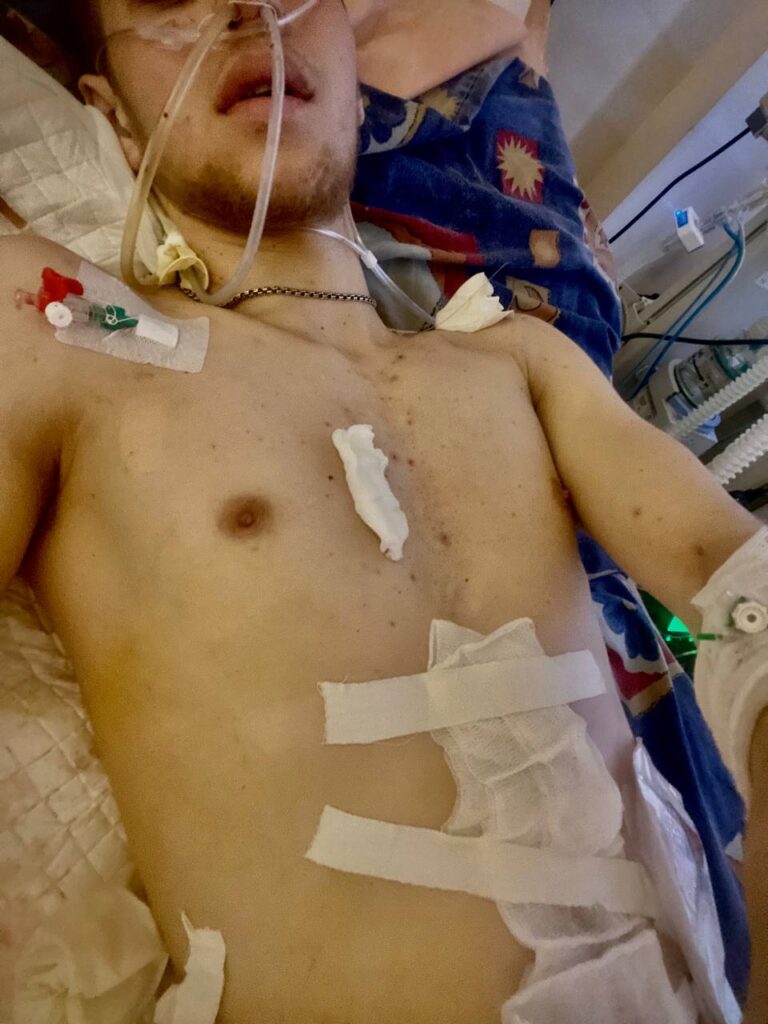
Well, to be honest, I cried when I saw everyone. I was so happy that my brother came to see me. After we met, I lay in my hospital room and cried, because I wanted to be with my family and loved ones. A friend also came to visit me from Kharkiv, but the visits were short because in intensive care they don’t let you talk for long, maybe 15–20 minutes and that’s it.
The hardest thing for me to accept was probably what the doctor told me: that I was no longer a military person. They were going to discharge me. That hit me hard, because ever since I was a kid, I dreamed of serving. I’d been in the military since I was 18, and I couldn’t imagine my life without it. Over time, I realized maybe service wasn’t the most important thing after all.
It was hard for me to accept the body I was left with after the injury. I had a severe blood infection, sepsis and a lot of inflammation. My body was covered in rashes and scars. But I still had and still have hope. I’m still going through treatment now. I know things will get better. Not perfect, not like it was before, but I believe 80% of it will heal.
There were no such problems in everyday life. Initially, after the hospital, we were given either three weeks for rehabilitation in recreation centers or a month’s vacation home. Since I had nowhere to go because I’m from Luhansk region. My sister moved to Khmelnytskyi, so I requested leave to visit her. I somehow managed to set up my daily routine. My sister helped me with some things, even cutting my toenails. But over time I figured it out myself and got used to everything.
For the period of rehabilitation, obviously I couldn’t lift heavy things. People helped with that too. Even simple things like going to the store, carrying things upstairs, was difficult at first.
Communication probably helped the most. I spent a lot of time talking with family, with my brother, my sister, my mom, that helped more than anything.
There weren’t any major changes in my daily habits, but my hobbies changed a bit. I used to go running just for myself, nothing serious. After the injury, I was told I couldn’t do any sports. At first, I wasn’t allowed to do anything at all. Only light walking just to train my muscles and keep them moving.
I also spent some time talking to psychologists and honestly, that really helps. A lot of people don’t understand why they’d need that, but it actually solves problems. While I was still in the hospital, I talked to psychologists there. Later, we were sent abroad for rehabilitation in Lithuania, and we had sessions there too. That also helped a lot. Once a month, we’d go out into nature for a day or two just to reset. And after that, you feel like you can keep going again. That kind of thing has become my hobby now. Everyone has their own, for some it’s sports, for others it’s travel.
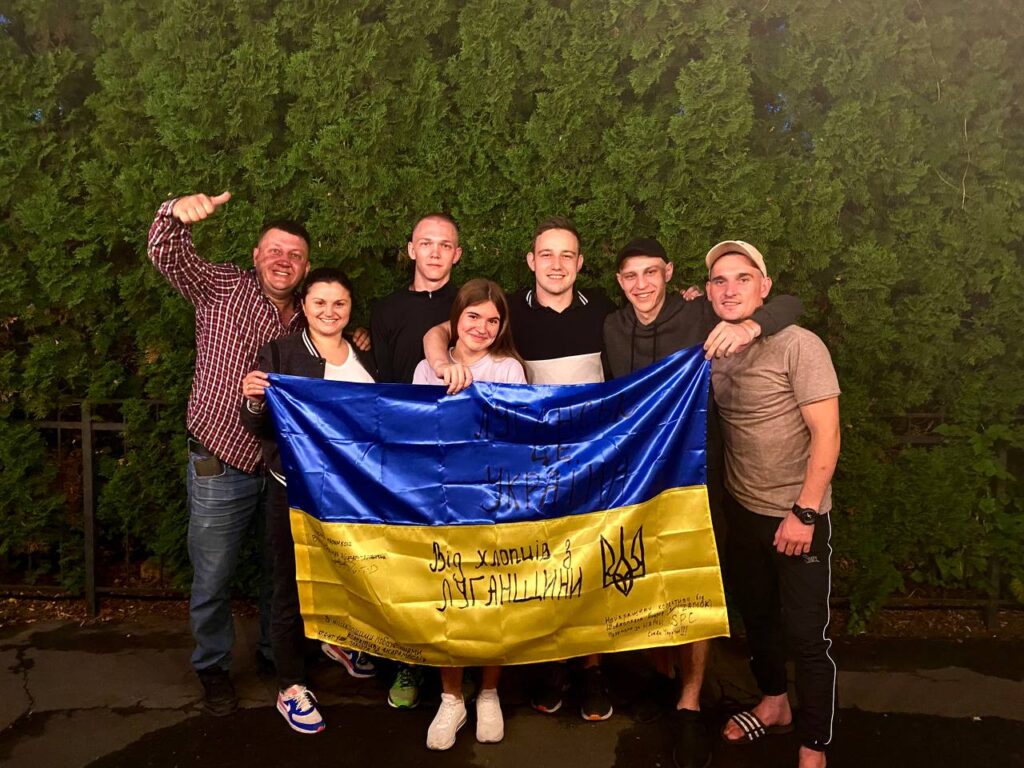
I stay in touch with my brothers-in-arms, we talk often. I try to keep in contact with those who are still serving or going through rehab, too. It’s not just calls or chatting via social media, it’s real, in-person conversations. Most of the guys I keep in touch with are in Khmelnytskyi, not many are here in Lviv region. We meet up, sit down together, talk.
I continued serving until August 2024. I wasn’t fully discharged and was classified as limited fit for duty. After the hospital, I served in Lviv region, then later in Zhytomyr. Then the unit was sent East, and they told me to write a request to serve on a peaceful border section (since I was in the border service). They assigned me to the Krakovets checkpoint. I served there until 2024.
That year, I wrote a health-related discharge request, due to my disability. After discharge, I wasn’t really sure what I wanted to do. I’d been in service since I was 18, never worked a civilian job, didn’t understand what happens there or how it works.
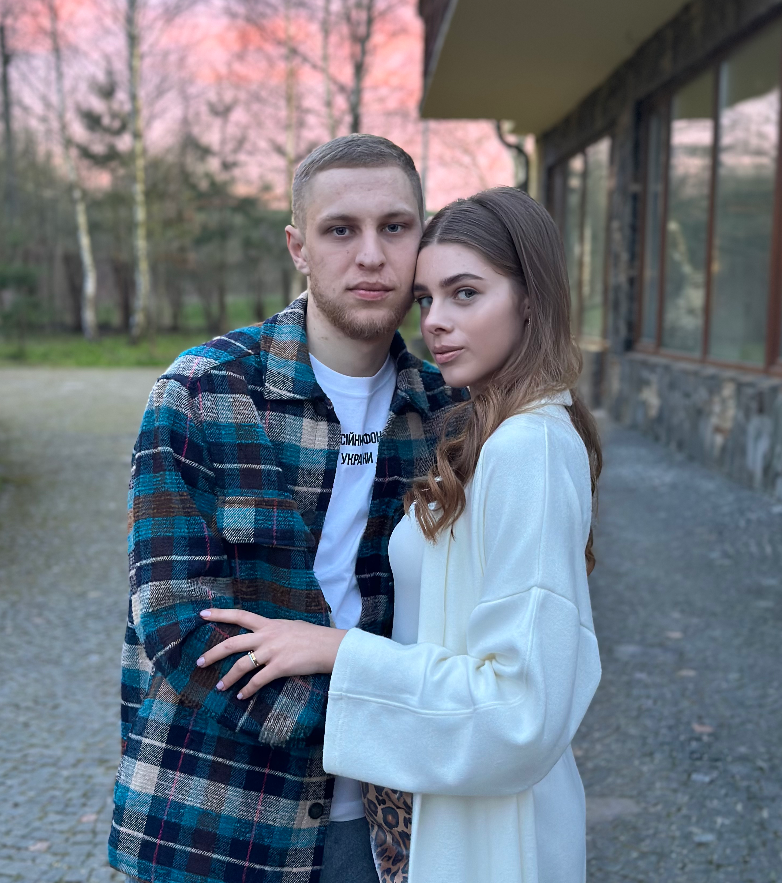
At first, I just rested for a few months. Then I started thinking what now, where do I go from here? My girlfriend and I decided to start something of our own. Right now, we’re working on opening a café-restaurant. We talked a lot about what we could do, how we’d manage because you can’t really live on a military pension alone. We came to a mutual decision that we need to do something of our own. I’ve never worked a regular job, I just don’t know how that system works.
I was planning to apply for a veteran’s grant and I did some research online and found out: if you apply you might get 500,000 UAH. But if you work as a private entrepreneur (FOP) for a year or two, and then apply as a veteran, you could get up to a million. So that’s how we planned it, start the business first, and later apply for the grant to open something else with that funding.
We’ve got almost everything ready now, except for staff. We have part of the team, but we’re still missing cooks and pizza makers. The café will have a serving line mostly for lunches, and then an evening menu.
To civilians, I would say: don’t pay so much attention like people do here. A person walked by on crutches, rode by in a wheelchair, with a prosthetic and people turn their heads, stare, burn you with their eyes. That’s what irritates me most, I don’t like that. For example, I try not to stare specifically at a prosthetic or something else when I see such a person.
My advice: talk with psychologists, they do their job. This is well-developed in Ukraine now. Reach out, communicate, accept yourself as you are. Because life goes on.
Translator Yuliia Melnyk


