What is the basic secondary education system in Ukraine and Norway?
Undoubtedly, after kindergarten, parents send their children to obtain secondary education in school without hesitation, as in many countries, including the European countries of Norway and Ukraine, secondary education is mandated by law. Therefore, secondary general education school is the primary social institution that implements and makes a significant contribution to the intellectual development and self-awareness of the nation, ensuring its physical and spiritual well-being. So, what common and distinct factors are observed in the education systems of these two countries?
(From open sources)
Key Stages of the School System in Norway
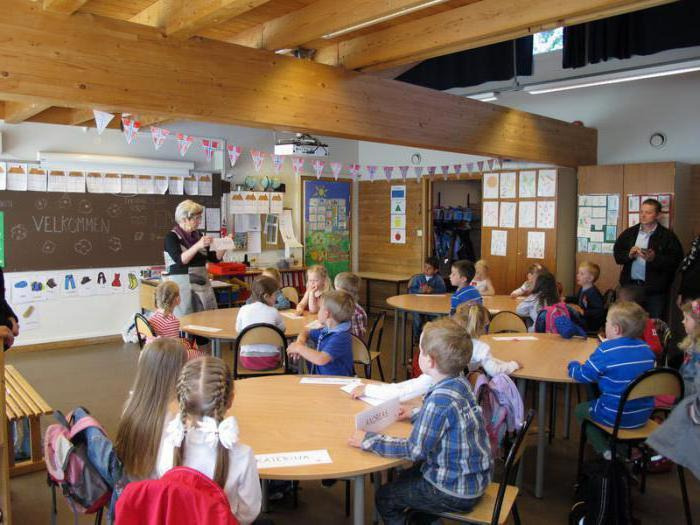
First and foremost, it is worth noting that in Norway, students begin their education at the age of 6, and the educational process lasts for ten years. Compulsory comprehensive secondary school is divided into three stages:
Primary school (1st to 4th grades), which is characterized by flexibility in choosing the content and organization of education. The curriculum is presented in integrated courses like “Winter,” “Spring,” “Summer,” and “Autumn.” The main focus is on games and various activities based on the children’s interests.
Lower secondary school (5th to 7th grades), where various subjects are studied, and the skills and abilities acquired in primary school are further developed.
Upper secondary school (8th to 10th grades), where academic disciplines are studied in depth. Students gain not only theoretical knowledge but also practical skills and abilities. At this stage, vocational training for high school students is also conducted.
Youth aged 16 to 19 receive compulsory general vocational education.
(From open sources)
Key Stages of School Education in Ukraine
Regarding the age at which children begin to receive secondary education in Ukraine, it aligns with Norway, as the optimal age of 6 years has been established. Enrolling all six-year-olds in a 4-year program ensures equal opportunities for children of this age to receive quality school education. One key difference is that Ukraine has a 12-year school system, which includes primary, basic, and upper levels.
Primary school is four years long, and children who turn 6 years old by September 1 and do not have contraindications for regular school attendance based on medical and psychological assessments are admitted.
Basic school (grades 5-9) provides a basic general secondary education, serving as the foundation for the overall education of all students, preparing them to choose and pursue further education and specialization. At this age, students generally complete the formation of general educational skills and knowledge, mastering the necessary material for further learning. Emphasis is also placed on promoting a healthy lifestyle, legal awareness, and environmental education. By completing basic school, students should be proficient in the Ukrainian language, their native language in minority schools, one foreign language, and computer skills.
Upper school (grades 10-12) represents the final stage of acquiring full general secondary education, where students finalize their comprehensive worldview, develop cognitive and communication skills, and learn to acquire and apply knowledge from various sources. Upper school mainly functions as a specialized educational stage, offering better conditions for differentiated learning and considering individual developmental characteristics. Intensive study of specific subjects and a wide range of elective courses and extracurricular activities are typical at this stage.
Principles of General Education School
If the duration of school education varies somewhat, the rules governing the operation of educational institutions in these two different countries are the same. These principles include:
The comprehensive development of a child’s individuality based on identifying their talents and abilities, shaping value orientations, satisfying interests and needs.
Preserving and strengthening the moral, physical, and mental health of students.
Educating students as citizens of their country, who are nationally conscious, free, democratic, life- and socially-competent individuals capable of making independent choices and taking responsibility in various life situations.
Instilling in students a desire and ability to learn, fostering a lifelong learning attitude, and developing practical and creative use of acquired knowledge.
Shaping students’ holistic scientific worldview, general scientific, cultural, technological, communicative, and social competencies based on mastering knowledge about nature, humans, society, culture, production, and practical and cognitive activities.
Fostering students’ love for work, creating conditions for their personal and professional self-determination, and preparing them for conscious career choices and mastering their chosen profession.
Educating students as morally responsible individuals, individuals of culture with developed aesthetic and ethical attitudes towards the surrounding world and themselves.
In summary, while these two countries may employ different methods, durations of education, or approaches to children, the values instilled from an early age remain consistent. You can read more about school programs in the following material.