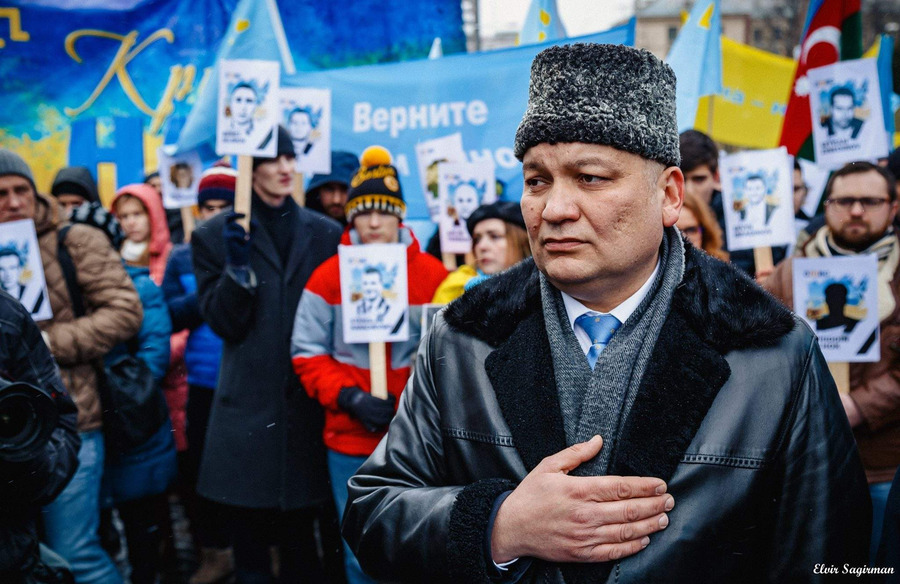
How Crimean Tatars returned home and lived until the 2014 invasion
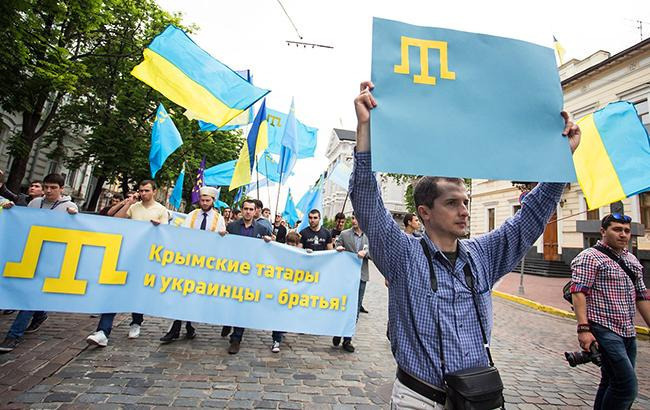
Crimean Tatars began to return to their homeland in 1989. They had tried to return to Crimea in the 1970s and the 60s ( the special settlement regime in 1956 was lifted). It was impossible due to a secret ban for Crimean Tatars to return to their Motherland. In the 1990s, the Crimean Tatars were primarily engaged in a settlement. They had to get a plot, housing, or find a job. Many Crimean Tatars with academic degrees or higher education worked in the markets. Crimean Tatars started to revive their theater, mass media, folklore ensembles, etc. Generations changed, and educational programs were created for Crimean Tatar youth. The generation was growing up and already in Ukraine trying to learn Ukrainian. They wanted to interact and receive higher education in other Ukrainian cities.
Only Crimea. Eskender’s life before the invasion
I finished school in 1991 in Uzbekistan and then returned to Crimea. I didn’t want to study in any other place. I had an opportunity, for example, to stay in Uzbekistan where I had been living for 17 years. I returned to Crimea. I wanted to settle here down and I wanted to receive my higher education only in Crimea. I have a wife, I got married in Crimea to a Crimean Tatar girl. In 1994 I initiated the Crimean Tatar youth organization. By the way, I coordinated Crimean Tatar youth at the Independence Square in Kyiv during 2004-2005 [during the Orange revolution, protests against election fraud — TR].
Ignore the referendum! What happened at the beginning of the invasion?
I was in Crimea when all those events started [Russian invasion of Ukraine in 2014 — TR]. I was the backer of the policy of ignoring the referendum [a disputed survey with the presence of Russian forces that allowed Russia to annex Crimea — TR]. In 2014 we were actively working with our fellow citizens so that they wouldn’t support any Russian political sentiments. We also wanted them not to participate in local elections, elections to the state council of the so-called Republic of Crimea, and local councils. I was one of the creators of the Committee for the Protection of Human Rights of the Crimean Tatar People. We started to record violations of human rights in Crimea and discussed how human rights were violated in occupied Crimea weekly. We arranged different events to talk about human rights here. Russians were constantly interfering and provoking us.
Should we forget the genocide for 3 million roubles?
Russians wanted to bribe the Crimean Tatars at the beginning of the occupation. In March 2012 they offered me 3 million roubles, which was 100 hundred dollars at that time. They had called me and said: “You have an organization, it has an account, let us send money to that account”.
I asked: “What money? Where did it come from?”. They told me it was a donation for the development of Crimea. I asked how I had to report on that money.
They answered that I didn’t have to report on it. I told them: “I don’t take money that I don’t have to report on. I’ve never done it and I won’t do it”.
In March the representatives of public organizations in the Russian Federation wanted to meet me. When we started talking, they offered to educate together, in a patriotic way, the Crimean Tatar youth. They told me that have direct access to the funds of the President of the Russian Federation and always get money from it. I told them: “We have different views on patriotic education. If we do such education the way I used to, you won’t be satisfied.”
The last person who tried to persuade me was the Crimean political scientist Formanchuk. After more than 2 hours of talking, he asked me: “Why do all your Crimean Tatars need Ukraine? It’s poor, it doesn’t help Crimean Tatars enough with the settlement, with your return to the homeland, they don’t resolve your political question. Russia is rich, it has a lot of money, it’s not a problem for Russia to solve the Crimean Tatar issue at all”. I answered him: “Crimean Tatars have a trauma. We had been accused of treason and collaboration with Fascist invaders for 50 years. There was genocide and extermination.”
Russians and a disloyal segment
In Mejlis, I strongly insisted on no negotiations with the occupiers. Everything they would do would be against the Crimean Tatars. Mejlis called on the Crimean Tatars not to participate in the referendum or any other political event supporting Russia. The occupiers started to see the Crimean Tatars as a disloyal segment of the population.
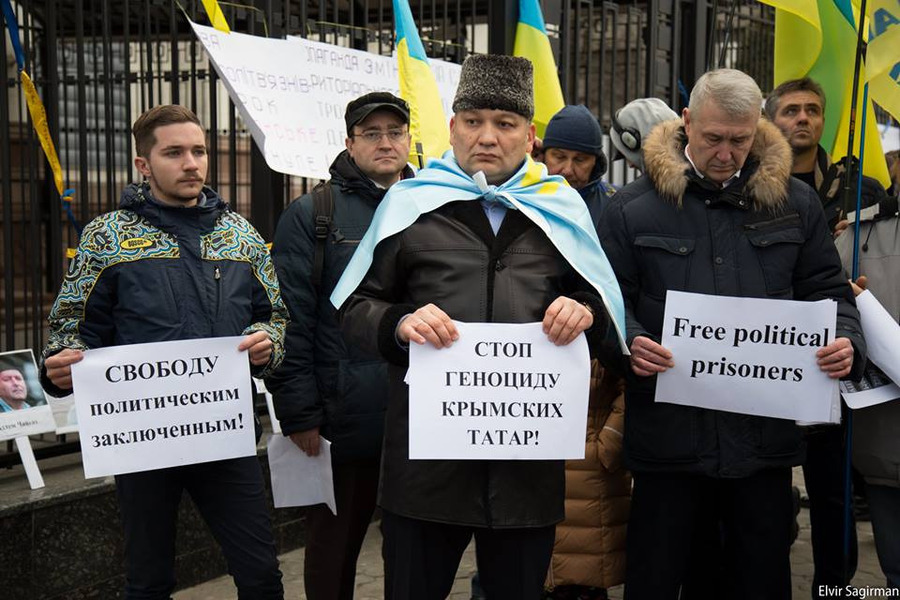
Then they started to persecute us. They prohibited all the Crimean Tatar media, such as ATR and Lâle. 264 people became political prisoners during the occupation and were persecuted under criminal cases. 188 of them are Crimean Tatars.
Now let’s talk about the articles. Well, at first, it’s “Hizb ut-Tahrir”, prohibited under Russian legislation as a terrorist organization. That’s why people who conduct The Pillars of Islam or just look like Muslims are persecuted under it. More secular people are persecuted under “the call to violation of the integrity of the Russian Federation”.
21 people are now in places of detention. They’re accused of being involved in the Noman Çelebicihan Battalion [the Crimean Tatar volunteer battalion — TR]. In June 2022 it was also recognized as a terrorist organization.
This way they want to scare the Crimean Tatars and make them depart from Crimea. Such a deliberate policy took place when Crimea was annexed in 1783 as well as in the 19th century and the 20th. Now its goal is to make as many Crimean Tatars as possible leave Crimea.
No return due to appeal
In 2015, we initiated the conference and they [Russians — TR] provoked us to arrest later. Later, three coordinators of us went to Istambul. We sent an appeal there to the President of Turkey from our conference. We returned to Kyiv and sent an appeal to the President of Ukraine and the Secretary-General of the UN. As we were going to return to Crimea, we were told that criminal cases were open against us and it was dangerous to return due to possible arrest. Therefore we stayed in Kyiv and ever since then I’ve been working here, in the capital of Ukraine.
Current moods
The vast majority of the Crimean Tatars supports Ukraine and is waiting for it. When the full-scale invasion started, and especially when all those blasts [Ukrainian attacks on Russian military bases in Crimea — TR] took place in August 2022, the people’s mood uplifted. They understood Ukraine had a chance to have Crimea back, that the international community supported it as well as Western countries, and that the Armed Forces could confront the Russian Army.
Yet, there are also other tendencies. Since February-March 2022, the Crimean Tatars have been thinking about how to hide their offspring of military age. They started to hide them in Crimea or deport them outside the country. The whole families are departing from Crimea. Yet, not everyone has such an opportunity, not every family has money for it.
I wouldn’t say it’s good. If they depart, there is no guarantee they return. When talking about the future reintegration of Crimea into Ukraine, we need more pro-Ukrainian Crimean people. On the other hand, we need our people not to be in the Russian Army and not to fight against Ukraine.
Resistance. Why shouldn’t you put a “Z”-sign on your car?
The Crimean Tatars are resisting, for example, when they refuse to service Russian military trucks. Or they can refuse to service Russian soldiers in the cafes. They can also refuse to turn on songs supporting the Russian occupation of Donbas. They turn on “Chervona Kalyna” [Ukrainian patriotic march — TR] at weddings and other meetings. Crimean Tatars have “Haytarma” music, and they created “Haytarma-Chervona Kalyna”. They can make an inscription or tear “Z” [a symbol of Russian invasion — TR] off a car.
For example, they inform Crimean Tatar Resource Centre about cars that use the letter “Z”. We collect information about their owners. Then we report to them through social media that they will take responsibility for using symbols of crimes against humanity in Ukraine.
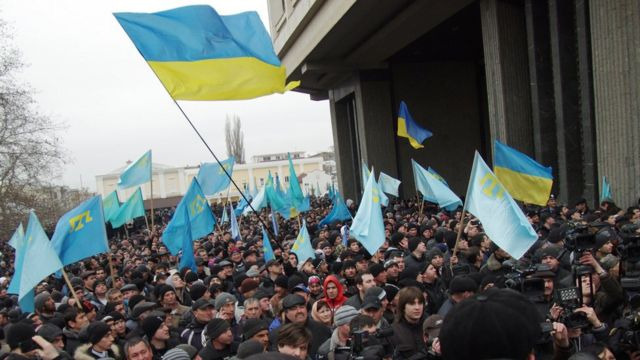
Fighting slavery on every front
“It started in Crimea — and it will end in Crimea”. We all, Ukrainians, Crimean Tatars, and other citizens of Ukraine, need to unite and be in solidarity. There is a fight between Good and Evil, between democracy and authoritarianism, that our ancestors, both Ukrainians and Crimean Tatars, have fought. There is a fight between freedom and slavery. We need to be in solidarity, fight, and liberate our territories. Only then would we have guarantees that we could save and develop our identities, our languages, our rights, and our cultures. That’s why I want to reach out to all the Ukrainians: we need to fight on every front, whether it’s by using weapons, or in the diplomatic field, with information. And I’m sure we will win. God and truth are with us!
Translator: Valeria Molderf