Canada is home to the largest Ukrainian diaspora in the world, which strives to preserve its cultural and national identity. This is made possible by the tireless efforts of Ukrainian and Canadian volunteers. The traditional Ukrainian Easter egg painting series of workshops at the Ukrainian Orthodox Cathedral in Ottawa is an amazing example of how ordinary people are making positive changes in the community. In this article, I talk about the experience and motivation of the Ukrainian-Canadian community in Ottawa that organized Pysanka Workshops to support Ukrainian culture during the full-scale Russian invasion.
The Easter egg-making workshops began in Ottawa on March 18, and are being held at the Ukrainian Orthodox Cathedral Assumption of the Blessed Virgin with the support of the Ukrainian-Canadian community. The series of workshops was attended by dozens of Ukrainian families with children who have recently arrived in Canada to find a safe place during the large-scale Russian invasion of Ukraine. According to organizers, the main goal of the workshop is to help newcomers preserve their Ukrainian culture and identity in Canada.
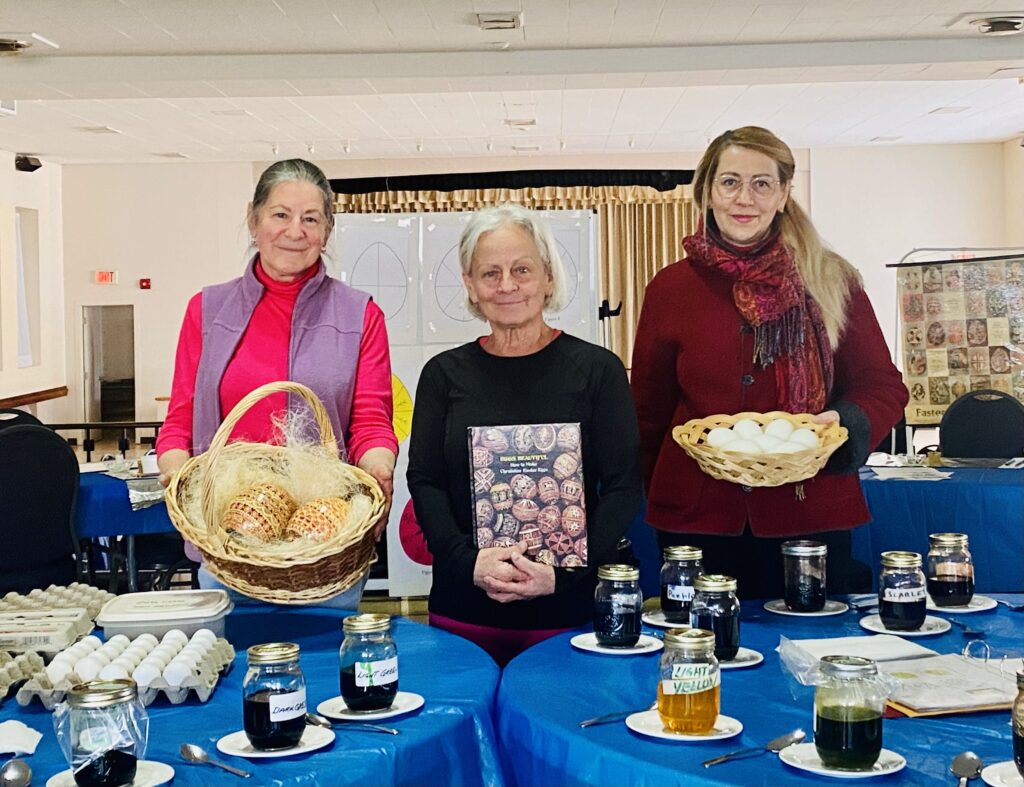
Tamara Rudenko-Charalambij, the Pysanka workshop coordinator, was born in South America and has lived in Canada since 1955. She is currently actively coordinating events in support of Ukrainians in Ottawa. Tamara Rudenko has parents of Ukrainian origin, and now some of her relatives remain in Kyiv, which continues to suffer from Russian shelling. According to Tamara, during the Russian invasion of Ukraine, it is important to support Ukrainians and help them preserve their culture and traditions in Canada.
“We organize all our events with the main goal of supporting Ukrainian culture, language and history. A year ago, the whole world woke up to the fact that Russia started a full-scale invasion of Ukraine,” she said. “It was a shock for us and we finally realized that the Russians want to destroy Ukrainian culture and history.”
Tamara Rudenko

Pysanka making is an ancient tradition, deeply rooted in the history of paganism. The symbolism of Easter eggs gives a sense of spiritual enlightenment.
“We have the opportunity to tell our own stories through this art, as each pysanka depicts its unique story and wish, said Rudenko-Charalambij. “Some people paint and pray, while others see it as art and an opportunity to share it with each other. They realize that they are in Canada. They are Ukrainians. And here in Canada, we do not forget the Ukrainian language. We honour it and want it to be preserved for our children and grandchildren.”
Tamara Rudenko

The first Easter egg-making workshops were held at the Ukrainian Orthodox Cathedral a year ago. Today, according to Tamara Rudenko, even more people from the Ukrainian and Canadian communities attend events dedicated to preserving and honoring Ukrainian culture in Ottawa.
Iryna Kapralova is a Ukrainian volunteer who recently arrived in Canada, but is already involved in helping the Ukrainian community. Her niece introduced her to the local community and she also sings in a Ukrainian Orthodox choir. Kapralova teaches newly arrived Ukrainians how to make Easter eggs. These skills were passed on to her by Ihor Nikolayevsky, a prominent painter and master of folk art in Ukraine. She believes that participation in Easter Pysanka workshops will help newly arrived Ukrainians preserve their national culture and traditions.
“Making pysankas is a sacred tradition of the Ukrainian folk culture,” she said. “During the previous workshop in the Ukrainian Orthodox Cathedral, we gave a lecture on the history of Ukrainian Easter eggs and the importance of this art. After that, the instructors taught Ukrainians and Canadians to paint Easter eggs and understand the secret meaning of these symbols. People did so with enthusiasm and a desire to learn about history. Some are already planning to attend the workshop next time.
Iryna Kapralova

Kapralova said every time she paints an Easter egg she makes a wish.
The Ukrainian community has been actively promoting Ukrainian culture and customs throughout the history of Ukrainian emigration to Canada. The Ukrainian women’s movement played a significant role in this, and, according to Tamara Rudenko, it had a significant impact on the development of the Ukrainian community at the national level.
“The Ukrainian Women’s Union of Canada will celebrate its 100th anniversary in 2026. Many years ago, Ukrainian women began to build Ukrainian schools, churches and their own communities in western Canada with their families. There are many examples of women of Ukrainian descent who have gone on to work for the Canadian government. For example, Chrystia Freeland (Edit note: Canadian journalist of Ukrainian descent and Deputy Prime Minister of Canada). We stand on their legacy and continue to promote Ukrainian culture. Canada is open to everyone.“
Tamara Rudenko
Read more: "Ukrainian in Ottawa helps other women find hope and strength: A story of compassion and resilience"

The Ukrainian Orthodox Cathedral in Ottawa, together with representatives of the Canadian community, continues a series of events and workshops to develop and support Ukrainian culture. According to Rudenko, the Pysanka workshop coordinator, they sincerely welcome Ukrainians to their church and wish them to find peace in a new country.

Since the start of the full-scale Russian invasion of Ukraine on February 24, 2022, millions of Ukrainians have been forced to flee their homes. On March 3, 2022, the Government of Canada announced the CUAET program for emergency entry of Ukrainians into the country, temporary financial assistance, and access to numerous settlement and adaptation services.
The Canada-Ukraine Emergency Travel Authorization is the fastest, safest and most cost-effective way for Ukrainians to come to Canada by simplifying current visa and travel requirements. On March 23, the Government of Canada announced that it will extend the Canada-Ukraine Emergency Travel Permit (CUAET) for Ukrainians abroad until July 15, 2023.


