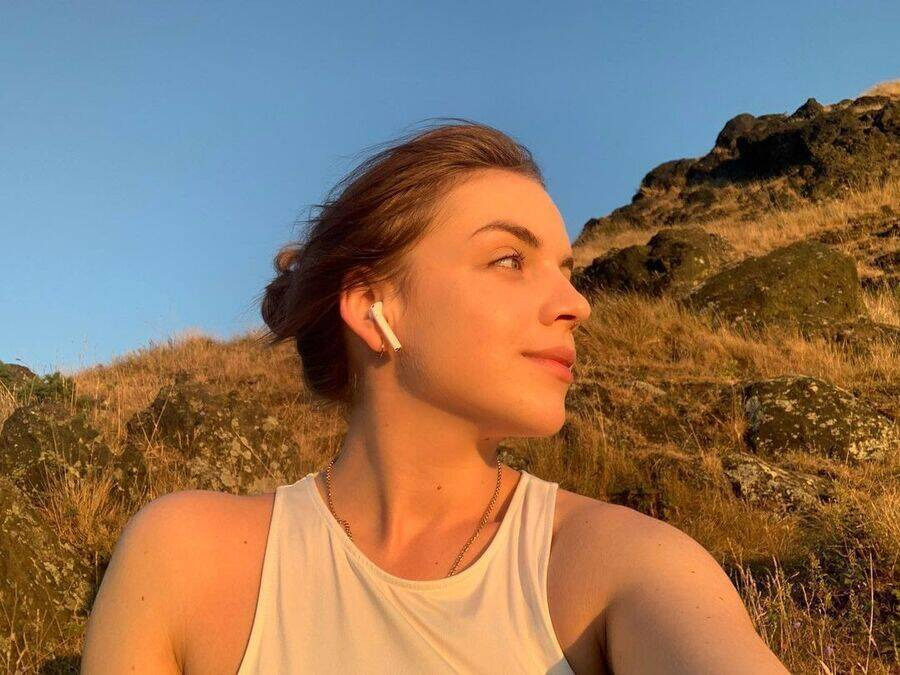
My name is Yuliia and I am 22. I was born in the Mykolayiv region. In 2021, I got a bachelor’s degree at the Mykolaiv National Agrarian University and my major was “Public Law and Administration”. Oddly enough, I immediately got a job related to my major. I was a recruiter at the agricultural company “Nibulon”, which recently began to appear frequently in the news for various reasons [one of which is the killing of the company’s owner by a Russian missile on July 31 – ed.]. The company is very large: we have about forty branches located throughout Ukraine.
 Personal sources
Probably as for most people, the war for me began early in the morning, at about 5 o’clock. I was sleeping in my apartment in Mykolaiv and woke up from explosions. I didn’t understand what it was. I thought, maybe they were some fireworks, as usual, or what else could come to mind to someone at 5 am? I immediately turned my phone on and started reading the news, which already told about the beginning of the so-called “special operation”, and my colleagues, who had more information, said where the explosions were coming from. It was not clear what to do, or where to run, but I knew that I needed to go to work, and as a responsible person I simply had to do it. Therefore, after staying home for some time, I still went to work, because I understood that older colleagues would be there, and I would not be so afraid.
On February 24, I was still in Mykolaiv, and during the day I decided to go home to my parents, who lived in the Voznesensky district of the Mykolaiv region. Honestly, it felt like I was living your last day, and the only thought was in my head: “Maybe it’s better to spend this day with my closest people, with a family.” Although I told my bosses we would meet on Monday, this Monday never came.
Before traveling abroad, I spent a month in Ukraine with my parents, and it was terrible. I didn’t work anywhere, I didn’t do anything, I was constantly reading the news – it was absolutely not my life. And you are constantly stressed. For example, at the beginning of March, Russian troops were already near the Voznesensky district located 100 kilometers from Mykolaiv. One night was extremely scary: we could clearly hear the gunfire and hid in the basement. It is especially terrifying when something flies in the sky, and you don’t know where it will fall and what you should expect. There was also a shootout in Voznesensk itself, and that was 5-6 kilometers from where we were. Yet, during that month, I didn’t have a particular goal for going abroad, because, just like everyone, was probably hoping that it would all pass. Sometimes a person can read the news and come across something good, and it gives them hope that maybe everything soon will be resolved. There were hopes, but I realized that I was just stagnating as a person and my parents firmly decided: I had to leave. I didn’t have a particular plan, I just wanted to leave as soon as possible. We were afraid that our territory would have the same fate as Kherson, which was occupied, and people could not leave it. But at that moment I already had a friend in Poland, and I went to her. Just 2 days before my departure they attacked a military unit in Voznesensk: there was smoke, it was scary, and my parents’ colleagues were killed.
As I said before, there was no particular plan. I just wanted to work and not sit around waiting for some kind of miracle. I came to Poland on March 21 or 22, and at that time I paid attention to the Scottish governmental program “Scottish Super Sponsor scheme” for accepting refugees, which started on March 18. On the day I arrived, my friend met me and we decided to apply for this program together. That evening it was done. Yet, before I ended up in Scotland, I had visited three more countries. For another 2 weeks, I was living with a friend and her family in Poland, because I was waiting for permission to enter Scotland. However, I didn’t know how long I had to wait. I couldn’t sit still either, so my brother, who worked in recruiting, helped me to find a job in Lithuania. It was great – I was going to Lithuania. When I came to the HR department of the company where I had found a job, they directed me to the migration service to register as a refugee. There I explained to the workers I want to go to Scotland in the future and it was my final destination. I was told that if I applied for refugee status in Lithuania, I wouldn’t be able to go to Scotland. Everything became so daunting to me. Since I had nowhere to stay, I went back to Poland. At the railway station, I called her parents, explained that everything was ruined, and received a logical answer – to return home. Yet, then I understood: you can’t go back, you only need to go forward. A Dutchman Roland whom I befriended on the first day of my stay in Poland helped me a lot. He provided the finances for which I was able to rent a hostel in Poland for a few more days, and then he offered me a room in the Netherlands. I agreed and three days later I went to Germany, where he met me and helped me get to my new place of residence. He is a person to whom I will never get tired of saying “thank you”. The best day in the Netherlands was when I got my visa to Scotland, then booked my flight tickets straight away, 2 or 3 days later I had a flight and yes, I flew to Edinburgh!
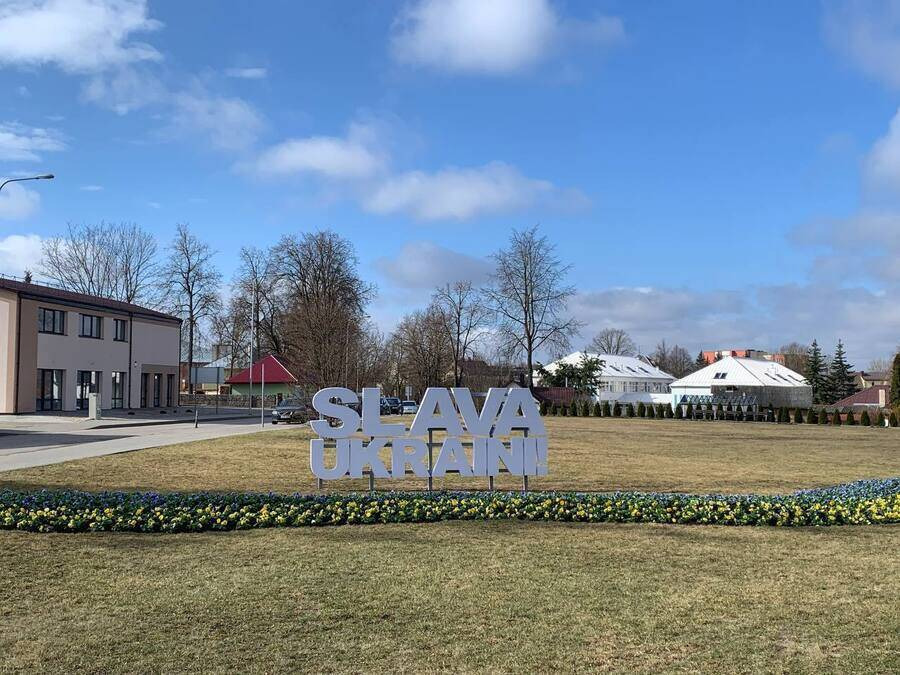 A square in a Lithuanian city. Personal sources
Even in Poland, I understood that when I came to Scotland, I would want to work, because I can’t just sit still. Therefore, I published information about myself in various Ukraine support groups, and the manager of the outsourcing company offered me a job as a housekeeper in a hotel in the center of Edinburgh. I immediately agreed, because in fact it was the only job offer, and I was ready for anything. And that’s how two weeks before coming here I already had a job and started working on the third day after arriving in Scotland. The government and local self-government helped me to find housing. The very next day I was accommodated in a hotel near the city center – such a great location. I lived there for 3 months with other Ukrainians. Yet, the government was looking for sponsors – individuals who were ready to provide a home for refugees, for everyone who came to Scotland the same way as me. After two meetings with local self-government bodies, I asked for permission to search for a sponsor independently and they agreed. And then the situation was like with housing: I published information about myself on Facebook, 3 days later I received a response from a Scottish woman – Jean, we immediately felt that we could live together, and now she is my sponsor. Jean is a volunteer and she meets Ukrainians at the airport several times a week. When I got to know about it, I also wanted to help and already had the opportunity to work as a translator for my people.
I communicated with the local population and I want to say that they, just like every sane person, do not understand how other people [Russians – ed.] can have so much evil and carry it to another country. They treat us with pity and understanding, and are, in my opinion, ready to help everyone. I didn’t hear a single unkind word from the Scots toward the Ukrainians.
Here I work, meet people, learn English, go for a walk, get to know the area, and study the culture. I try to absorb as much as possible of that, because I enjoy being here – I feel like I belong here. In the process of living, you feel this flow of life, in fact, you feel that you are alive. I consider the decision to come here, made at the station in Poland, to be right. Two years ago, I already had the experience of living in this country, when I did an internship at the university. And now, having lived in Scotland for 4 months, I’m trying to get the most out of my stay here. I want to find a job under my qualification where I can apply the skills I have already acquired. I have the strength and confidence that I am able to achieve something here, so I am doing everything that’s possible for it.
Translator: Valeria Molderf


