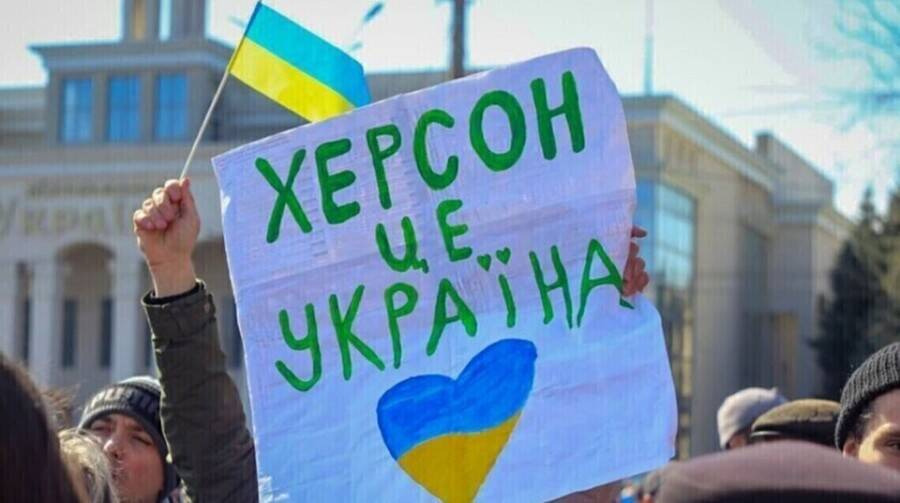
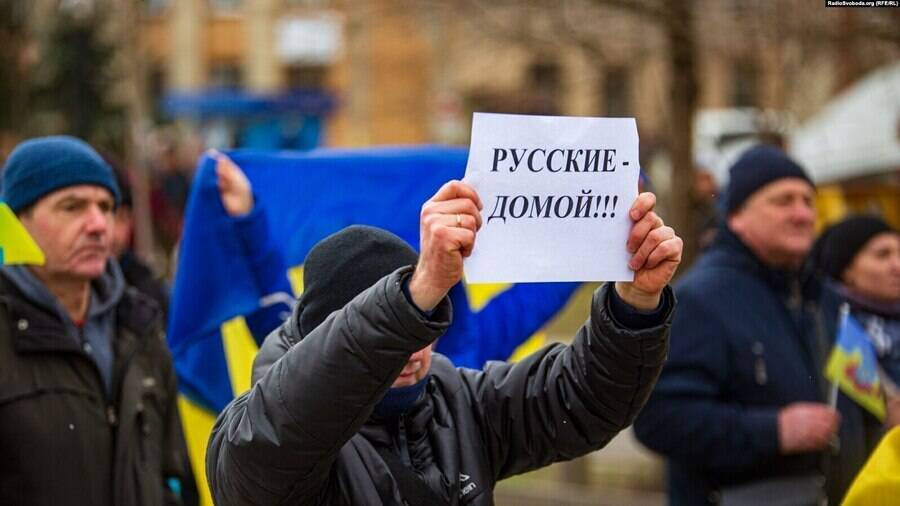
Ukrainians are a truly fearless nation. People began to repel the enemies as soon as they set foot on Ukrainian land. They gathered for rallies under fire, jumped out onto russian tanks with Ukrainian flags, chanted “Damoy”[go hame – TR] and ignored points for distribution of humanitarian aid from russia. This is the heroic image of this city formed by the majority of Ukrainians. However, the occupiers didn’t leave the city. Now russian flags hang there and Russian goods are in the shops. Many people managed to leave, but there are many who still stay there.
32-year-old Oleksandra complains that people don’t understand the complexity of the situation in her city. “I am often asked why I complain about living in Kherson, they say “you don’t even have air alerts there”. Yes, the sirens really don’t wail, but we also don’t have any “green corridors” or humanitarian aid for residents,” the woman says.
Locals say that most products are brought from Crimea and sold 3 times more expensive. “Almost all shops are closed, there is nothing to buy. Seems like people are in a cage. All the people who are left do spontaneous markets on the streets to earn at least some money. Indeed there are very few people left. The city is devastated,” Oleksandra admits sadly.
A woman from an area of the city called Ostriv. In order to get there from the nearest working store, she needs to pass the post of the Russian military. “They checked everything: phone, documents and even text messages,” Oleksandra says. — Therefore, the phone must be “cleared” before going outside. If they see Ukrainian symbols or something like that, the person will be taken to a filtration camp. And not everyone returns from there. Seems like everyone has forgotten about our city and there is nowhere to look for help….”
On April 30, the Internet and mobile communications were lost in Kherson. Cut off from the world, we lived like this until April 4. “At that time phones could only be used to check the time. Relatives were worried, called, but we couldn’t even tell them that we were alive.”
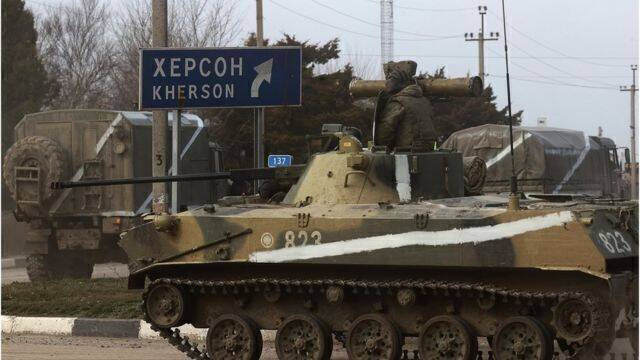
38-year-old Konstantin also lives in Kherson. He says, people in the city understood what war was on the night of February 24. The battles on the Antonivsky Bridge could be clearly heard. “Then everyone was sitting in basements. Now we continue to hear explosions, but everyone is used to it,” he says.
The man showed a special pass that is used to travel through Kherson and the region. “What is remarkable is that the document is drawn up in the language of the occupied territory, i.e. Ukrainian,” says Kostyantyn. “However, there is no name and surname of the commandant. I don’t know where and why the stamp of the Kherson City Council is here, there is no clear explanation yet. You can move around, but such papers simplify the passing of roadblocks, it’s allowed without queuing. It’s also a lower risk of being searched or you won’t be searched at all.”
Locals say that the occupiers walk everywhere and as if they`re at home. “They penetrate entrances and make marks on apartments and floors where no one lives. For example, it can be matches in doors or keyholes”, keeps telling Konstantin. “There are simply marks on the walls, as it was in the 90s, as, for example, the entire floor is not residential. I can’t say with certainty who does it and why. Maybe russian for the census, which they announced. There may be “domushnyky” [ Ukrainian slang — people who rob apartments – TR] who decided to take advantage of the situation. Anyway, it is better to paint over all these marks.”
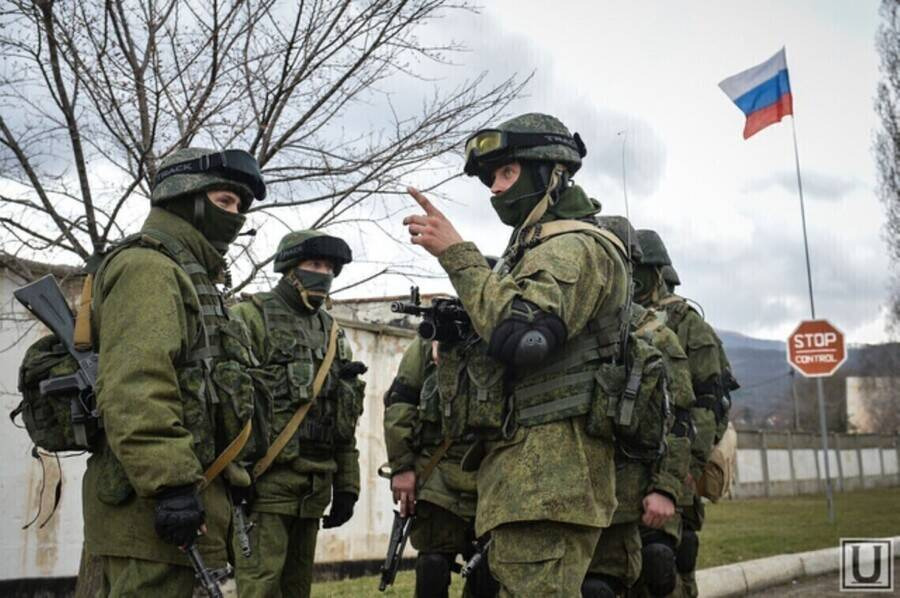
Yaroslav is 46 years old, he and his wife live in the Skadovsk district of the Kherson region. “People no longer have money, they have nothing to live on,” the man complains. “Prices are very high. Shops are open, but you can count them on the fingers of one hand, so that everyone goes to the market. Ukraine pensions are paid to all people, and this is pleasing. My grandmother doesn’t have a bank card, but she receives money in the post office.”
Currently, only the occupiers import humanitarian aid, but the locals convince that almost no one takes it. “Only some elderly people who really don’t have anything to eat are the exception. At the beginning of the war, it feeled like a holiday when our people brought humanitarian aid”.
Yaroslav works in Mykolaiv, so sometimes he has to overcome 11 roadblocks with occupiers to get to his place of work. “We’re afraid to go because not everyone manages to do it. Some are taken away for unknown reasons and we don’t know what is done to them,” he says. “At checkpoints they check documents, phone, I had my tattoos searched. When leaving the city, they ask you your last name several times, whether you or your family member were in the military and why. If you answer that you don’t know, they threaten, they say, “Maybe we can speak privately, then you will recall?” It’s scary.”
Yaroslav admits: people are scared, but the occupiers are trying to “make friends” with them. “One rashist gave my little nephew a candy at the checkpoint. We moved a few meters away and the child threw it away.” The man says that living in peace is what everyone wants most. “Explosions and bangs are heard all day long, but there is no alert alarm. People are being taken away, houses are being walked around — it happened three times to us. They come, look around and leave. But the neighbor was taken somewhere, and he still hasn’t returned,” says Yaroslav.
Despite the fact that their lives are in danger every day, people do not want to leave their hometown. They say: “It’s terrifying here, but we’re not going to run away, because Kherson is Ukraine!”
Translator: Bohdana-Nikolietta Terekhina


