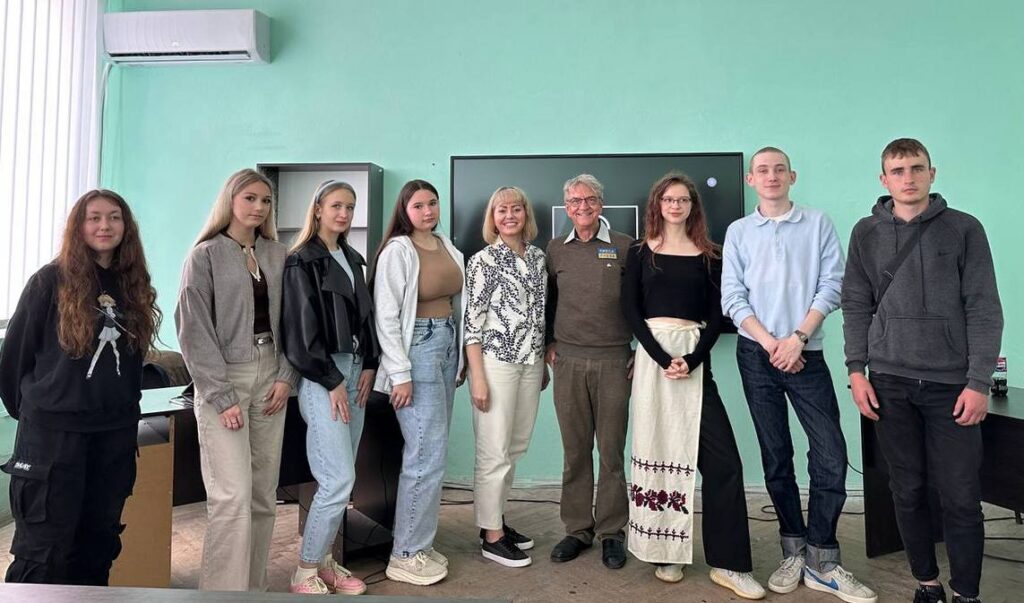
The workshop was held in an interactive format, allowing participants not only to listen but also to actively engage by asking questions and taking part in practical exercises. The event was attended by first- and second-year journalism students as well as faculty members.
Mr. Lonsmann shared his experience working with Scandinavian media and emphasized that in the context of full-scale war, critical thinking and the ability to filter information are not just professional skills for journalists but also a societal responsibility. According to him, the ability to recognize emotionally charged headlines, manipulations, disinformation, and propaganda is key to maintaining public trust in the media.
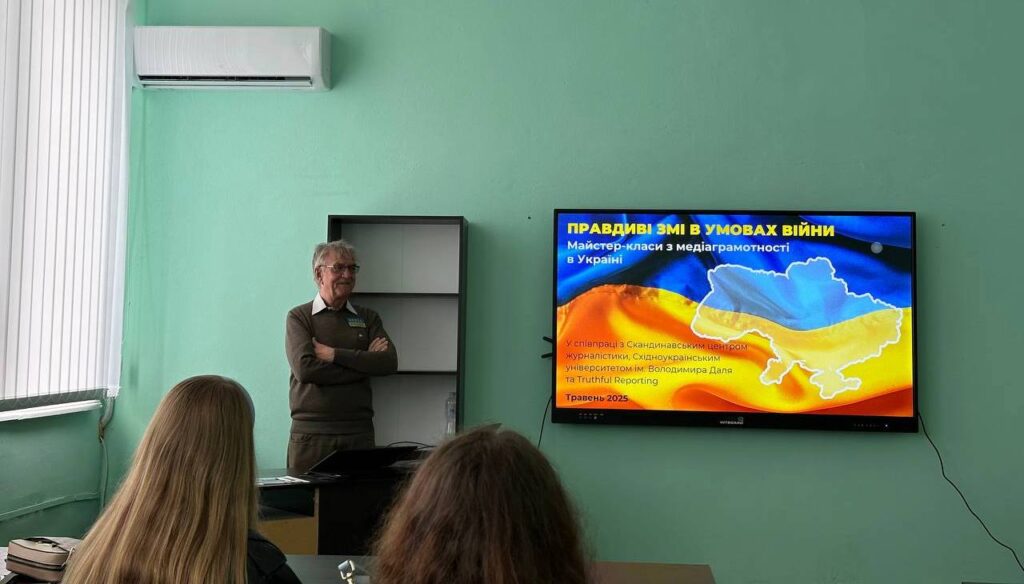
Special attention during the workshop was given to distinguishing high-quality information sources from “information junk,” as well as to identifying controversial experts and destructive content. Participants worked in small groups, analysed examples of real news stories, and practiced detecting manipulation and concept substitution.
The workshop was held as part of a project supported by the Nordic Council of Ministers within the framework of the initiative “Supporting Free and Independent Media for Democratic Development in the Nordic-Baltic Region and Adjacent Areas.” The series of similar events in various cities across Ukraine aims to strengthen the professional skills of young journalists and foster a responsible approach to information activities.
Authors: Maria Artyukh, Diana Kedrova


