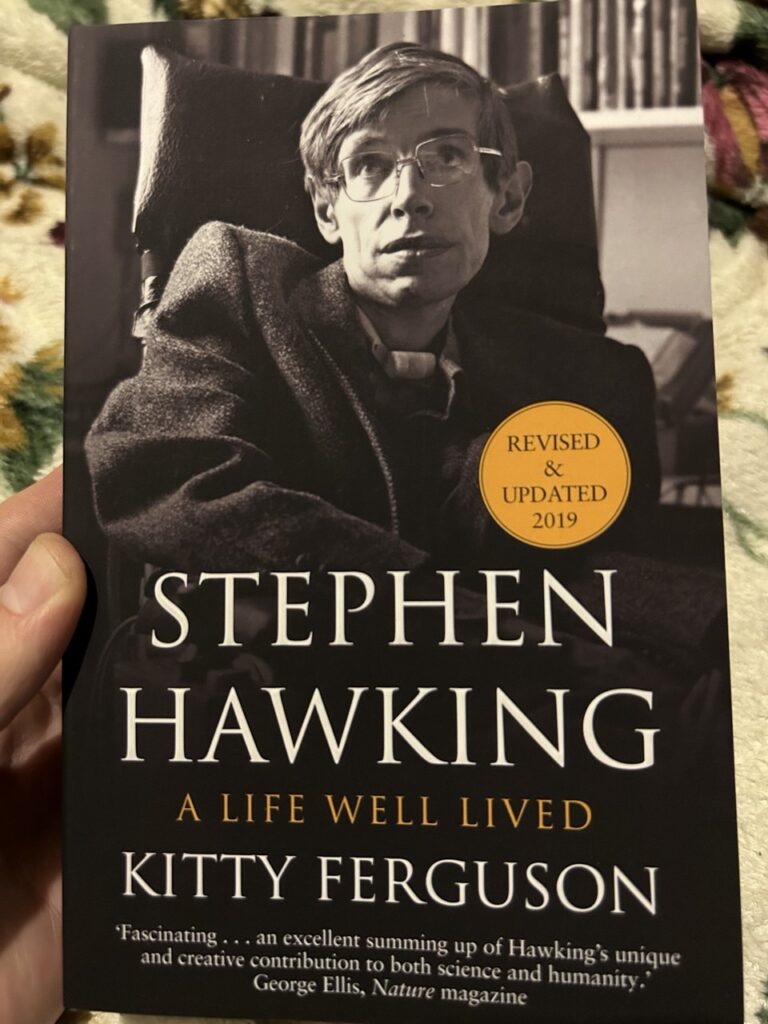
My obsession (in a good way) with this man and his life goes back to my school days. I remember reading about his death in March 2018, when I was still a teenager, and I was incredibly saddened by the news, which is a bit weird for me in retrospect. I mean, Hawking is certainly not a close person to me, like my relatives or even friends, I’ve never met him in person, no matter how much I’d like to, I haven’t had the opportunity, but somehow the news of his death just stayed with me for a long time. Emotionally, it was such a huge blow. I remember continuing to read all sorts of articles, including those by his fellow scientists, about Hawking’s contribution to the world of science, his diagnosis, his enormous impact on the disabled community and the global community interested in the universe. This man held, and still holds, a special place in my heart. His life is an incredible source of inspiration to me, as it is to millions of other people around the world, and so I decided to dig much deeper, to learn as much as I could about the scientist and his work. And that’s how I came across a biography written by American author Kitty Ferguson.
Known for her highly accessible books on various scientists, the history and philosophy of science, Ferguson worked alongside Hawking for many years. When she first met him in 1989, he had just published his legendary “A Brief History of Time”. By then Stephen was confined to a wheelchair, able to move only one or two fingers to operate his communication system, laboriously spelling out words. The first book about him was “Stephen Hawking: The Search for the Theory of Everything” (1991) and it became a global bestseller. For more than thirty years, Ferguson has updated his story in four revised editions, culminating in “Stephen Hawking: A Life Well Lived”, published in March 2019, a year after his death.

When I got my hands on the printed version of this book, I was overjoyed. Even then, I felt the intellectual pleasure of exploring Hawking’s life. And I must say that this reading experience has been absolutely worth every second of it.
The book is quite large, about 700 pages, and covers a lot of things that happened during the scientist’s life. Essentially, it gives the reader a kind of account of almost all the years of Hawking’s life, when he was studying, actively involved in science, writing popular books, and involved in a number of other projects. It covers all aspects of the scientist’s life: from his childhood to his greatest discoveries, from his terrible diagnosis to the publication of A Brief History of Time and his worldwide fame, right up to 2018, the year of his death.
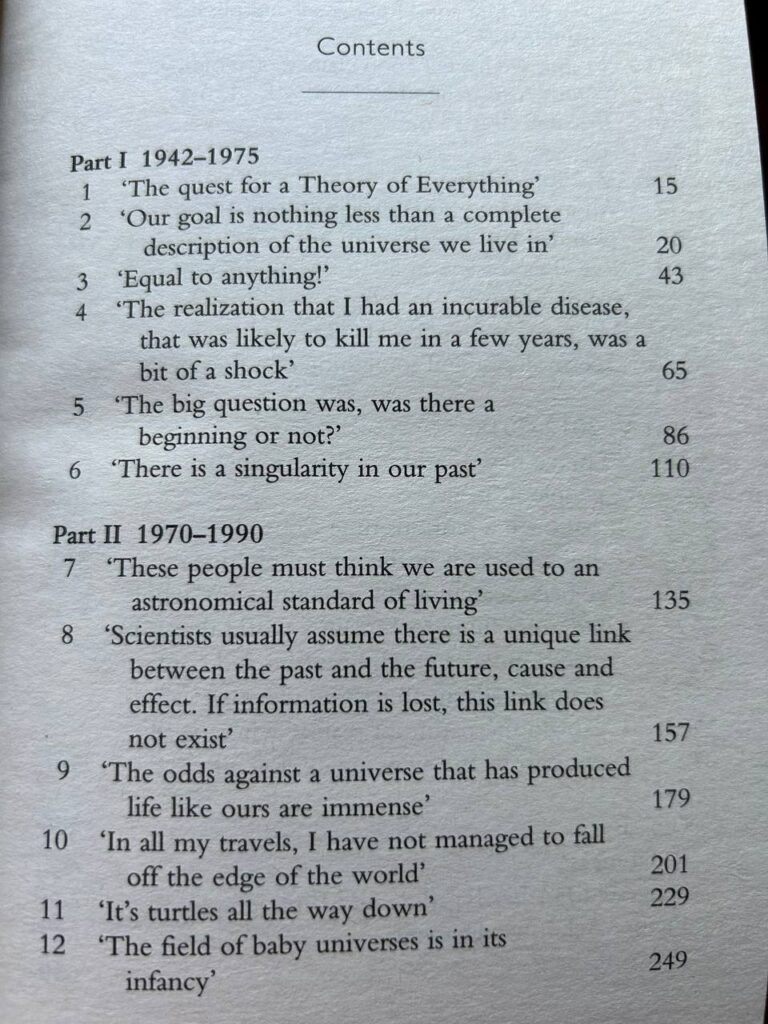
Ferguson looks at Hawking’s contributions to the field of cosmology, including his work on black holes and the origin of the universe, as well as his personal struggles and triumphs. His most famous scientific discovery, which later became known as Hawking radiation, shows that black holes are not actually completely black. They emit photons and other fundamental particles and eventually, after incredibly long periods of time, they simply evaporate and disappear from the universe. This discovery led to many hundreds of scientific papers, raised many important questions that scientists are still puzzling over, and continues to stimulate the thinking of the world’s most brilliant physicists. And it has been doing so for over 50 years (the original paper was published in 1974). Such an achievement cannot be underestimated. Although Hawking radiation has not yet been experimentally proven, it remains a very important theoretical prediction, and it is thanks to this discovery that the British cosmologist has gained the greatest recognition in the scientific community and become one of the most prominent scientists in his field.
And let’s not forget the scientist’s terrible illness, which he fought for more than 50 years of his life. He was diagnosed with amyotrophic lateral sclerosis (ALS) at a very young age, just over 20. Initially depressed, he later decided to defy the odds and, despite the progression of this terrible disease, carried out his most outstanding scientific research, becoming a symbol of resilience and intelligence. He could not move physically, but thanks to the power of his mind, he travelled to the edge of space and to the beginning of the universe.
In her biography, Ferguson strikes a fine balance between the scientific and the personal. She explains complex concepts such as Hawking radiation and singularities in a way that is accessible to a wide audience, while providing a deep insight into Hawking’s personal life, from his childhood in Oxford to his international fame and his relationships with women, and how he tried (or not) to balance that fame with his relationships. Readers see not only the mind behind his revolutionary theories, but also a man who faced life’s challenges with humour and determination. Another remarkable aspect of this approach to writing the book is that it is by no means a one-sided portrait; the author does not simply portray the scientist as a scientific genius without flaws. In fact, one of the book’s greatest strengths is the way it humanises Hawking, making him just like the rest of us, with our own problems. Ferguson does not shy away from discussing the complexities of his personal life, including his divorce, two marriages, the controversy surrounding his care in his later years, and the differing views on his physical condition and legacy as a scientist. These personal details seem to bring the reader closer to Hawking, who can seem very distant from the rest of humanity because of his science, and also add a certain emotional depth to the narrative.
The biography is enriched by Ferguson’s personal connection with Hawking. This is evident throughout the book, as the author often recounts her experiences of personal communication with the physicist, describing how she spent time with him, questioning him about his science and his involvement in various initiatives. It is important to remember, however, that this closeness does not lead to a biased tone in the narrative. As I have already pointed out, Ferguson provides the reader with the most balanced, unbiased picture of the scientist, noting his enormous contribution to science and its popularisation, but at the same time recognising and describing his personal problems and shortcomings, especially with regard to family relationships.
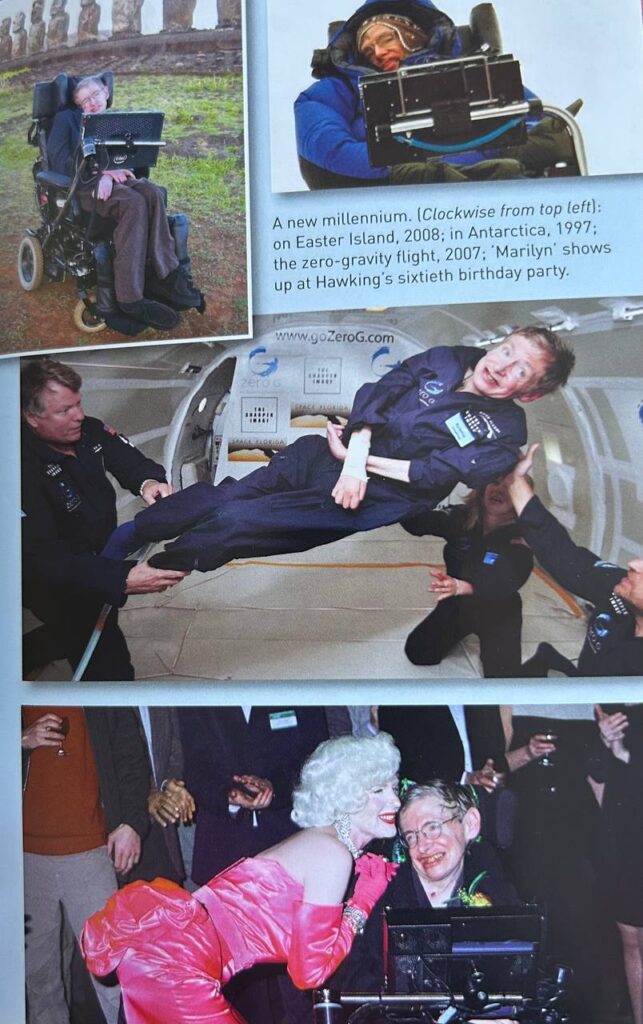
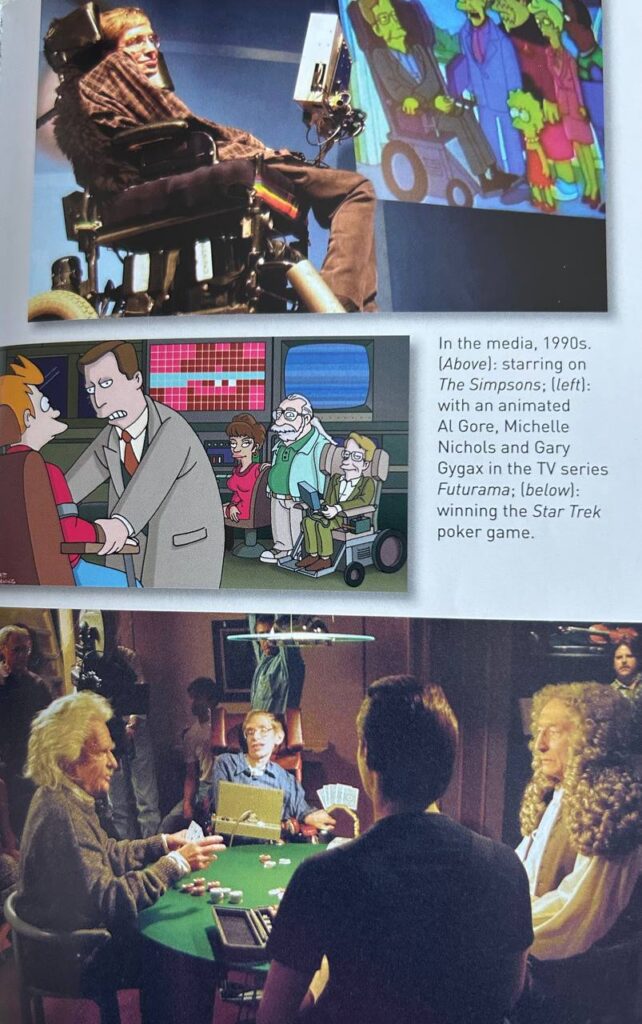
“Stephen Hawking: A Life Well Lived” is a very good and inspiring book, perfect for people who like to read non-fiction in general and biographies of great scientists in particular. The scientific concepts presented here are quite complex, but the author has an amazing ability to ‘bring Hawking’s science down to earth’, to make it very accessible without undue simplification (without dumbing it down, as the British would say). In other words, Ferguson treats these widely accepted theories with great respect, so that they do not lose their essence in the understanding of the average man in the street who is not an expert, but are also as clear as possible when presented without mathematical equations.
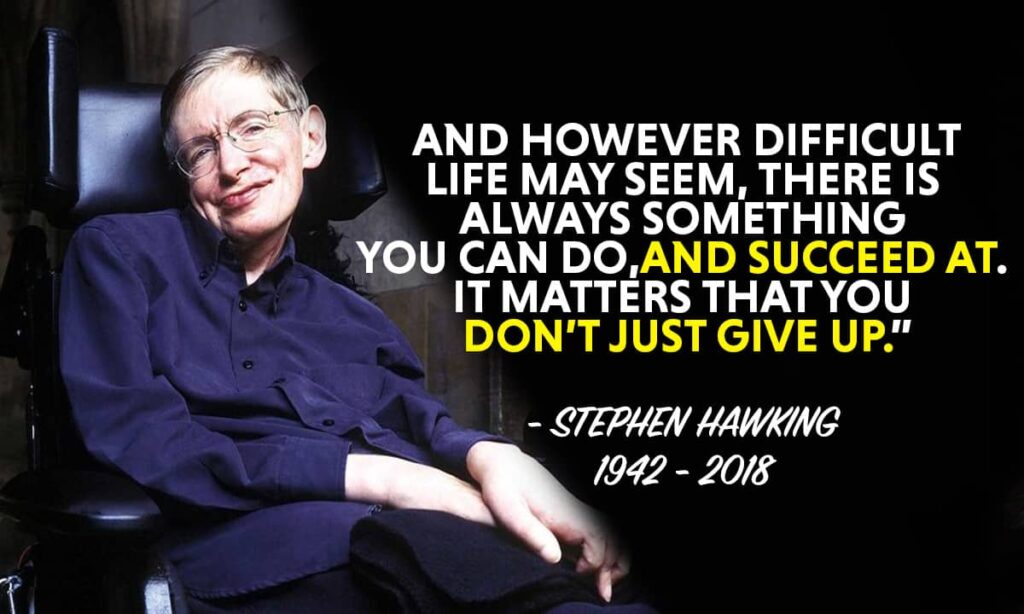
It is an inspiring read for those interested in science, history, and biographies. It paints a vivid picture of a man whose life was as extraordinary as his work, providing readers with both intellectual insights and emotional resonance. Ferguson’s ability to translate the life of one of the most iconic figures in modern science into a compelling narrative makes this book a standout tribute to Hawking’s enduring legacy. And for this very reason, this is my favourite biographical work so far. I’ve read it many times and will keep returning to some of the passages of the book as it gives me inspiration to go forward in life. To me, this is just a wonderful example of how biographies should be done and written. It mixes Ferguson’s incredibly good writing with her in-depth knowledge of the man and his work. And Hawking’s life is obviously a great example of how one should live, that in spite of all the challenges, there’s always, in his words, “something you can do and succeed at. While there’s life, there’s hope”.
“It’s been a remarkable journey”, Kitty Ferguson said of her thirty years spent knowing and writing about Stephen Hawking. After reading this book, I feel as though I’ve been on a similar journey myself — what a fascinating and enriching experience it has been. So I can highly recommend this piece of non-fiction to anyone who wants to delve into the man and his life, it’s well worth one’s time to read.